
Resolution 10 through a Nordic lens

 |
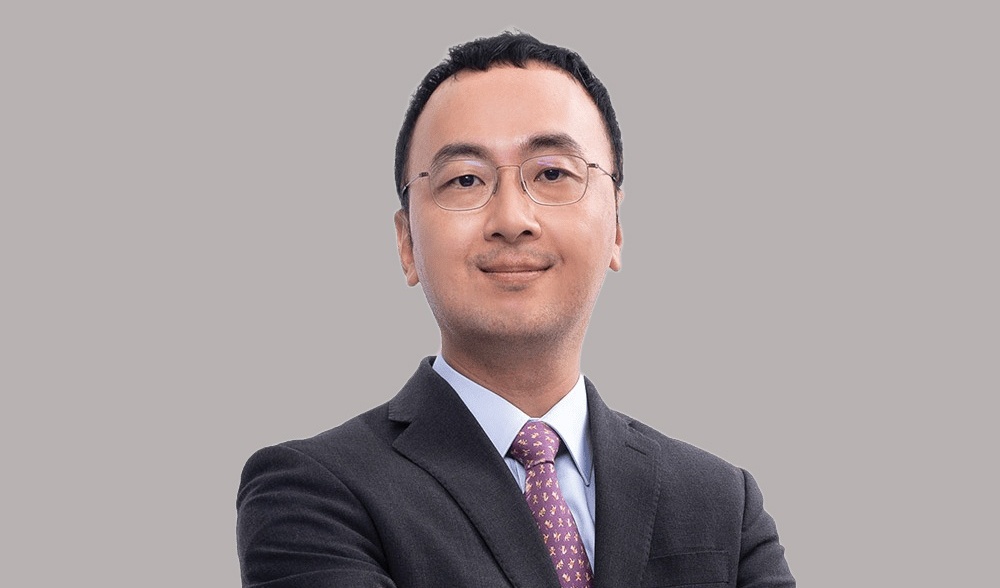
| David Tuan Anh Nguyen, executive director of NordCham Vietnam |
For many years, such investment in Vietnam was measured largely by registered capital and jobs created. Reading Resolution 10, what stays with us is not the quantitative targets. It is the way Vietnam has redefined the relationship itself: foreign-invested enterprises are now recognised as an integral part of the national economy.
Rita Mokbel, vice-chair of NordCham Vietnam and president and CEO of Ericsson Vietnam, was in the room when the Resolution was presented to the business community. She led the European business delegation to that conference. Sharing her view earlier, she put the shift this way: "This is very much aligned with the strengths of Nordic investors, who typically take a long-term approach and invest not only in production, but also in people, skills, and responsible business practices. Recent investments by LEGO and Pandora demonstrate that Vietnam is increasingly attracting projects centred on advanced manufacturing and sustainability."
There is a reason this framing suits Nordic companies. They built their competitiveness on innovation, productivity and responsible business rather than on scale.
What our nearly 200 members bring instead is depth: technology, operating and governance standards, sustained investment in people, and a presence counted in decades rather than incentive cycles. When Vietnam chooses to look at foreign investment through the quality of its contribution rather than the size of its capital, that is a measure the Nordic community recognises itself in.
Resolution 10 gives priority to projects with strong effects in sustainable development and green growth. This is where I feel the alignment between Vietnam and the Nordic region most clearly. The Nordic countries went through their own energy transition decades ago, and the lesson we took from it is that going green does not slow growth down – it reshapes how growth happens.
Among our members are companies already doing this work. Lego runs a carbon-neutral factory here. Pandora crafts jewellery on renewable power. Syre is building a textile recycling operation designed to keep material in use rather than send it to landfill. Vestas supplies wind turbines. Vard builds, in Vietnamese yards, the specialised vessels that serve offshore wind farms in other parts of the world.
Alongside them are companies working in energy efficiency, water technology, recycling systems, low-emission logistics and on-site vocational training. These were commercial decisions, designed to green standards from the very first drawing.
The green transition is already happening in Vietnam. Our members are investing in cleaner production, renewable energy, recycling and more efficient operations because it makes business sense. These are not just sustainability projects, they are decisions about how companies want to build and operate for the long term in and with Vietnam.
Vietnam’s green ambitions and the Nordic experience fit together well enough that value can flow in both directions. Nordic companies need capable local suppliers, energy engineers, environmental specialists and certification professionals. In return, Vietnamese businesses and young talent gain access to technology, operating standards and global supply chains. Neither side reaches that point alone, and neither reaches it quickly.
That is the work we see for the years ahead: bringing members closer to Vietnamese partners, sharing what the Nordic vocational training model has taught us, and keeping an open conversation with policymakers. A resolution sets the direction; a community turns it into everyday practice.
Because in the end, the investment that is remembered is rarely the one with the largest announced figure. It is the one that stays the longest, and leaves the most behind.
 | Vietnam must build talent and innovation to attract quality investment Vietnam is seeking to reposition itself as a destination for higher-quality foreign investment. Joel Hassan, lecturer for International Business at RMIT University Vietnam, told VIR that success will depend on building a stronger talent pipeline and improving innovation capacity. |
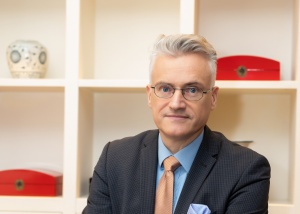 | Resolution 10 sets ambitious targets to increase localisation Resolution 10-NQ/TW sets ambitious targets to increase the localisation rate and strengthen domestic supply chains. Prof. Dr Andreas Stoffers, FOM University of Applied Sciences analyses the biggest barriers preventing Vietnam from achieving higher localisation compared to other ASEAN countries. |
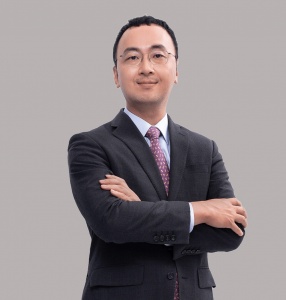 | Resolution 10 equals growth driven by strategic innovation A massive strategic overhaul is underway regarding Vietnam’s embrace of foreign investment. Il-Dong Kwon, managing director and partner at BCG Vietnam, spoke to VIR’s Bich Ngoc about improving the quality of foreign funding and related resolutions to boost high-tech sectors. |
What the stars mean:
★ Poor ★ ★ Promising ★★★ Good ★★★★ Very good ★★★★★ Exceptional
 Tag:
Tag:
Related Contents

Latest News




More News
- Dong Thap province steps up industrial expansion and infrastructure connectivity (October 19, 2026 | 08:56)
- Vung Ang LNG Terminal looks for candidates for $1 billion EPC contract (October 16, 2026 | 17:53)
- Work on digital technology building begins in Hanoi (October 16, 2026 | 17:46)
- Vietnam CFA showcase highlights $120m funding need for climate ventures (October 16, 2026 | 17:14)
- Long-delayed LNG power projects may be replaced in revised PDP VIII (October 14, 2026 | 11:59)
- Foreign investors seeking a synchronised manufacturing ecosystem (October 14, 2026 | 11:51)
- Localities report breakthrough results in FDI in first nine months (October 14, 2026 | 11:45)
- Why Asian FDI is flowing into northern Vietnam’s industrial parks (October 14, 2026 | 09:03)
- Hung Yen unveils adjusted master plan with three economic zones (October 13, 2026 | 11:30)
- Ho Chi Minh City climbs 17 places in Global Financial Centres Index (October 13, 2026 | 11:27)







 Mobile Version