
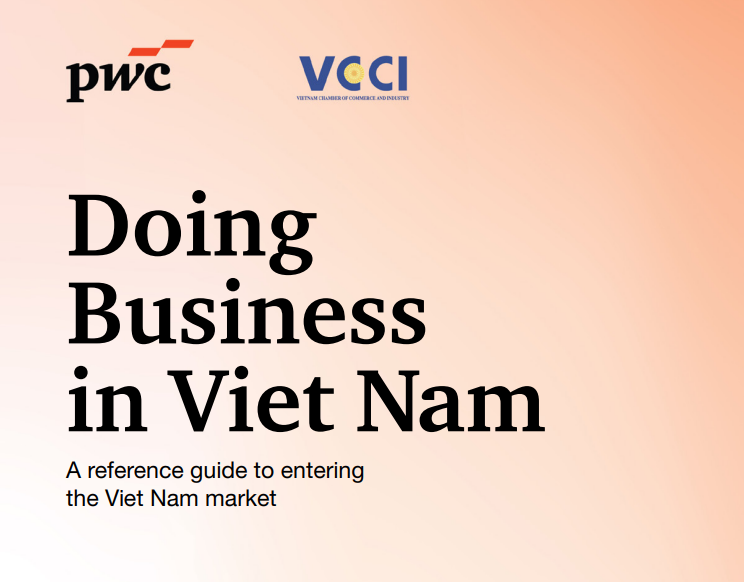
VCCI and PwC Vietnam launch 'Doing Business in Vietnam' to empower investors

 |
This year's edition arrives at a pivotal moment. Vietnam's economy is showing strong momentum, with 7.85 per cent GDP growth in the first nine months of 2025, a trade surplus of $16.82 billion, and foreign direct investment (FDI) inflows up 15.2 per cent, with greater investments from South Korea and Malaysia. Inflation remains controlled at 3.27 per cent, reflecting macroeconomic stability amid global uncertainties.
The guide provides practical insights into Vietnam's legal frameworks, tax incentives, investment structures, and strategic sectors such as digital transformation, infrastructure, and renewable energy. It also reflects Vietnam's ambition to become a high-income, industrialised nation by 2045, and achieve net-zero emissions by 2050.
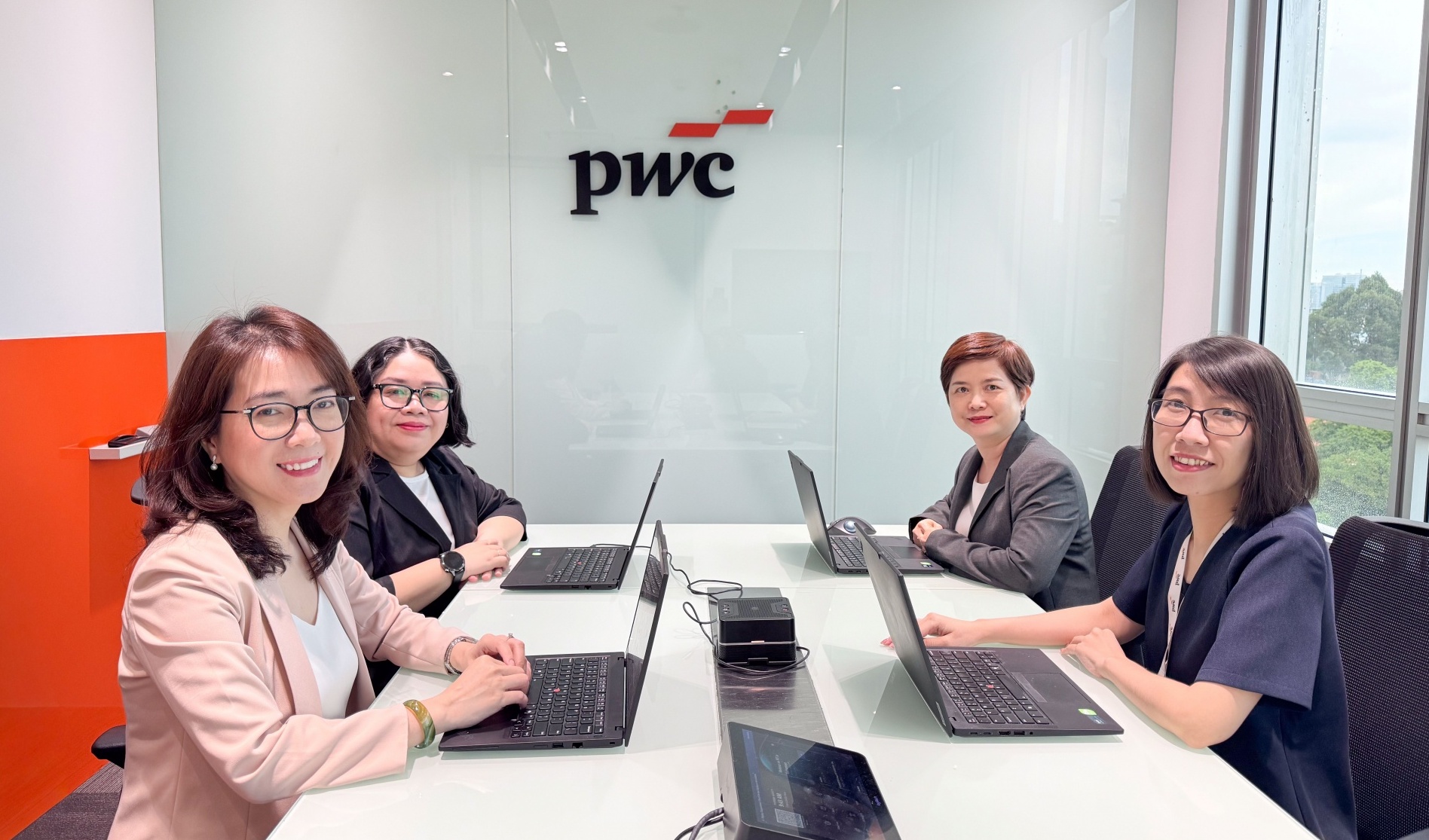
VCCI and PwC Vietnam have collaborated closely for a decade to produce the "Doing Business in Vietnam" guide. This partnership reflects a shared commitment to supporting Vietnam's business community through practical insights, policy dialogue, and international engagement.
Pham Tan Cong, chairman and president of VCCI, shared, "In an era where knowledge and transparency are fundamental drivers of growth, delivering accurate and comprehensive information is not merely a necessity; it is a responsibility to the business community. This publication reflects the strong collaboration between VCCI and PwC Vietnam in our shared commitment to fostering a transparent, competitive, and globally integrated business ecosystem. Through this effort, we aim to contribute to realising the vision of a sustainably developed Vietnamese economy that meets international standards."
Across Asia-Pacific, CEOs are rethinking how value is created – driven by megatrends such as AI, climate transition, and supply chain reconfiguration. Vietnam is no exception, with rising investor interest and bold domestic reform converging to reshape its economic landscape. Drawing on insights from PwC's Value in Motion thought leadership, the guide also reflects wider regional and global trends.
Mai Viet Hung Tran, general director of PwC Vietnam, commented, "Vietnam is entering a transformative phase, driven by bold reform, digitalisation, and sustainability commitments. This guide is more than a publication; it's a strategic compass for investors seeking to contribute to and benefit from Vietnam's dynamic growth. We are proud to support Vietnam's entrepreneurs and business leaders as they shape the future of this vibrant economy."
The guide points out that Vietnam achieved 7.09 per cent GDP growth in 2024, outperforming regional peers despite global headwinds. Strong performances in services, manufacturing, and agriculture, coupled with a trade surplus of $24.77 billion, underscores the country's economic stability.
With $38.2 billion in registered FDI in 2024, Vietnam continues to attract global investors, particularly in the manufacturing, real estate, and high-tech sectors. Provinces like Bac Ninh and Haiphong are emerging as key investment hubs.
The government has increased its 2025 budget by 20 per cent, allocating over $106 billion to infrastructure, education, science and technology, and digital transformation, signalling a strong commitment to long-term growth.
Additionally, new laws and amendments in land, energy, data, and public-private partnerships are streamlining procedures, enhancing transparency, and empowering local authorities to drive development.
Vietnam is also prioritising digital infrastructure, AI, and green energy. The new Electricity Law and Decree 182/2024 offer incentives for renewable energy and high-tech research and development, including subsidies for semiconductor and AI projects.
Regarding global integration, Vietnam now holds 21 strategic partnerships and has signed 17 free trade agreements, including recent Comprehensive Strategic Partnerships with Australia, France, and Malaysia. These ties strengthen Vietnam's role as a trusted global trade and investment partner.
The guide also highlights Vietnam's financial hub ambitions. Resolution No.259/NQ-CP sets the stage for the development of International and Regional Financial Centres in Ho Chi Minh City and Danang, with pilot policies expected by 2030.
The "Doing Business in Vietnam" guide is co-authored by PwC Vietnam and VCCI, offering practical insights into Vietnam's legal frameworks, tax incentives, investment vehicles, and sectoral opportunities. It is designed for entrepreneurs, multinational corporations, and small- and medium-sized enterprises alike, those who seek to be part of Vietnam's transformation.
As Vietnam celebrates its entrepreneurs on this special day, this publication stands as a tribute to their resilience, innovation, and contribution to national progress.
 | Doing Business in Vietnam report offers roadmap for investors The “Doing Business in Vietnam 2025-2026” report serves as a practical guide, offering investors a comprehensive view of the nation's economic landscape along with the key considerations for market entry and operations. |
 | Vietnamese businesses navigate US tariffs As US tariffs continue to pressure global trade, Vietnamese businesses are undergoing a comprehensive transformation, from supply chains and production to markets and services, to adapt and stay competitive. |
 | Vietnam tax and legal changes set to shape foreign investment landscape Nguyen Huong Giang, partner of Tax and Legal Services at PwC Vietnam, notes that upcoming tax reforms are expected to reshape the business environment and influence the attractiveness of Vietnam for foreign investors. |
What the stars mean:
★ Poor ★ ★ Promising ★★★ Good ★★★★ Very good ★★★★★ Exceptional
 Tag:
Tag:Related Contents




Latest News



More News
- Leading in AI: from pilot initiatives to enterprise value (August 10, 2026 | 07:00)
- Programme launched to develop new Vietnamese business leaders (July 28, 2026 | 13:50)
- Family businesses face succession hurdles (June 30, 2026 | 17:05)
- Global shocks and tightening cash for Vietnamese business (June 22, 2026 | 06:00)
- Data and governance key hurdles to AI scaling for Vietnamese firms (June 17, 2026 | 16:55)
- Vietnam second fastest growing automotive market in ASEAN‑6 (April 20, 2026 | 20:34)
- Vietnam’s green push requires further hurdles to clear (March 30, 2026 | 08:00)
- The use of artificial intelligence to advance ESG goals for businesses (March 06, 2026 | 11:50)
- Vietnam a strategic growth engine for Asia-Pacific: CEO survey (March 05, 2026 | 17:12)
- PwC launches global workforce survey (February 09, 2026 | 17:42)



Latest News






 Mobile Version