
Capital concentrated in later-stage startups, leaving funding gaps for early ventures

Addressing the 'Restructuring Capital Channels' seminar hosted by VIR in Hanoi on July 15, Bui Thanh Trung, deputy general director of Thien Viet Securities (TVS), examined how new financing channels can be unlocked to support innovative startups under Vietnam's emerging growth model.
“Vietnam is entering a new phase of growth driven increasingly by science, technology, and innovation. One notable trend is that capital has not disappeared, it is shifting,” he said. “In 2025, private investment in Vietnam reached approximately $4.5 billion across 149 deals, nearly doubling from $2.3 billion across 141 deals in 2024. However, most of the increase came from large private equity (PE) transactions, with a combined value of nearly $4 billion.”
Regarding venture capital (VC), Trung said total investment rose 28 per cent from around $398 million in 2024 to $509 million in 2025, while the number of deals declined from 118 to about 104.
“This indicates that funds continue to deploy capital, but into fewer companies with larger ticket sizes,” said Trung. “The trend is also evident across funding rounds. Pre-A and Series A activity has remained relatively stable over the past three years, suggesting that the startup pipeline remains healthy. Meanwhile, the median Series B deal size recovered from around $10 million in 2024 to $11 million in 2025 after two years of decline, while the number of C+ deals increased from two in 2024 to six in 2025, the highest level since 2022.”
“In other words, new startups continue to emerge, but capital is increasingly concentrated on companies that have entered the growth stage and can absorb larger investments,” he added.
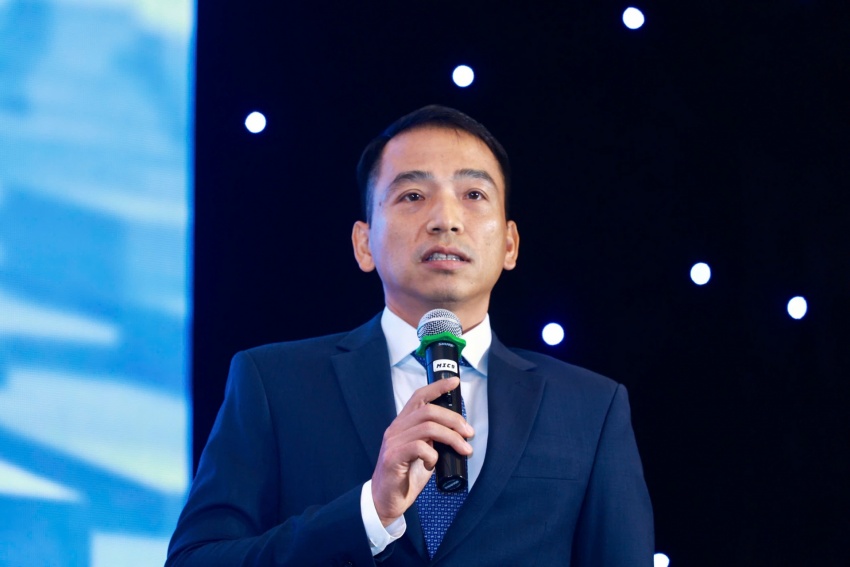 |
| Bui Thanh Trung, deputy general director of Thien Viet Securities. Photo: Chi Cuong |
On the investor side, Trung noted that Vietnam recorded 119 active VC investors and 48 PE investors in 2025, the highest number of PE investors since 2016. Singapore remained the leading source of investment, while the return of investors from the US, Europe, and Japan reflected sustained international interest in the Vietnamese market. At the same time, Vietnam's stock market capitalisation reached around $410 billion in May, highlighting the continued expansion of the public capital market.
“The challenge is no longer simply raising more capital, but ensuring capital reaches the right stage, managing risks effectively, and creating viable exit channels that allow capital to recycle,” said Trung. “The market still lacks liquidity for unlisted shares, flexible exit mechanisms, and risk management tools suited to innovative enterprises. That is why today's priority is not just how to mobilise more capital, but also how to improve risk management mechanisms to facilitate capital recycling.”
Based on market data, TVS identified three key trends reshaping capital flows.
“First, funds are becoming more defensive. Around 60 per cent of capital deployed in 2025 went to follow-on rounds and bridge financing for existing portfolio companies, rather than new investments. A significant amount of committed but undeployed capital remains on the sidelines,” said Trung. “Second, capital is shifting towards later-stage companies. The 10 largest transactions accounted for around 72 per cent of total investment in 2025. Deals valued between $1 million and $5 million increased from roughly 21 per cent in 2023 to 41 per cent in 2025, while smaller transactions continued to decline. Investors are moving up the growth curve searching for greater certainty.”
“Third, exits remain the biggest bottleneck. In 2025, the US - the world's most active initial public offering (IPO) market, recorded 995 exits through mergers and acquisitions (M&A), compared with just 62 through IPOs. In other words, 94 per cent of exits were completed via M&A. For VC-backed companies, IPOs are no longer the dominant exit route,” he added.
Trung argued that if IPOs account for only 6 per cent of exits even in the US, expecting IPOs to become the primary exit channel in Vietnam is unrealistic.
“Looking across the corporate lifecycle, the delays do not lie at a single stage. There is no shortage of ideas or founders at the beginning. The financing gap lies between seed funding and Series A, while at the exit stage, unlisted shares still lack a genuine secondary market,” he added.
Trung said the weak exit environment has two clear consequences. First, capital is not being recycled efficiently. Global funds' capital distributions-to-net asset value (NAV) fell to around 17 per cent in 2025, compared with the 10-year average of 26 per cent. This ratio measures the cash distributed to limited partners (LPs) during the year as a proportion of a fund's NAV.
“Simply put, for every $100 of assets under management, funds returned only $17 to LPs, compared with the historical average of $26. That means capital returned to investors was about 30 per cent slower than normal, reducing capital recycling and making it more difficult for the next generation of startups to secure funding,” he explained.
Second, timing risk remains unresolved. Around 64 per cent of private equity investors in Vietnam expect exit timelines to be delayed by at least one year.
“In practice, investment holding periods can extend from seven to 10 years. When exit timing becomes unpredictable, investors cannot accurately assess risk and naturally become more cautious,” said Trung. “Without a clear exit path, projected internal rates of return become difficult to justify, making investment committee approval more challenging. As a result, capital may stall at the final step – the signing stage.”
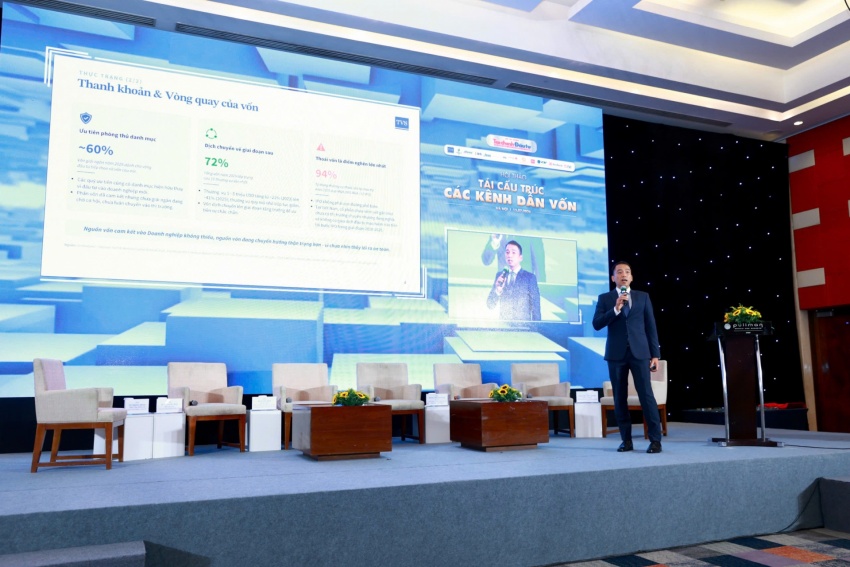 |
Based on this assessment, TVS did not offer specific recommendations but instead proposed several perspectives aligned with different stages of corporate development, drawing on international experience and the firm's own observations.
TVS viewed the capital journey as comprising four stages: idea incubation, bridge financing, liquidity support, and exit through M&A.
Trung noted that Singapore offers a useful reference, as it uses tax policy to encourage acquisitions.
“Singapore operates two separate schemes. The first is the M&A Scheme, which provides a tax allowance equal to 25 per cent of the value of eligible share acquisitions, spread over five years. The second is the Enterprise Innovation Scheme (EIS), which allows a 400 per cent tax deduction on qualifying expenditure for acquiring or licensing intellectual property. These are two distinct mechanisms, but they illustrate the same principle: tax policy can encourage large corporations to become active acquirers within the innovation ecosystem,” he said.
Trung explained that it is important not to say that the EIS provides tax deductions for M&A because these are two different schemes. The M&A Scheme applies to share acquisitions, while the EIS applies to the acquisition or licensing of intellectual property.
“Taken together, these four stages should be viewed as one continuous system. Early-stage funding helps businesses get started. Bridge financing enables them to overcome growth gaps. Secondary-market liquidity allows capital to recycle more quickly. M&A completes the investment cycle,” he added. “The objective is not simply to inject more capital into the market, but to build a complete capital pathway with efficient entry and exit mechanisms, enabling capital to be recycled, supporting the next generation of businesses, and fostering sustainable market development.”
 | Expansion of capital channels being urged There are calls for Vietnam to develop a more diverse financial ecosystem capable of supporting businesses at every stage of development, particularly private and innovative companies. |
What the stars mean:
★ Poor ★ ★ Promising ★★★ Good ★★★★ Very good ★★★★★ Exceptional
 Tag:
Tag:
Latest News




More News
- Vietnam and Switzerland to deepen financial cooperation (October 19, 2026 | 13:24)
- Carbon finance hinges on viable ventures (October 19, 2026 | 09:59)
- AI to transform the future of finance (October 19, 2026 | 09:04)
- Government proposes relaxing IPO conditions (October 19, 2026 | 08:00)
- Citi warns of intensifying competition for capital amid higher rates (October 16, 2026 | 16:54)
- Banks poised for Q3 profit growth amid margin pressure (October 16, 2026 | 16:51)
- Eximbank to strengthen corporate governance structure (October 16, 2026 | 11:32)
- Citi honours 13 banks with 2025 STP Awards (October 15, 2026 | 16:01)
- Green transition requires realistic roadmap (October 14, 2026 | 17:31)
- VIR workshop explores credit policy and carbon market development (October 14, 2026 | 11:22)







 Mobile Version