
Government approves national financial inclusion strategy towards 2030

Deputy Prime Minister Nguyen Van Thang signed Decision No.928/QD-TTg on May 25, approving the National Financial Inclusion Strategy for the 2026-2030 period.
The strategy’s overarching goal is to establish a modern, secure, and inclusive financial ecosystem in an attempt to improve living standards and ensure that no one is left behind during the development process.
It seeks to guarantee that all citizens and businesses, particularly priority groups, can access financial products and services on an equal and comprehensive basis, fully benefit from the strategy and contribute to social progress, equity, and welfare during the country’s development.
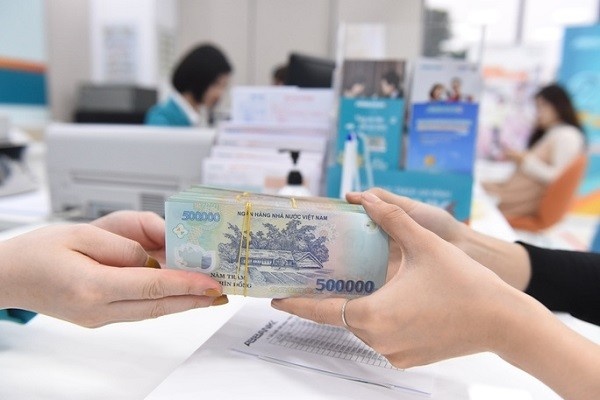 |
Under the strategy, by 2030 Vietnam targets 95 per cent of people aged 15 and above holding transaction accounts at banks or other eligible institutions.
The value of cashless payments is expected to reach 30 times GDP, while at least 30 per cent of adults are expected to maintain savings deposits at credit institutions and foreign bank branches.
The country also aims for at least 300,000 small and medium-sized enterprises to have outstanding loans at credit institutions and foreign bank branches.
Outstanding loans serving agricultural and rural development are targeted to account for around 25 per cent of total outstanding credit in the economy. Meanwhile, insurance industry revenue is expected to reach approximately 3.3-3.5 per cent of the country’s GDP.
To achieve these goals, the strategy outlines several key tasks and solutions, including improving the legal framework to create a favourable environment for implementing financial inclusion objectives; developing diversified providers of financial products and services; and expanding modern distribution channels to help target groups access and use financial services conveniently and at reasonable costs.
The strategy also focuses on diversifying modern and user-friendly financial products and services; developing and upgrading digital financial infrastructure to promote financial inclusion; implementing a nationwide National Financial Education Programme and Digital Citizen Programme; promoting sustainable finance, climate finance, and inclusive finance; and strengthening cybersecurity and personal data protection.
A major focus will be placed on developing diversified modern distribution channels based on digital technology with reasonable costs, while expanding the coverage of financial service access points in rural, remote and isolated areas to make easier for individuals and businesses in these regions to access financial products and services.
Another highlight of the strategy is the promotion of cashless payment across the economy, enabling all citizens to access and use non-cash payment services, while diversifying financial products and services supporting agricultural and rural production and business activities.
It encourages credit institutions, foreign bank branches, and financial service providers to prioritise lending for individuals and businesses implementing green and circular economy projects and applying environmental, social, and governance standards.
The strategy also promotes the development of green financial products and green credit solutions to improve access to financing for individuals and businesses undertaking green transition initiatives.
At the same time, the strategy encourages credit institutions, foreign bank branches and financial service providers to expand microcredit products, while urging insurance companies to develop insurance and supplementary pension products.
Notably, it promotes the development and application of fintech models to expand access to financial products and services for priority groups.
The effective implementation of the National Financial Inclusion Strategy is expected to boost growth, develop the digital economy, strengthen economic resilience, and support Vietnam's sustainable development goals.
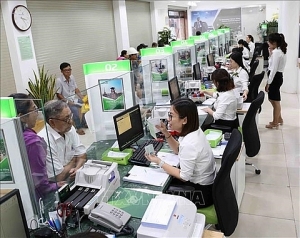 | PM ratifies national financial inclusion strategy until 2025 Prime Minister Nguyen Xuan Phuc has approved a national financial inclusion strategy until 2025 with a vision to 2030, targeting at least 80 per cent of adults in the country to have bank accounts by 2025. |
 | Leaders lay stepping stones for financial inclusion Vietnamese authorities are sticking to their target of moving towards a digitally-led economy by increasing cashless payments for public services, in which the non-cash payment value would be 25 times higher than GDP. |
 | Fintech a solution to financial inclusion Collaboration between banks and fintech companies is crucial for leveraging financial technologies within the existing regulatory framework, ensuring the benefits of innovation are accessible to all citizens and advancing financial inclusion. |
What the stars mean:
★ Poor ★ ★ Promising ★★★ Good ★★★★ Very good ★★★★★ Exceptional
 Tag:
Tag:
Related Contents











Latest News





More News
- New state capital rules could unlock wave of stock revaluations (August 18, 2026 | 08:48)
- Corporate bond recovery set to continue amid funding, maturity pressures (August 17, 2026 | 10:48)
- Citi raises Vietnam’s 2026 GDP forecast to 8 per cent (August 14, 2026 | 15:31)
- Beyond loans, veterans turn capital into sustainable livelihoods (August 13, 2026 | 17:42)
- Vietnam seeks Australia's technical support in four key financial areas (August 13, 2026 | 14:29)
- Banks roll out lower-cost credit to boost businesses and priority sectors (August 13, 2026 | 14:18)
- Techcombank helps foreign investors unlock growth opportunities in Vietnam (August 12, 2026 | 19:00)
- Banks face growing bad debt risks amid rising funding costs (August 11, 2026 | 14:57)
- Vietcombank returns to top spot in Bank Satisfaction Rankings 2026 (August 11, 2026 | 10:32)
- DPM calls for ways to ease business credit access (August 11, 2026 | 08:00)








 Mobile Version