
Capital market reform demands deeper structural changes

While Vietnam's capital market has expanded significantly over the past decade, speakers at a seminar on restructuring capital channels hosted by VIR in Hanoi on July 15 agreed that the next phase of development will depend less on mobilising additional capital than on improving how it is allocated.
Rather than relying solely on credit growth, they argued that Vietnam must build a more diversified and resilient financial ecosystem capable of supporting long-term investment and sustainable economic growth.
Bui Hoang Hai, vice chairman of the State Securities Commission (SSC), said broadening investment channels would be central to that transformation. Alongside the Ministry of Finance's plan to restructure the investor base and develop the fund management industry, regulators are working to introduce new markets and financial products capable of attracting capital with different risk appetites.
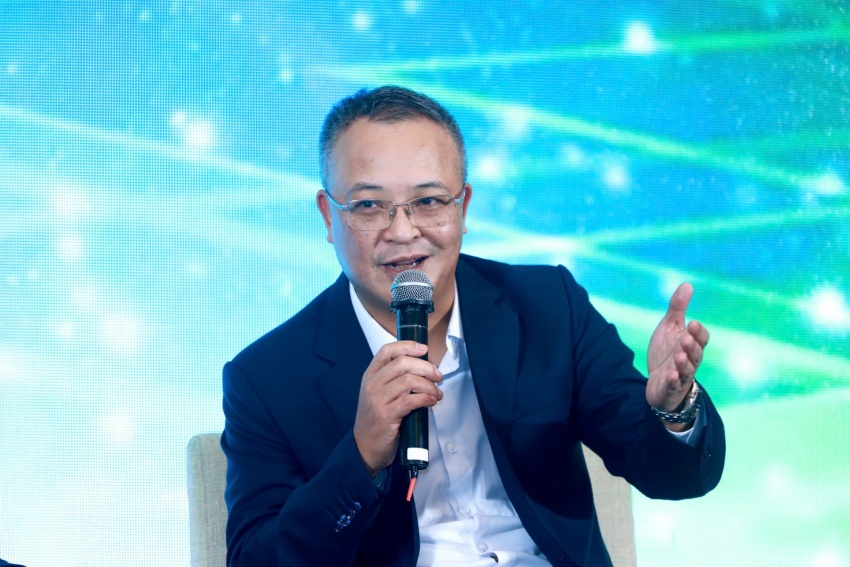 |
| Bui Hoang Hai, vice chairman of the State Securities Commission. Photo: Chi Cuong |
“Among the initiatives under consideration is a dedicated market for innovative startups, allowing companies that do not yet meet listing requirements to access equity financing through an appropriate regulatory framework. At the same time, the SSC is studying the development of a gold derivatives market as a way to unlock idle capital currently tied up in physical gold holdings,” said Hai. "Today, investors have to purchase physical gold in full. A gold derivatives market would allow investors to gain exposure with only a small margin requirement, releasing the remaining capital back into productive investment across the economy."
Policy reforms, however, must be accompanied by stronger market infrastructure, according to Nguyen Son, chairman of the Vietnam Securities Depository and Clearing Corporation (VSDC).
He revealed that VSDC is working closely with the World Bank, the SSC and international partners to introduce a central counterparty clearing model for the cash equity market based on the KRX trading platform.
“If implemented as scheduled, the CCP framework is expected to become operational in early 2027, removing settlement bottlenecks, improving capital efficiency and making Vietnam's securities market more attractive to both domestic and international investors,” he added.
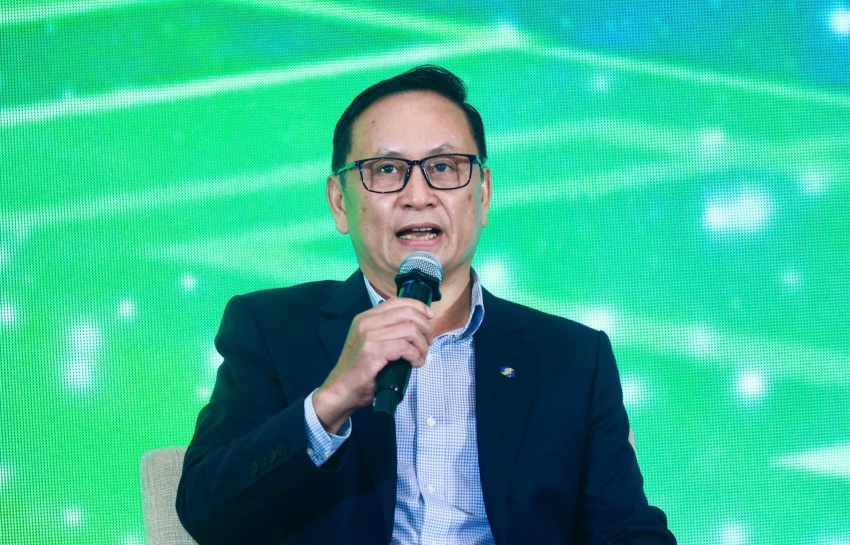 |
| Nguyen Son, chairman of the Vietnam Securities Depository and Clearing Corporation. Photo: Chi Cuong |
Alongside the CCP project, VSDC is expanding voluntary supplementary pension initiatives while supporting the development of Vietnam's fund management industry. Nevertheless, Son cautioned that attracting long-term foreign capital will require more than technical upgrades.
“VSDC is currently collaborating with several credit rating agencies to build a platform for independently and objectively evaluating and recognising top performers, based on international standards, to provide market signals,” said Son.
While regulators focus on strengthening market foundations, Trinh Quynh Giao, general director of PVI Asset Management, argued that Vietnam's greatest challenge is not a shortage of capital.
“Despite ranking among the world's largest markets for gold ownership and cryptocurrency participation, Vietnam has yet to channel sufficient savings into long-term investment vehicles. Restructuring the investor base essentially means shifting capital from retail investors towards professional institutions, with banks, insurance companies and investment funds forming the three pillars of a healthier financial system,” Giao said. "The banking sector has performed remarkably well in mobilising savings by earning depositors' trust. Insurance, however, still has significant untapped potential. Insurance assets account for only around 7.5 per cent of GDP, far below approximately 30 per cent in China and 50-70 per cent in Singapore. Restoring market discipline will be essential for the industry to become a stronger long-term institutional investor."
 |
| Trinh Quynh Giao, general director of PVI Asset Management. Photo: Chi Cuong |
While banks and insurers play a critical role in mobilising long-term savings, Giao argued that investment funds remain the weakest pillar because of limited investor confidence.
Trinh Hoai Giang, CEO of Ho Chi Minh City Securities Corporation argued that improving market liquidity should be treated as an equally important priority.
Drawing on his experience helping reform Vietnam's government bond market two decades ago, Giang recalled how fragmented issuance had severely limited trading activity until authorities adopted benchmark-sized bond issues based on yield curves rather than nominal coupon rates.
"That reform significantly improved liquidity and the market's capacity to absorb capital," he said. "Vietnam's capital market now needs a similar approach in product development."
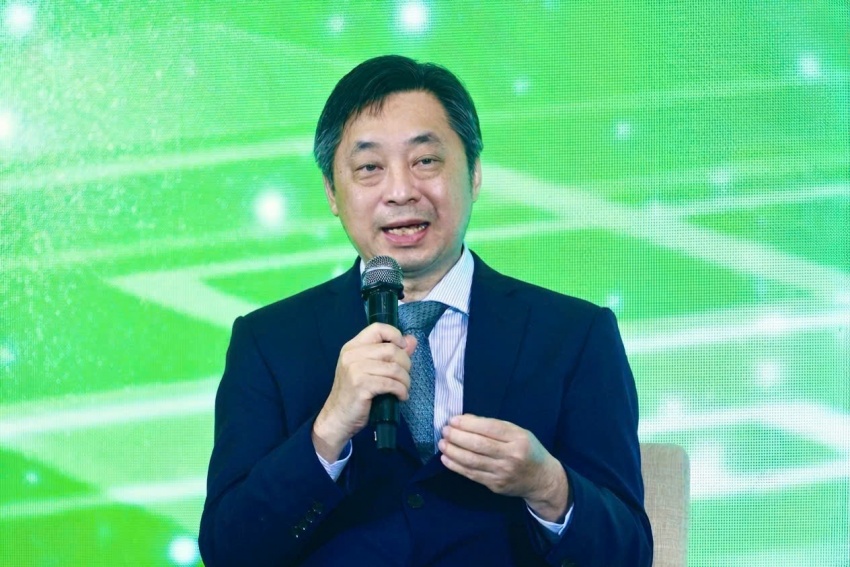 |
| Trinh Hoai Giang, CEO of Ho Chi Minh City Securities Corporation. Photo: Chi Cuong |
Although exchange-traded funds and other new products have been introduced, Giang believes innovation remains insufficient to materially deepen market liquidity. Following Vietnam's market upgrade, international investors are paying increasing attention to derivatives, where, as he put it, flow attracts flow.
"A well-developed derivatives market liquidity and also strengthens the resilience of the underlying cash market during periods of volatility," he said. Rather than launching too many products simultaneously, policymakers should focus on building liquidity around a small number of flagship products, including gold, US dollar and commodity futures.
For Nguyen Duy Linh, CEO of Saigon-Hanoi Securities, however, liquidity is ultimately a consequence rather than the starting point.
"When confidence returns, capital will naturally follow, and liquidity will recover," he said. "I see liquidity as the market's thermometer, reflecting both investor confidence and the broader market cycle."
 |
| Nguyen Duy Linh, CEO of Saigon-Hanoi Securities. Photo: Chi Cuong |
Linh noted that although international investors remain optimistic about Vietnam's long-term growth story, their investment priorities are shifting rapidly.
“Instead of traditional sectors such as real estate and financial services, global institutions are increasingly seeking opportunities in green energy, innovation and industries aligned with Vietnam's next growth drivers. Yet Vietnam's listed market has not evolved at the same pace,” he added.
He also stressed the importance of expanding the institutional investor base, suggesting measurable targets to increase institutional trading activity from around 5-10 per cent currently to 15-20 per cent over time.
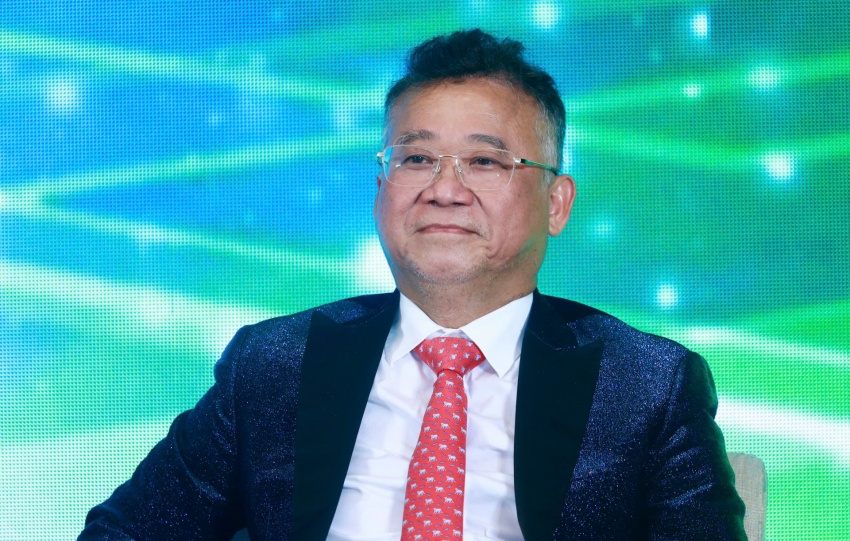 |
| Dang Thanh Tam, chairman of Kinh Bac City Development Holding Corporation. Photo: Chi Cuong |
Dang Thanh Tam, chairman of Kinh Bac City Development Holding Corporation, argued that the ultimate success of capital market reform would depend on the quality of businesses rather than financial engineering alone.
"The quality of assets in the capital market ultimately determines its ability to pull in long-term capital," Tam said. "Listed companies must strengthen corporate governance, improve operational efficiency and create genuine economic value. Investor confidence is built through sound policies as well as transparent, high-quality businesses."
He added that Vietnam is entering a new phase of foreign direct investment, where technology transfer, innovation, green growth and domestic supply-chain development matter far more than investment volume alone.
"Improving localisation rates, strengthening supporting industries and building stronger domestic supply chains will allow Vietnam to capture greater value from future FDI," Tam said.
 | Expansion of capital channels being urged There are calls for Vietnam to develop a more diverse financial ecosystem capable of supporting businesses at every stage of development, particularly private and innovative companies. |
What the stars mean:
★ Poor ★ ★ Promising ★★★ Good ★★★★ Very good ★★★★★ Exceptional
 Tag:
Tag:
Related Contents




Latest News


More News
- Banks face three-way test as AI reshapes digital finance (October 22, 2026 | 16:21)
- Techcombank posts strongest quarter on record (October 22, 2026 | 12:10)
- Digital asset exchange awaits completion of operational requirements (October 21, 2026 | 14:57)
- TPBank secures $50 million from DEG for green and SME lending (October 21, 2026 | 14:43)
- Citi set for record year across ASEAN Investment Banking (October 19, 2026 | 17:49)
- Vietnam and Switzerland to deepen financial cooperation (October 19, 2026 | 13:24)
- Carbon finance hinges on viable ventures (October 19, 2026 | 09:59)
- AI to transform the future of finance (October 19, 2026 | 09:04)
- Government proposes relaxing IPO conditions (October 19, 2026 | 08:00)
- Citi warns of intensifying competition for capital amid higher rates (October 16, 2026 | 16:54)



Latest News





 Mobile Version