

Customs Law amendments to strengthen digital integration

One provision in the draft is the improvement of coordination mechanisms between Customs authorities and the Public Security forces in information sharing, as well as handling smuggling and fraud.
 |
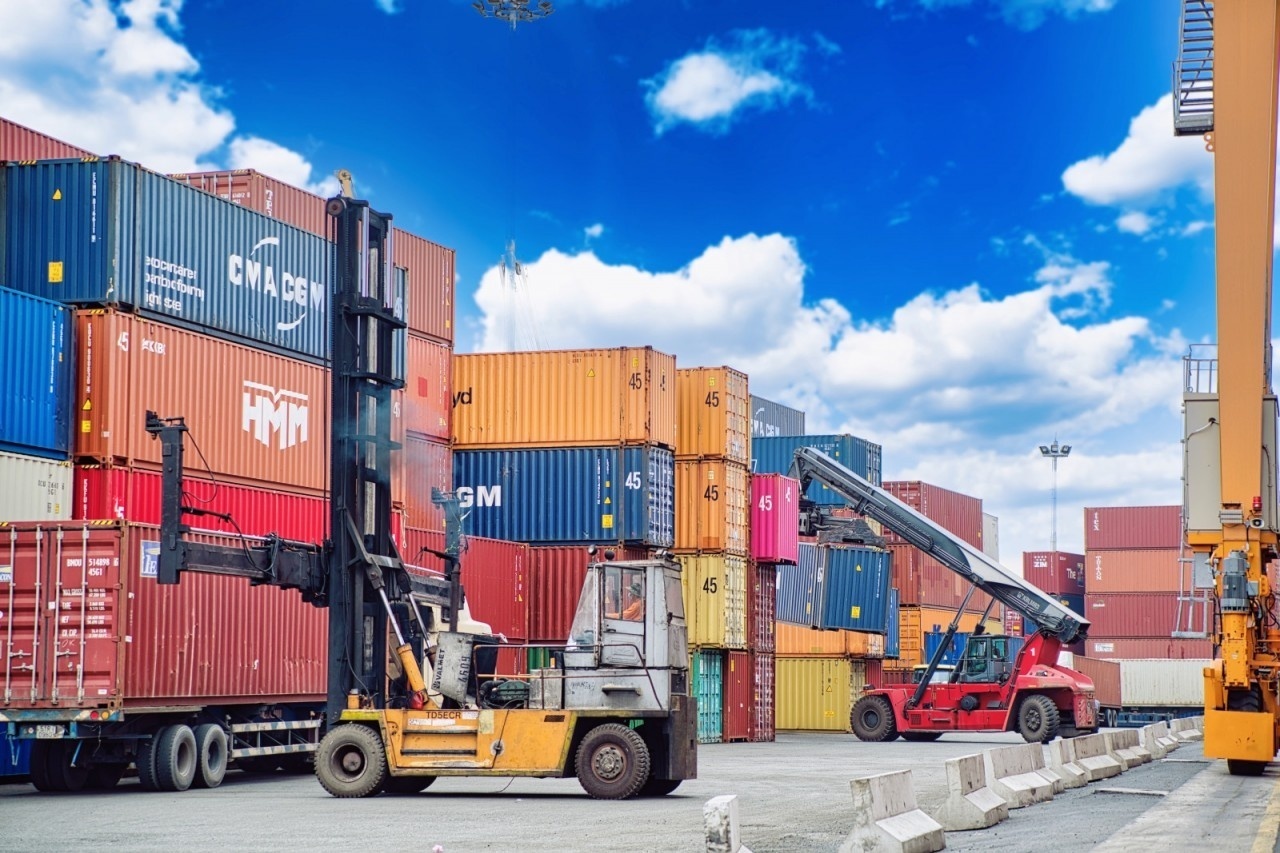
| Customs officers provide guidance and support to businesses in carrying out customs procedures |
The Ministry of Public Security said that coordination mechanisms and responsibilities among competent authorities should be clarified to improve the effectiveness of detecting, and addressing violations in import-export activities.
The draft also proposes refinement of regulations on risk management, customs inspection, and supervision of high-risk categories of goods.
According to the consultation, such measures are necessary amid increasingly complex international trade and the emergence of new business models.
One of the issues attracting particular attention is the integration of Customs information systems with the operational databases of the Ministry of Public Security.
The draft seeks to strengthen the responsibilities of customs declarants in the e-environment. It stipulates that an individual's authorisation of another person to carry out customs declarations must be conducted through the electronic authorisation system integrated into the National Public Service Portal.
The Ministry of Public Security has proposed provisions on the legal liability of tax and customs declarants for the accuracy of information contained in customs declarations and submitted supporting documents.
A major component of the draft is the establishment of an appropriate management framework for cross-border e-commerce.
According to the government Inspectorate, a key characteristic of e-commerce is the massive volume of orders, while the value of each order is generally small.
As a result, oversight mechanisms should rely on data-driven control rather than primarily on manual inspections.
Based on this, there have been proposals to include provisions for the development of a dedicated customs information portal directly connected to both domestic and international e-commerce platforms, while also being integrated with the national electronic identification system.
Codifying technical data-sharing mechanisms would enable regulatory authorities to shift towards automated data control, prevent the practice of splitting orders to evade taxes, and at the same time avoid disruptions to supply chains.
Representatives of the Vietnam Logistics Business Association said that administrative reforms in the customs sector had delivered positive results in recent years, particularly in relation to electronic procedures.
However, the draft law should continue to refine provisions concerning decentralisation and delegation of authority, specialised inspections, the handling of backlogged goods, the national single-window mechanism, and the application of technology in customs.
According to Deputy Minister of Justice Dang Hoang Oanh, several provisions in the draft require review to ensure consistency with sector-specific legislation.
Among them is the provision identifying e-commerce platform operators as customs declarants. Under the E-Commerce Law, platform operators are not automatically considered transaction parties or legal representatives of sellers in all circumstances.
“In addition, the provision requiring both buyers and sellers engaged in cross-border trade to verify their electronic identities should further clarify the scope, level of verification, and mechanisms for protecting personal data,” she noted.
The appraisal agency recommended that the law should only regulate matters falling under the authority of the National Assembly, while procedural and implementation-related issues should be assigned to the government for detailed regulation to maintain flexibility.
 | Data-driven risk management signals major shift in customs administration The Ministry of Finance has introduced a new circular transforming customs management through digital data-based risk assessment, easing border procedures while strengthening compliance and post-clearance oversight for import-export businesses. |
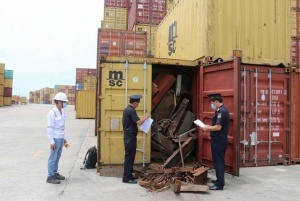 | Vietnam moves to repeal inter-agency scrap import regulation Vietnam’s Ministry of Finance is proposing to repeal a key inter-agency scrap import regulation as environmental rules mature, and the government pushes to simplify overlapping administrative procedures. |
 | Vietnam Customs accelerates AI and digital transformation Vietnam’s Minister of Finance Ngo Van Tuan has assigned two key priorities to the customs sector: completing the institutional framework and accelerating the deployment of digital customs, as the country faces mounting customs clearance pressure alongside increasingly complex cargo control requirements. |
What the stars mean:
★ Poor ★ ★ Promising ★★★ Good ★★★★ Very good ★★★★★ Exceptional
 Tag:
Tag:
Related Contents









Latest News





More News
- From loans to women’s economic empowerment (October 06, 2026 | 17:58)
- VIB named Outstanding Retail Bank 2026, targets transaction banking (October 06, 2026 | 10:52)
- FTSE upgrade paves way for stronger stock market development (October 05, 2026 | 18:44)
- coLoan to empower women through inclusive green finance (October 05, 2026 | 18:42)
- Techcombank CEO: AI no longer a tool but a new operating foundation (October 05, 2026 | 18:11)
- Banks sustain profit growth as funding costs squeeze margins (October 02, 2026 | 22:22)
- Nam A Bank delivers strong breakthrough in 2026 (October 02, 2026 | 19:00)
- Policy credit builds sustainable livelihoods from the grassroots (September 29, 2026 | 07:48)
- VIB deploys Front Arena treasury and foreign exchange trading system on AWS (September 28, 2026 | 16:46)
- Nam A Bank receives $60 million loan from FMO (September 28, 2026 | 12:37)


Latest News






 Mobile Version