

From policy intent to decisive action

 |
| Bui Anh Tuan |
For many years, Vietnam’s private business community has consistently called for substantive improvements in the business environment: clearer institutions, simpler procedures, lower compliance costs and, above all, stronger confidence.
In 2025, these expectations began to translate into concrete reality. What sets this period apart is not only the correctness of policy direction, but the speed, scale and coherence with which major decisions have been implemented across the entire political system.
Following the issuance of Resolution No.68-NQ/TW on private sector development, an unprecedented policy mobilisation was triggered. Within just over 60 days, the National Assembly (NA), the government, and line ministries moved in concert, issuing a series of resolutions and action plans with a shared focus: removing long-standing issues, unlocking resources and restoring confidence for the private sector as a key driver of the economy.
For the business community, the true value of a major policy lies not only in its strategic vision, but in how quickly and effectively it is translated into concrete, actionable measures. Following the issuance of Resolution 68, an unprecedented wave of coordinated and decisive policy action was swiftly set in motion across the entire political system.
Within a short period, Resolution No.198/2025/QH15 on special policies for private sector development was adopted, while the government issued detailed action plans with clear task allocation, defined timelines and strong accountability requirements. Notably, more than 60 per cent of assigned tasks were scheduled for completion within 2025, underscoring a strong commitment to early action and practical implementation.
Further translating this commitment into practice, in January, the government approved Decree No.20/2026/ND-CP, guiding Resolution 198. The decree focuses on policy areas with direct and immediate impact on business operations, including support for access to land and production premises; tax incentives; assistance for science, technology and innovation; and the provision of free training services to enhance managerial capacity and workforce quality in the private sector.
The timely issuance of a comprehensive implementing framework has significantly narrowed the gap between policy intent and real-world execution, enabling enterprises to access support measures in a clear, consistent and practical manner.
This progress reflects strong political resolve to bring resolutions into real life, while creating renewed momentum for the private sector to grow with confidence and sustainability.
Institutional reform
A central message of Resolution 68 is the creation of a transparent, stable and predictable business environment. For enterprises, these qualities are essential prerequisites for long-term investment, expansion and integration into domestic and global value chains.
Throughout 2025, a series of important laws and decrees were adopted or amended with a clear reform orientation: simplifying procedures, expanding decentralisation and strengthening accountability among implementing agencies. The acceleration of decentralisation, accompanied by clearer oversight mechanisms, has created greater flexibility for local governments to support businesses, shorten processing times and address practical obstacles more effectively.
Particular attention has been given to policies facilitating access to land and production premises in industrial parks and technology incubators; tax incentives; and support for research and development, innovation and digital transformation. These areas directly affect input costs, competitiveness and the long-term growth capacity of private enterprises.
In tax administration, reforms targeting household businesses represent a structural shift towards greater transparency and modern management. The planned abolition of the lump-sum tax regime from 2026 is not only aimed at improving state management, but also at creating conditions for millions of household businesses to transition confidently into formal enterprises and participate more fully in the organised economy.
In parallel, financial support programmes, green and circular economy initiatives, capacity-building schemes for corporate governance and executive training are being designed with greater precision. The objective is not merely to help businesses survive, but to enable them to grow sustainably in an increasingly competitive environment.
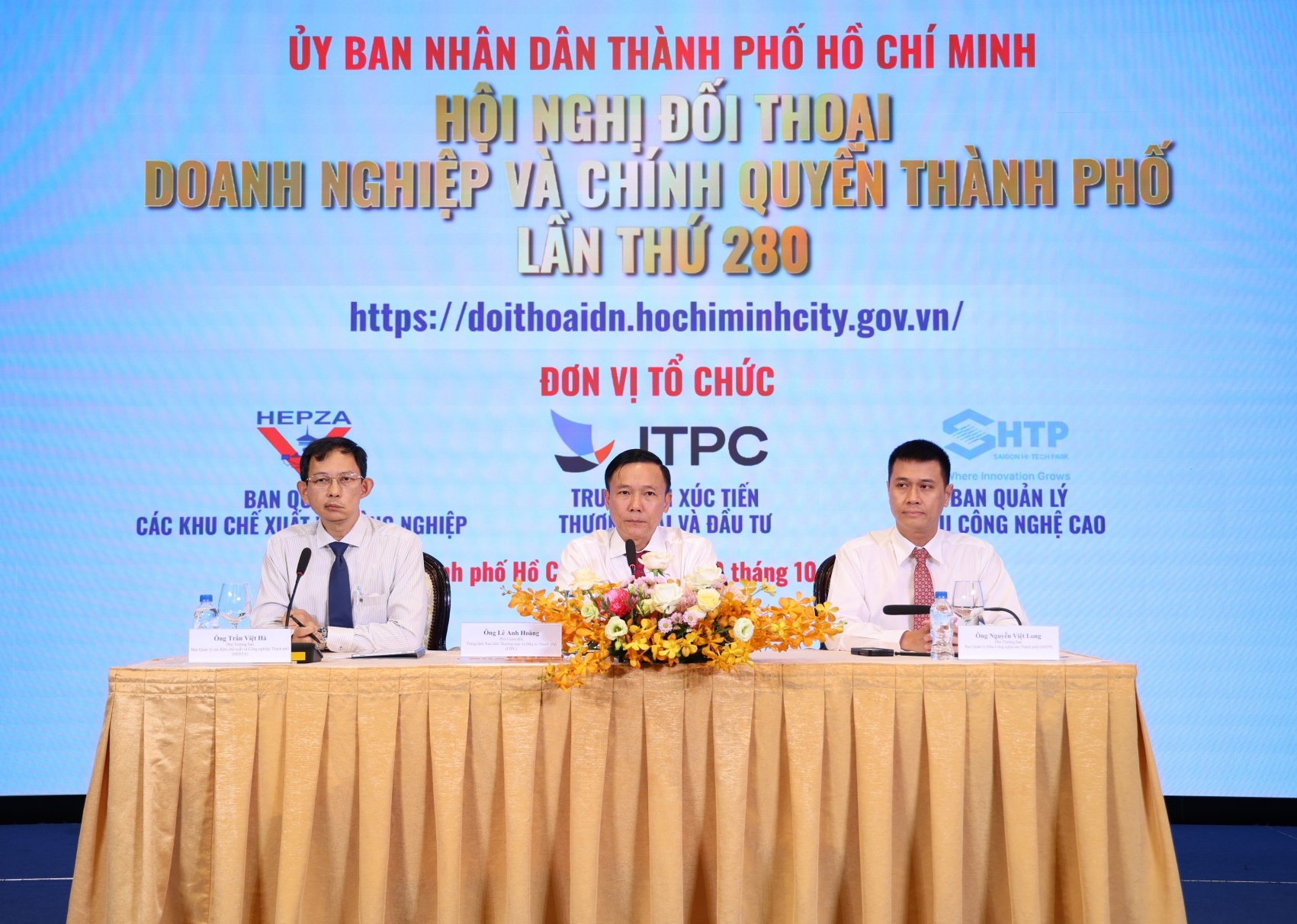
One of the most notable features of Resolution 68’s implementation is the emphasis on communication, dialogue and partnership with the business community. National conferences, thematic forums and policy dialogues have been organised at scale, with direct participation from senior leaders, creating open channels for businesses to voice concerns and receive timely responses.
Beyond government agencies, socio-political organisations, business associations and media institutions have played an active role in bringing the resolution closer to enterprises. From specialised TV programmes and private sector forums to initiatives supporting small and medium-sized enterprises, startups, green transition and digital transformation, the spirit of Resolution 68 is increasingly embedded in economic life.
Importantly, the business community itself has responded with proactive initiatives, reflecting a growing sense of ownership and responsibility. Programmes that mentor new entrepreneurs, encourage the transformation of household businesses into enterprises and strengthen business linkages illustrate that businesses are not only policy beneficiaries, but also active contributors to a healthier and more resilient business ecosystem.
Renewed confidence
Early indicators in 2025 revealed the tangible impact of Resolution 68 on business trust and activities. The number of newly established enterprises rose sharply, average registered capital increased, and, most notably, existing enterprises expanded their investment at an accelerated pace.
This trend is particularly significant, as operating enterprises base their decisions on real market experience. Their willingness to scale up investment signals renewed confidence in policy direction, market prospects and institutional stability. Such confidence is a critical leading indicator for medium- and long-term economic performance.
Never before has Vietnam’s private sector faced such a convergence of opportunity, as a series of landmark resolutions collectively address innovation, international integration, legal reform, human capital development and growth quality. Together, they form a coherent strategic framework that places private enterprises at the heart of national development.
Resolution 68 marks a turning point in mindset and practice regarding private sector development. Its rapid and coordinated implementation, from central to local levels and from public institutions to business communities, reflects strong political will and an increasingly pragmatic approach to economic governance.
As institutions are streamlined, resources mobilised and confidence restored, the private sector is well positioned to accelerate growth, drive innovation and enhance national competitiveness. This momentum is essential not only for achieving development targets by 2030, but also for realising Vietnam’s long-term vision of becoming a high-income, developed nation by 2045.
From resolution to action, and from action to impact, the pathway for private sector development in this country is clearer than ever. On this journey, enterprises are not merely participants, but the central force shaping the future of Vietnam’s economy.
What the stars mean:
★ Poor ★ ★ Promising ★★★ Good ★★★★ Very good ★★★★★ Exceptional
 Tag:
Tag:Related Contents



Latest News





More News
- Significant steps made in related-party transactions (August 21, 2026 | 15:51)
- New challenges for workforce data and HR policy management with PIT changes (August 17, 2026 | 10:32)
- Leading in AI: from pilot initiatives to enterprise value (August 10, 2026 | 07:00)
- Programme launched to develop new Vietnamese business leaders (July 28, 2026 | 13:50)
- Vietnam must build talent and innovation to attract quality investment (July 09, 2026 | 08:00)
- AI-ready workforce key to Vietnam's next decade, analysts say (July 01, 2026 | 15:55)
- VIFC shouldn't try to be Dubai, says VinaCapital chief economist (June 24, 2026 | 14:17)
- Highly skilled workforce and fiscal incentives key to driving high-tech growth (June 17, 2026 | 16:17)
- KPMG and Anthropic to redefine client services with artificial intelligence tie-up (May 25, 2026 | 08:00)
- FDI a crucial component to double-digit growth (May 15, 2026 | 11:38)


Latest News





 Mobile Version