

Cooling crude oil prices temper Vietnam's oil and gas stock rally

On June 18, the United States and Iran announced that they had signed an MoU aimed at ending the conflict. The 14-point memorandum marked the beginning of a 60-day negotiation period, during which Iran agreed to allow the free passage of vessels through the Strait of Hormuz, one of the world’s most critical oil and gas shipping routes.
The oil market reacted immediately to the announcement, sending crude prices sharply lower. Brent crude oil futures fell 1.1 per cent to $78.70 per barrel, while US West Texas Intermediate crude oil declined 1.3 per cent to $75.80 per barrel.
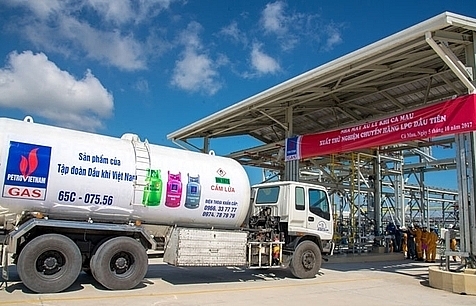
The development has not only affected international oil markets but has also had a direct impact on Vietnamese oil and gas stocks, one of the sectors most sensitive to fluctuations in crude prices.
 |
| Oil and gas stocks are losing part of the growth momentum due to geopolitical tensions |
For oil and gas companies, oil prices remain a key variable influencing investment activity, exploration, production and profitability. As a result, declining oil prices often trigger mixed reactions across the industry.
In the short term, oil price movements will continue to play a decisive role in determining the direction of oil and gas stocks. As the sector’s rally loses momentum, many industry stocks have recorded notable corrections.
For example, shares of PVB, operated by PV Coating JSC, declined from their peak of $1.68 per share established in March 2026 to $1.03 per share on June 18, representing a drop of 38.5 per cent.
Over the past month, shares of PVD, owned by PetroVietnam Drilling and Well Services Corporation (PV Drilling), have fallen more than 15.5 per cent.
Shares of PVT, operated by PetroVietnam Transportation Corporation (PVTrans), declined 14.23 per cent, while BSR, owned by Binh Son Refining and Petrochemical JSC, lost more than 21 per cent. Compared with its peak of $1.51 per share on March 4, BSR was trading at $1.07 per share on June 18, equivalent to a decline of more than 29.4 per cent.
In Vietnam, the companies most directly affected are those operating in the upstream segment and in oilfield technical services.
Businesses such as PV Drilling and PetroVietnam Technical Services Corporation (PTSC) typically benefit when oil prices remain elevated.
Under such conditions, global energy groups tend to accelerate exploration and production activities, driving demand for drilling rigs, oil and gas engineering services and offshore operations.
Conversely, when oil prices decline or the outlook for further price increases weakens, the market often becomes concerned that new investment plans will be reviewed more cautiously. This tends to place profit-taking pressure on oilfield service stocks following periods of strong gains.
PTSC maintained positive growth momentum during the first five months of 2026 as a number of oil and gas and renewable energy projects entered their peak implementation phase.
The company reported consolidated revenue of $540.6 million, fulfilling 41 per cent of its annual target and up 34 per cent on-year. Net profit after tax reached $22.5 million, equivalent to 57 per cent of the full-year target and up 11 per cent from the same period last year.
According to Kafi Securities, PTSC’s total revenue for 2026-2030 is projected to reach between $8.4 billion and $8.8 billion, representing a compound annual growth rate of approximately 15 per cent.
For midstream operators, including oil and gas transportation companies such as PetroVietnam Transportation Corporation (PVTrans), the impact is generally viewed as more neutral. During periods of geopolitical tension, oil freight rates typically rise as marine insurance costs increase.
As conflict risks subside, this advantage may diminish considerably. On the positive side, however, global oil transportation volumes could increase if Iranian supply returns to the market. This would help offset part of the impact from easing freight rates.
Analysts at Saigon- Hanoi Securities JSC expect PVTrans’s profit margins to improve in 2026.
The company is entering a harvesting phase following an aggressive fleet expansion cycle during 2023-2025. The addition of numerous new vessels has driven rapid growth in revenue and earnings before interest, taxes, depreciation, and amortisation, while depreciation pressure has gradually eased since the second half of 2025 as several large vessels completed their accelerated depreciation schedules.
In the downstream segment, represented by Binh Son Refining and Petrochemical JSC, the impact of oil prices is often more complex. Lower oil prices help reduce feedstock costs and fuel consumption demand.
However, business performance also depends on movements in the crack spread, the margin between crude oil prices and refined petroleum product prices.
As a result, a decline in oil prices does not necessarily translate into a corresponding increase in profitability.
If the agreement between the United States and Iran is maintained over the long term, the cooling trend in oil prices could continue in the coming months. This would mean that oil and gas stocks are likely to lose part of the growth momentum previously supported by geopolitical factors.
Nevertheless, over the longer term, the positive business outlook of many oil and gas companies could still create noteworthy investment opportunities.
 | Shares rise on large-caps and oil stocks The Vietnamese markets started the week on a positive note on Monday morning thanks to the performance of large-cap stocks and oil stocks. |
 | Shares go up thanks to oil stocks Vietnamese shares increased on Friday morning, aided by energy and petroleum stocks. |
 | Local oil stocks rebound as OPEC cuts output As soon as the OPEC members have started cutting the output, the global oil price has steadily upgraded, leveraging up the local oil stocks these days. |
What the stars mean:
★ Poor ★ ★ Promising ★★★ Good ★★★★ Very good ★★★★★ Exceptional
 Tag:
Tag:
Related Contents










Latest News





More News
- From loans to women’s economic empowerment (October 06, 2026 | 17:58)
- VIB named Outstanding Retail Bank 2026, targets transaction banking (October 06, 2026 | 10:52)
- FTSE upgrade paves way for stronger stock market development (October 05, 2026 | 18:44)
- coLoan to empower women through inclusive green finance (October 05, 2026 | 18:42)
- Techcombank CEO: AI no longer a tool but a new operating foundation (October 05, 2026 | 18:11)
- Banks sustain profit growth as funding costs squeeze margins (October 02, 2026 | 22:22)
- Nam A Bank delivers strong breakthrough in 2026 (October 02, 2026 | 19:00)
- Policy credit builds sustainable livelihoods from the grassroots (September 29, 2026 | 07:48)
- VIB deploys Front Arena treasury and foreign exchange trading system on AWS (September 28, 2026 | 16:46)
- Nam A Bank receives $60 million loan from FMO (September 28, 2026 | 12:37)


Latest News







 Mobile Version