

Deposit rate hikes expected to continue as banks compete for liquidity

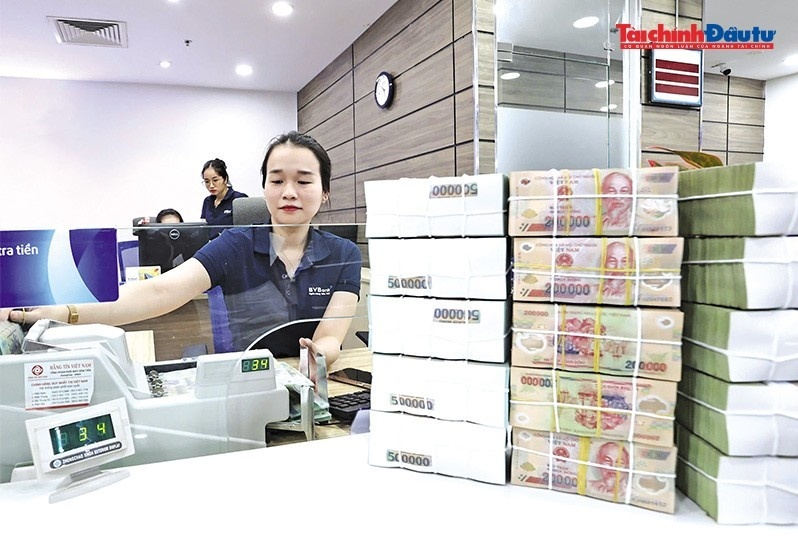
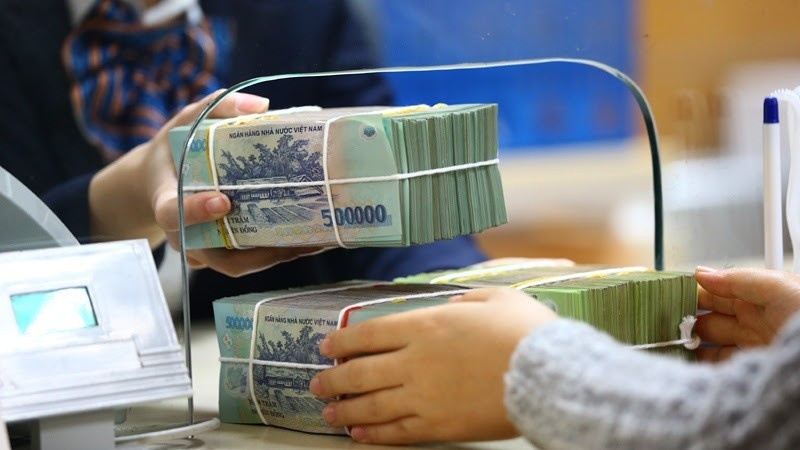
Analysts forecast that the upward trend in deposit rates will persist in 2026, particularly in the first half of the year, as the interest rate level is expected to be repositioned about 0.5-1 percentage point higher than at the end of 2025.
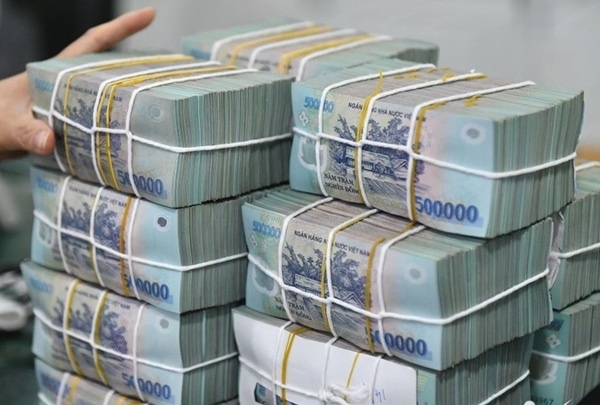 |
| Rising deposit rates are expected. |
This move is primarily aimed at improving deposit growth, narrowing the gap between deposit and credit growth, thereby strengthening the liquidity foundation and supporting stable development of local banking system.
Currently, the highest deposit rate for the six-month term is commonly around 7.1 per cent, per year. For the 12-month term, the highest rate stands at about 7.2 per cent, per year. Some banks have even raised rates to 8-8.1 per cent, per year for customers depositing at least VND1 billion (about $40,000) for six months.
Liquidity pressure within the banking system is expected to persist in the early months of the year due to several key factors.
First, the gap between credit growth and deposit mobilisation in 2025 remained relatively high, estimated at 4 per cent by the end of the year. Although disbursement pressure at the start of the year is usually not significant and higher interest rates may help pull in deposits, this gap is likely to remain elevated in the first half of the year.
Second, the loan-to-deposit ratio of many banks has approached the regulatory ceiling of 85 per cent set by the State Bank of Vietnam, increasing the need to boost deposit mobilisation to mitigate liquidity risks.
At the same time, the capital structure still carries maturity risks. About 80 per cent of mobilised funds are short-term, while nearly half of outstanding loans are medium- and long-term, creating pressure to comply with regulations on the ratio of short-term funds used for medium- and long-term lending.
Third, demand for cash among households and businesses typically rises sharply during the Lunar New Year period. In addition, surging gold prices ahead of tensions in the Middle East have encouraged capital outflows from the banking system. Exchange rate pressures are also contributing to higher interest rates.
Moreover, interest rates in the interbank market are expected to remain at medium to medium-high levels to maintain a positive spread between VND and USD rates, thereby supporting exchange rate stability.
According to the Vietnam Corporate Credit Conditions 2026 report by FiinRatings, deposit interest rates in Vietnam are forecast to rise by around 0.5-1 percentage points in 2026.
The increase stems not only from the gap between credit and deposit growth but also from the complete exclusion of State Treasury deposits from the calculation of the loan-to-deposit ratio starting in January, under Circular 26/2022 issued by the State Bank of Vietnam.
This change forces banks to compete more aggressively for deposits from households and businesses.
As funding costs increase, lending rates are unlikely to remain unchanged. Notably, housing loan interest rates have surged sharply since late 2025.
From the end of February 2026, many banks raised housing loan interest rates by around 1-2 percentage points compared with the end of 2025.
Fixed rates during the first 12 months are commonly at 8-10 per cent, per year, while floating rates after the promotion period may reach 12-15 per cent. The rising financial burden has forced many prospective homebuyers to reconsider their plans.
Among the state-owned banks, Agribank currently has the highest average lending rate at 7.34 per cent, per year, up 1.18 percentage points from the previous month. The average lending rates at BIDV and Vietcombank stand at 5.75 per cent and 6.1 per cent, per year, respectively, up 1.32 and 1.5 percentage points.
Within the private lenders, BVBank reports an average lending rate of 9.61 per cent, per year. Other banks such as Bac A Bank, OCB, Sacombank and TPBank have maintained average lending rates above 9 per cent, per year.
According to Pham Thanh Ha, Deputy Governor of the State Bank of Vietnam (SBV), market interest rates are currently broadly stable based on supply and demand, while new lending rates have shown a downward trend compared to last year.
However, the central bank leadership noted that the global environment remains complex and unpredictable. As a highly open economy, Vietnam is directly affected by global fluctuations.
In the upcoming period, the SBV will continue to closely monitor both domestic and international developments to flexibly manage monetary policy, while coordinating closely with fiscal policy and other macroeconomic policies, maintaining a firm priority on inflation control and macroeconomic stability.
Specifically, the central bank will manage interest rates in line with market developments, macroeconomic conditions and monetary policy objectives. At the same time, credit to potentially risky sectors will be strictly controlled.
The State Bank of Vietnam will also continue to require credit institutions to strictly disclose lending rates, simplify credit approval procedures, and accelerate digital transformation in lending processes, thereby facilitating access to bank financing for both households and businesses.
According to the SBV, credit growth has remained positive. As of February 26, total outstanding credit approximated $754.4 billion, up 1.4 per cent compared to the end of last year and nearly 20.2 per cent on-year.
 | Lending rates maintaining stability through year-end Lending rates have remained relatively stable, but room for further cuts appears limited amid persistent exchange rate and inflation pressures. |
 | Banks raise deposit rates as year-end lending heats up Banks are lifting deposit rates to secure year-end funding as credit demand accelerates and liquidity pressures rise, signalling a renewed upward cycle in savings costs. |
 | Banks raise deposit rates as funding pressure builds Many banks are lifting deposit rates as liquidity tightens, interbank rates surge, and the central bank increases open-market injections to stabilise funding conditions amid strong credit growth and rising capital demand. |
What the stars mean:
★ Poor ★ ★ Promising ★★★ Good ★★★★ Very good ★★★★★ Exceptional
 Tag:
Tag:
Related Contents



Latest News





More News
- coLoan to empower women through inclusive green finance (October 05, 2026 | 18:42)
- Techcombank CEO: AI no longer a tool but a new operating foundation (October 05, 2026 | 18:11)
- Banks sustain profit growth as funding costs squeeze margins (October 02, 2026 | 22:22)
- Nam A Bank delivers strong breakthrough in 2026 (October 02, 2026 | 19:00)
- Policy credit builds sustainable livelihoods from the grassroots (September 29, 2026 | 07:48)
- VIB deploys Front Arena treasury and foreign exchange trading system on AWS (September 28, 2026 | 16:46)
- Nam A Bank receives $60 million loan from FMO (September 28, 2026 | 12:37)
- Vietnam’s finance sector moves to build an AI-driven digital ecosystem (September 25, 2026 | 10:58)
- Vietnam pushes digital finance into tangible gains (September 25, 2026 | 08:17)
- Citi and HDBank sign MoU to expand banking cooperation (September 24, 2026 | 09:50)








 Mobile Version