

VIR workshop highlights capital and policy for sustainable development

Speaking at the 'Diversifying Capital Sources for Sustainable Development' conference held in Hanoi on December 15, VIR's editor-in-chief Pham Van Hoanh reconfirmed that sustainable development is a process of harmoniously balancing the three pillars of economic growth, social progress, and environmental protection, to ensure prosperity without compromising the future of coming generations.
“For Vietnam, the effective implementation of sustainable development is an urgent requirement, not just to achieve long-term growth objectives but also to respond to increasingly severe challenges such as climate change, natural disasters, and environmental pollution,” said Hoanh.
VIR’s editor-in-chief noted that in recent years, Vietnam has demonstrated a strong commitment to sustainable development through a series of international pledges and domestic policy initiatives. These range from commitments made at COP conferences on achieving net-zero emissions, reducing methane emissions, and ending deforestation, to the issuance of Resolution No. 136/NQ-CP on sustainable development, the National Climate Change Strategy to 2050, the National Green Growth Strategy for 2021-2030 with a vision to 2050, along with multiple schemes related to energy transition and the circular economy.
In particular, Decision No. 21/2025/QD-TTg, issued in July this year on the criteria and procedures for certifying green initiatives, was described as a significant turning point.
“With this decision, Vietnam has, for the first time, established a national green taxonomy, providing a foundation for eligible projects to access preferential credit and state support, thereby guiding investment flows towards sustainability and expanding the space for the green finance market,” he added.
However, according to the Hoanh, the most pressing challenge remains capital mobilisation.
“To successfully implement sustainable development goals, Vietnam requires a considerable volume of capital, far beyond the capacity of the state budget and the banking system alone, without the concerted participation of other capital channels,” he said.
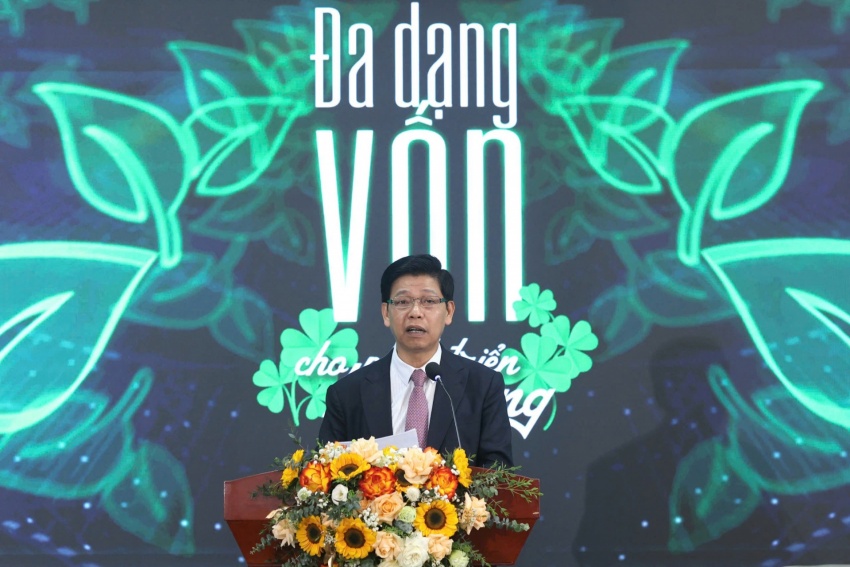 |
| VIR's editor-in-chief Pham Van Hoanh. Photo: Dung Minh |
Hoanh noted that, in practice, over the past five years, under the government’s direction and with the active involvement of the banking sector, capital mobilisation for sustainable development has made notable progress. International partners have committed to mobilising $15.5 billion to support Vietnam’s net-zero target, while financial institutions such as the World Bank and the Asian Development Bank have provided approximately $3.8 billion for renewable energy and green infrastructure projects during the 2020-2024 period.
At the same time, by the end of 2024, Vietnam had attracted nearly $32 billion in foreign direct investment related to renewable energy, the circular economy, and emissions-reduction technologies.
According to the State Bank of Vietnam’s (SBV) Green Credit Report 2025, outstanding green credit across the entire banking system is estimated to reach around $34 billion by the end of 2025, accounting for nearly 6 per cent of total outstanding credit, with commercial banks playing a leading role.
“Nevertheless, compared to the estimated demand of around $20 billion per year for the green transition, current resources remain modest. This requires Vietnam to further and more strongly diversify its capital sources, develop additional appropriate green financial instruments, and continue improving the legal framework in line with international standards to ensure capital is allocated to the right targets and used effectively,” said Hoanh.
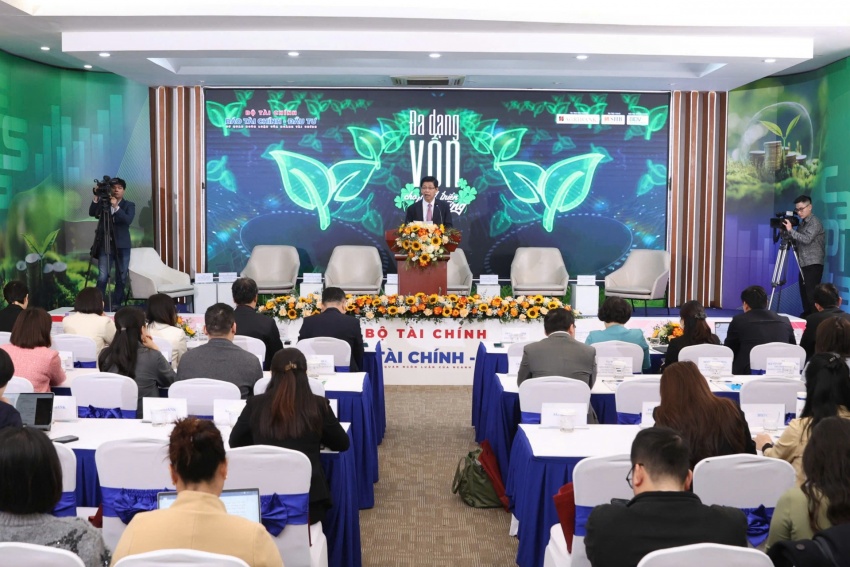 |
Hoanh also highlighted the pivotal role of businesses in this process.
“Companies need to shift their governance mindset, viewing information transparency and long-term commitments as key assets to secure sustainable capital at reasonable costs. Adopting international reporting standards and investing in digital infrastructure to track emissions will increasingly become mandatory,” he said.
As the organiser of the seminar, the VIR Editorial Board expressed hope that the event would serve as an effective platform connecting regulators, economic experts, financial institutions, and the business community, helping to clarify the role of each capital channel in promoting sustainable development.
“Drawing on our years of work in sustainable development and the dual transition, we believe that policy dialogue, experience sharing, and resource connectivity are crucial for Vietnam to achieve its green growth goals,” Hoanh concluded, expressing gratitude to the State Bank of Vietnam, Deputy Governor Nguyen Ngoc Canh, and partner banks including Agribank, SHB, and BIDV for supporting the conference.
 | Four Vietnamese banks join $5.6 trillion green finance alliance Four Vietnamese banks have joined the Alliance for Green Commercial Banks, signalling a major step in advancing sustainable finance in the country. |
 | AgriS, DEG strengthen partnership for sustainable agriculture Thanh Thanh Cong – Bien Hoa JSC (AgriS) has strengthened its partnership with Germany’s DEG to advance sustainable, high-tech agriculture in Vietnam. |
 | Sustainability efforts on right track through policy and tech Vietnam’s sustainable development landscape is evolving faster than ever as the government is accelerating the push to green growth through a range of policies, while companies are incorporating technology into strategies to fast-track their progress. |
What the stars mean:
★ Poor ★ ★ Promising ★★★ Good ★★★★ Very good ★★★★★ Exceptional
 Tag:
Tag:Related Contents




Latest News




More News
- From loans to women’s economic empowerment (October 06, 2026 | 17:58)
- VIB named Outstanding Retail Bank 2026, targets transaction banking (October 06, 2026 | 10:52)
- FTSE upgrade paves way for stronger stock market development (October 05, 2026 | 18:44)
- coLoan to empower women through inclusive green finance (October 05, 2026 | 18:42)
- Techcombank CEO: AI no longer a tool but a new operating foundation (October 05, 2026 | 18:11)
- Banks sustain profit growth as funding costs squeeze margins (October 02, 2026 | 22:22)
- Nam A Bank delivers strong breakthrough in 2026 (October 02, 2026 | 19:00)
- Policy credit builds sustainable livelihoods from the grassroots (September 29, 2026 | 07:48)
- VIB deploys Front Arena treasury and foreign exchange trading system on AWS (September 28, 2026 | 16:46)
- Nam A Bank receives $60 million loan from FMO (September 28, 2026 | 12:37)


Latest News





 Mobile Version