
Vietnam electronics sector flounders


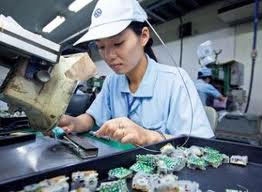 |
| illustration photo |
According to the General Statistics Office, the import turnover for electronic products, computers and spare parts reached $1.76 billion in the first four months, an increase of 29.7 per cent over the same period last year.
China and Malaysia accounted for $567 million and $118 million of this figure, posting respective increases of 20.6 and 9.4 per cent. Imports of electronic products from the Republic of Korea, meanwhile, tripled to $462 million.
For May alone, import turnover topped $500 million, an increase of over 20 per cent over the previous month.
Many importers attributed the import surge of the last five months to the launch of many new products for this year.
Moreover, the US dollar exchange rate had "cooled down" recently, making it easier to buy the greenback from banks, with some selling it at lower than the listed price.
Enterprises have taken full advantage of these factors to import products in large volumes. They have also been motivated to do so by the assessment of distributors that this year's electronic market will experience high growth.
Bui Tan Cuong, director of Thien Hoa Electronics and Interior Decoration Product Centre, said that domestically produced or assembled electronic products used to account for 70-80 per cent of sales at trade centres.
However, it has now fallen by almost half, he said. Imported televisions, for instance, account for 60 per cent of sales at trade centres instead of the previous 30 per cent.
Imported refrigerators, air-conditioners and washing machines now have more than 50 per cent of the domestic market share. Especially, imported household appliance products have occupied more than 80 per cent and digital items are nearly imported 100 per cent.
Electronic businesses say the import tax of electronic products are currently at 5 per cent under the Asian Free Trade Area (AFTA) framework, and will continue to decrease in the coming years. This is another factor in the "boom" of imported products, presenting a serious challenge for local businesses.
Many local electronic firms have moved out of manufacturing and assembling and shifted to import and distribution.
Sony closed its Vietnam assembly plants in 2008 and in the beginning of this year, JVC Vietnam temporarily stopped its production.
Nguyen Quang Huy, business director of Toshiba Vietnam, said the company stopped assembling LCD television sets in Vietnam last year and has begun importing the item.
Vu Duong Ngoc Duy, deputy general director of JVC Vietnam, said the tax decrease, plus Chinese products at cheap prices would apply big pressure on Vietnamese businesses and further weaken their competitiveness.
Most famous electronic firms have production factories in other Southeast Asian countries and China , and the current market situation makes it easier and more profitable to import their products than making them here.
What the stars mean:
★ Poor ★ ★ Promising ★★★ Good ★★★★ Very good ★★★★★ Exceptional
 Tag:
Tag:
Related Contents




Latest News




More News
- Foreign fruits flood Vietnamese market (December 09, 2025 | 13:22)
- Vietnam’s fruit and vegetable exports reach $7.8 billion in first 11 months (December 05, 2025 | 13:50)
- Vietnam shapes next-generation carbon market (November 26, 2025 | 15:33)
- PM urges Ho Chi Minh City to innovate and remain Vietnam’s economic locomotive (November 26, 2025 | 15:29)
- Experts chart Vietnam's digital finance path: high hopes, high stakes (November 14, 2025 | 10:56)
- Vietnam’s seafood imports surge 30 per cent in first 10 months (November 10, 2025 | 19:35)
- Vietnam’s durian exports hit $1 billion milestone (October 30, 2025 | 17:41)
- Beyond borders: Sunhouse and new era of Vietnamese brands on Amazon (October 28, 2025 | 10:46)
- Record-breaking trade fair set to open in Hanoi (October 15, 2025 | 15:59)
- Timber sector seeks solutions to VAT refunds (October 14, 2025 | 18:58)









 Mobile Version