
Vietnam boosts sustainable forestry with international certification

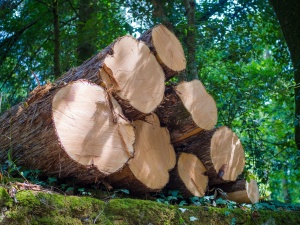
At the core of this transformation is the country’s commitment to sustainable forestry. With forests playing a vital role in carbon sequestration, biodiversity protection, and rural livelihoods, the Programme for the Endorsement of Forest Certification (PEFC) has emerged as a key tool for Vietnam’s forestry sector.
The efforts to advance sustainable forest management via international certification, which plays a key role in balancing economic growth and environmental protection, were highlighted at the PEFC Forest Forum 2025 held in Ho Chi Minh City on May 8.
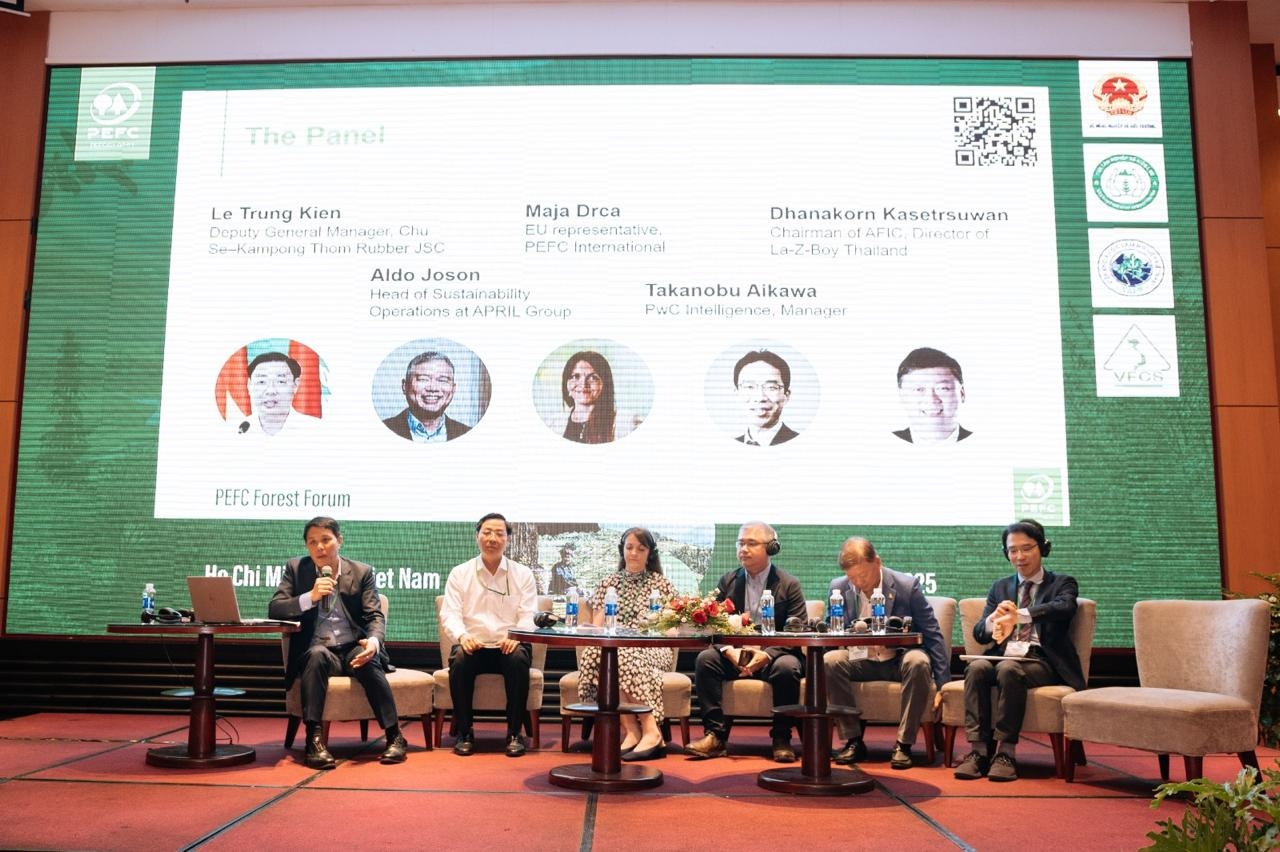 |
| Panel discussion at the PEFC Forest Forum 2025 about responsible forest management |
PEFC, one of the world’s largest forest certification systems, offers a framework ensuring that forest resources are managed responsibly, balancing ecological, social, and economic needs. Vietnam became the 50th member of PEFC in 2019, marking a significant milestone in its forestry reforms.
According to the Ministry of Agriculture and Environment, PEFC now ensures over 75 per cent traceability from source to finished products in Vietnam. The country has seen a double-digit increase in demand for PEFC-certified products, with clear evidence of reductions in illegal logging activities within certified regions.
Vietnam’s success in forest recovery is evident. National forest coverage has grown from 34 per cent in 2000 to just over 42 per cent in 2024, thanks to coordinated government action, international cooperation, and community participation.
Under the Vietnam Forestry Development Strategy 2021-2030, the country aims to reforest at least 345,000 hectares annually. Efforts are also underway to regenerate over 537,000 ha of natural forests while actively maintaining more than 2.3 million ha of plantation forests. These initiatives are gradually shifting Vietnam from forest depletion to sustainable stewardship, enabling the growth of industries reliant on healthy ecosystems.
Among those industries, the paper sector occupies a unique position at the intersection of economic development and environmental responsibility. Historically criticised for its environmental impact, the industry is increasingly embracing PEFC standards to drive sustainable transformation.
Through measures such as controlled logging, replanting initiatives, and community forestry schemes, paper producers are aligning their operations with sustainability principles. This transition not only mitigates environmental risks but also enhances long-term business viability, especially as global markets tighten environmental compliance requirements.
The PEFC Forest Forum 2025 also spotlighted the role of private enterprises in promoting sustainability, with APRIL Group drawing attention for its proactive approach.
Aldo Joson, head of sustainability operations at APRIL Group, spoke about how the company integrates financial accountability with grassroots engagement. "Our internal sustainability mechanisms have resulted in thousands of hectares of community-managed forests, increased local incomes through sustainable agroforestry, and educational programmes that foster early environmental awareness," said Joson.
He further emphasised the importance of blending conservation with business goals, saying, "Sustainability is not just a commitment but a continuous journey of learning, collaboration, and innovation."
APRIL’s initiatives reflect a broader shift within Vietnam’s forestry sector, where collaboration among government, businesses, and local communities is becoming central to sustainable development efforts.
As Vietnam continues to pursue its climate and biodiversity goals, experts believe that scaling up such models will be crucial for long-term success. The country’s experience with PEFC certification demonstrates that responsible forestry can simultaneously advance economic growth, environmental protection, and social equity.
With growing global demand for certified wood products and increasing regulatory pressures, Vietnam’s forestry sector is expected to further integrate sustainability at its core, setting an example for other countries in the region navigating similar challenges.
What the stars mean:
★ Poor ★ ★ Promising ★★★ Good ★★★★ Very good ★★★★★ Exceptional
 Tag:
Tag:Related Contents





Latest News


More News
- SolarGATES secures partnership with Hopergy to expand solar structural solutions in Vietnam (June 25, 2026 | 16:07)
- SunAsia Energy, VinEnergo launch Solar on Water portfolio in the Philippines (June 24, 2026 | 08:37)
- Asia-Pacific countries convene to advance green agricultural value chains and forest protection (June 24, 2026 | 08:33)
- Agencies and market operators join forces to advance Vietnam carbon trading platform (June 23, 2026 | 15:37)
- Vietnam and WB strengthen cooperation (June 22, 2026 | 16:53)
- Work starts on Japan–Bac Lieu wind power plant (June 22, 2026 | 16:45)
- V-Green, EVNHANOI to install 10,000 EV battery swapping cabinets in Hanoi (June 20, 2026 | 15:00)
- Skellefteå: epicentre of an extraordinary societal transformation (June 19, 2026 | 12:30)
- Novonesis and Nha Xanh Vietnam partner to strengthen Vietnam's biofuel production (June 18, 2026 | 15:48)
- Vietnam lays groundwork for carbon market development (June 17, 2026 | 16:26)







 Mobile Version