

Rising supply chain demands tackled amid global headwinds

In response to the headwinds, the business community is trending towards restructuring its supply chain. Specifically, Japanese businesses in Vietnam are now looking to increase the local procurement rate so that they decrease the import of spare parts from outside into the country.
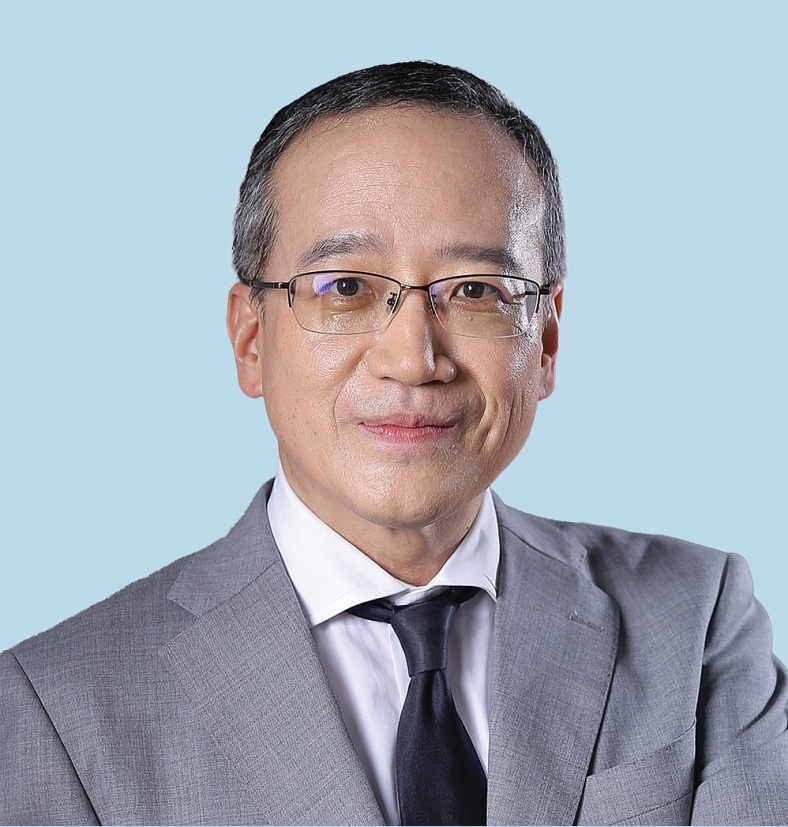 |
| Ozasa Haruhiko, chief representative in Hanoi Japan External Trade Organization |
This interest has been shown in recent surveys from the Japan External Trade Organization in Hanoi, and is now growing amid the global challenges and certainties. In the latest survey, 50.9 per cent of Japanese companies said that they want to increase the local procurement rate. This percentage rose by 7.7 per cent compared to the same period last year, and is the highest among Asian nations.
At present, the local procurement rate among Japanese companies in Vietnam is 36.6 per cent. This rate includes the number of Vietnamese-owned suppliers and and foreign capital suppliers in the country. If we exclude the number of foreign suppliers, the rate is just 15.7 per cent.
The supply chain is one among the key pillars in Vietnam and Japan’s strategic relations. The more we strengthen the supply chain, the enhanced ties we have. Compared to Thailand and China, the proportion is low. When Japanese firms can expand their supply chain network in Vietnam, they will benefit much more. Also, Vietnamese companies when joining deeper in the Japanese supply chain can enjoy opportunities to become global suppliers.
Vietnam is a market with much potential. The country is also a manufacturing hub for exports to countries, so businesses expect the supporting industry will develop further.
In the past, companies could freely import components and equipment from other countries for their manufacturing activities in Vietnam and then export them to international market. However, with the new tariffs from the US, difficulties arise.
While the 20 per cent tariff on Vietnamese exports to the US may not pose a serious threat, the 40 per cent tariff on transshipment is far more concerning. If products contain components imported from third countries, they may be subject to the 40 per cent tariff, potentially impacting many businesses.
Therefore, to prevent the higher tariffs, increasing the local procurement rate will be a key, thus leading to rising demands in the supporting industry.
To develop the supporting industry, it is necessary to enhance communications between Vietnamese and Japanese businesses to help the Vietnamese partners understand more about Japanese requirements. In addition, the favourable policies of the government are also important to support the industry development and enable businesses to increase the localisation rate, as well as increase market attractiveness.
However, of more importance is that businesses need to mature their business activities in the new context to enable them to develop sustainably. This is also aligned with Vietnam’s ambitions to elevate the role of the private sector in the economy.
The most critical thing is to develop small and medium-size enterprises (SMEs). When they grow and become powerful, they can meet the requirements of manufacturers, supplying quality components and spare parts. Enabling major private and state-owned companies to develop strongly is also important to support industry development.
In Japan, there are many powerful companies like Sony, Panasonic, and Toyota. However, the power of Japan’s supporting industry and supply chain does not come from them, but from SMEs, which are vital part of their supply chain. Without small suppliers, Toyota cannot produce cars and Panasonic cannot produce fridges.
This is why Japan has been paying strong attention to developing SMEs, especially in nations like Vietnam, with its fast-growing processing and manufacturing industry. In the past, Vietnam mostly imported spare parts from countries. It is time for the country to make them itself in order to increase its competitiveness.
 | Businesses shift to local supply chains and market diversification amid new US tariffs Vietnamese businesses are adapting to new US tariffs by investing in local supply chains, exploring new export markets, and innovating to maintain competitiveness in a challenging global landscape. |
 | Vietnamese exporters shift strategies amid new US tariffs Vietnamese exporters are responding to new US tariffs with strategic shifts, turning pressure into opportunities for growth and diversification. |
What the stars mean:
★ Poor ★ ★ Promising ★★★ Good ★★★★ Very good ★★★★★ Exceptional
 Tag:
Tag:Related Contents


Latest News





More News
- Vietnam can lead the way in AI regulatory system (September 04, 2026 | 09:00)
- Vietnam's next cycle: capital shifts from low-cost manufacturing to higher-value investment and M&A (August 26, 2026 | 14:51)
- Significant steps made in related-party transactions (August 21, 2026 | 15:51)
- New challenges for workforce data and HR policy management with PIT changes (August 17, 2026 | 10:32)
- Leading in AI: from pilot initiatives to enterprise value (August 10, 2026 | 07:00)
- Programme launched to develop new Vietnamese business leaders (July 28, 2026 | 13:50)
- Vietnam must build talent and innovation to attract quality investment (July 09, 2026 | 08:00)
- AI-ready workforce key to Vietnam's next decade, analysts say (July 01, 2026 | 15:55)
- VIFC shouldn't try to be Dubai, says VinaCapital chief economist (June 24, 2026 | 14:17)
- Highly skilled workforce and fiscal incentives key to driving high-tech growth (June 17, 2026 | 16:17)








 Mobile Version