
Meeting Vietnam’s energy moment: GE Vernova CEO

In the context of increase in electricity demand associated with the goal of reducing emissions and decarbonising, what are the core competitive advantages that help GE Vernova lead the electrification process instead of just selling in the market?
There’s not any one technology that is going to provide an effective solution. We have a number of different technologies that provide a solution for a country like Vietnam, whether it is gas power, wind power, or our investments in the grid. There are very few companies that have the diverse set of technologies that we have.
The other real dynamic is that a very large number of countries are investing in modernising their grid infrastructure. We already power 25 per cent of the world’s electricity every day. This enables us to upgrade and optimise existing systems efficiently, helping countries respond quickly to rising energy demand.
What we often talk about is it’s easier to innovate with growth. When demand for our products grows, we are able to continue our investment in decarbonisation technologies.
For example, our small modular reactor is now expected to be developed faster than previously planned, driven by strong demand from large-scale technology companies that are actively seeking reliable, low-carbon power solutions.
The beauty of the AI companies is they will pay a premium for decarbonised power. So whether small modular reactors or carbon capture attached to gas power plants, complicated scale technology will advance further because of this demand. It’s much harder in a flat-demand environment to innovate.
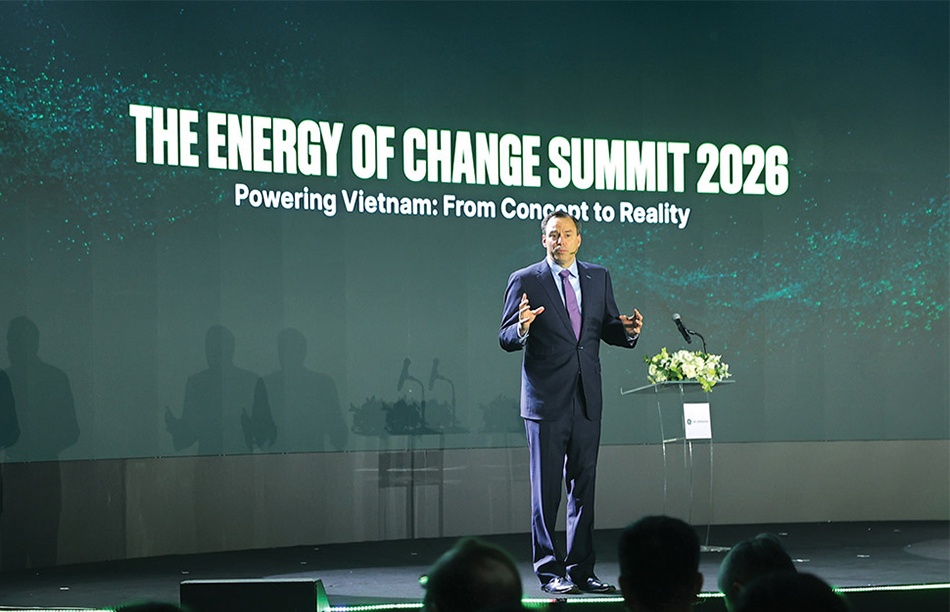 |
| GE Vernova organises ‘Energy of Change’ events to help drive industry conversations globally |
Coal currently accounts for about one-third of Vietnam’s installed power capacity but nearly half of electricity generation. For a fast-growing economy like Vietnam, what factors should determine the optimal balance between coal, gas, nuclear, renewables and storage?
The mix will evolve over time. I think within the context of creating the electrons that are needed for economic growth, we need to balance that with the resiliency needs of the country with affordability.
And as it continues to grow and develop, the three legs of the stool between supply, resiliency, and decarbonisation will probably evolve.
So I wouldn’t say there’s an ideal mix for 2026 or for 2030. I think we know there’s a direction of travel here. And the direction of travel has us trying to reduce the carbon intensity of the total system. But because Vietnam is going through so much growth, I focus less on the nominal amount of carbon and more on the carbon intensity of all of the electricity.
And in some cases, technologies like gas, which have carbon, can still decarbonise the system. It enables more wind and solar to be developed so that it’s available when the wind isn’t blowing and the sun’s not shining.
The goal needs to be to meet the moment, creating as much electricity as the country needs, along with reducing carbon intensity over time.
Petrovietnam has been assigned to study a second nuclear power project, but the scale and partners have not yet been determined. What are your expectations regarding the opportunity for GE Vernova to become a strategic partner for this?
We’re building the first 300-MW small module reactor right now in Canada. We’ll advance projects in the US, in Sweden, and in Poland.
The cost curve will start to come down with these launch customers and in the next decade this can be a very practical solution for the country.
In the near term, it’s more expensive power and while managing the affordability challenges in Vietnam, it’s probably not tomorrow’s solution.
But as you go into the next decade, to continue to reduce the carbon intensity of the total electric power system, small modular reactors can be a very effective replacement of aged base load coal. So I think it’s going to play an important role over the course of the next decade.
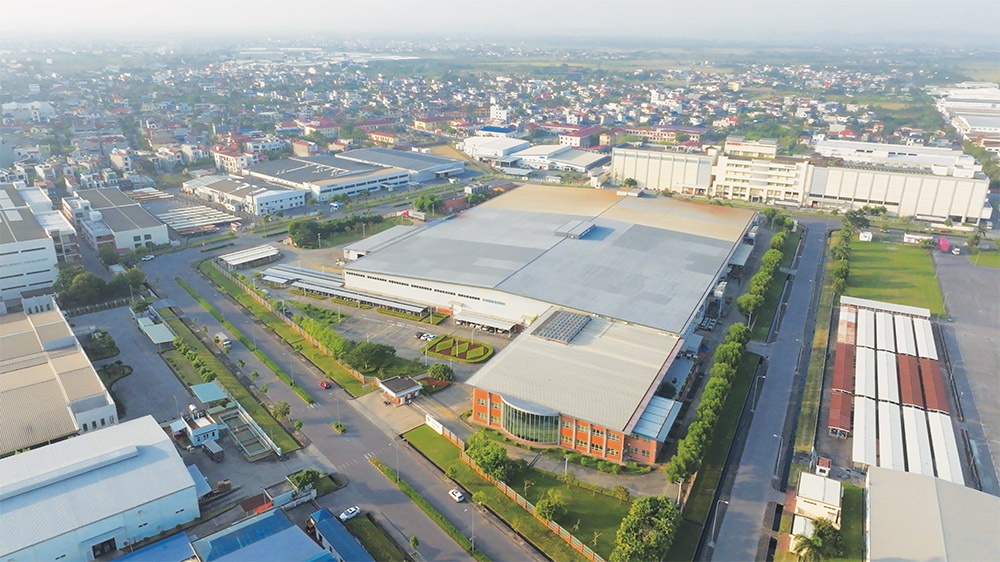 |
| GE Vernova is leading the electrification process |
How has GE Vernova repositioned its global manufacturing strategies, and how can it expand its long-term investment in Vietnam?
The choice to hold the Energy of Change summit in Vietnam is because we view this to be a platform for us to invest in a country but also for the region and the world. We already have two factories today that support our gas business, one that makes heat recovery steam generators and one that does repair work. We have a factory for wind that supports the generators that we ship all over the world. And we’re adding a grid factory. So we have a manufacturing footprint now in all of our three businesses in Vietnam.
If you ask whether Vietnam has potential for further growth, the answer is yes. Vietnam is a promising market with significant room for growth thanks to policy stability, its location in a fast-growing region, and competitive costs. So we certainly could put more investment into Vietnam over the medium to long term.
With investments into the country because of policy, we’re also very aligned with Vietnam’s power development plan. That gives us clarity for five years on what Vietnam is trying to accomplish that allows us to invest into that certainty.
And for a country that today has 90GW of capacity with goals to get it by 2030 to north of 200GW, that’s a great ambition. That’s an ambition that motivates us to serve it.
With global gas turbine demand surging and production capacity reportedly booked through 2028, how likely will upcoming liquefied natural gas projects in Vietnam secure turbines in time, and what specific proposals do you have to support Vietnam in upgrading transmission infrastructure?
We’re going to prioritise the Vietnamese market, and we will move as fast as the customers can move. And if the customers are able to advance the construction of the plants to the point that we have a credible view on when things will be ready, we’ll be there. Our job is to move as quickly as this market can move, and we’re motivated to meet this moment in the country.
So yes, we definitely have a high degree of motivation to support all of the customers here, for us to play our humble part in supporting Vietnam to reach its objectives.
What’s most important is to have a very efficient permitting process that allows ultra-high-voltage projects to go through many communities. It involves moving electrons over a long distance in as efficient a way as possible. Communities need to have a vote in the process, but the faster the country can permit the lines, the faster we can get going on the projects.
From the GE Vernova side, do you plan to have any kind of support or any kind of financial and technical support to accelerate that process?
Well, it starts with localising a manufacturing facility that will drive towards a very competitive, affordable solution because our logistics cost will be so much less than alternatives.
Our role is first and foremost to have a manufacturing footprint to serve the market.
The other dynamic with this much growth is why we have announced the investments from our GE Vernova Foundation that we’re doing with the Electric Power University because there’s going to be more resources that will be needed to support this industry.
And that’s why over the next three years, with the investments we’re making at Electric Power University, we’ll touch at least 4,000 students because that’s another way we help this country move faster is by investing in the workforce.
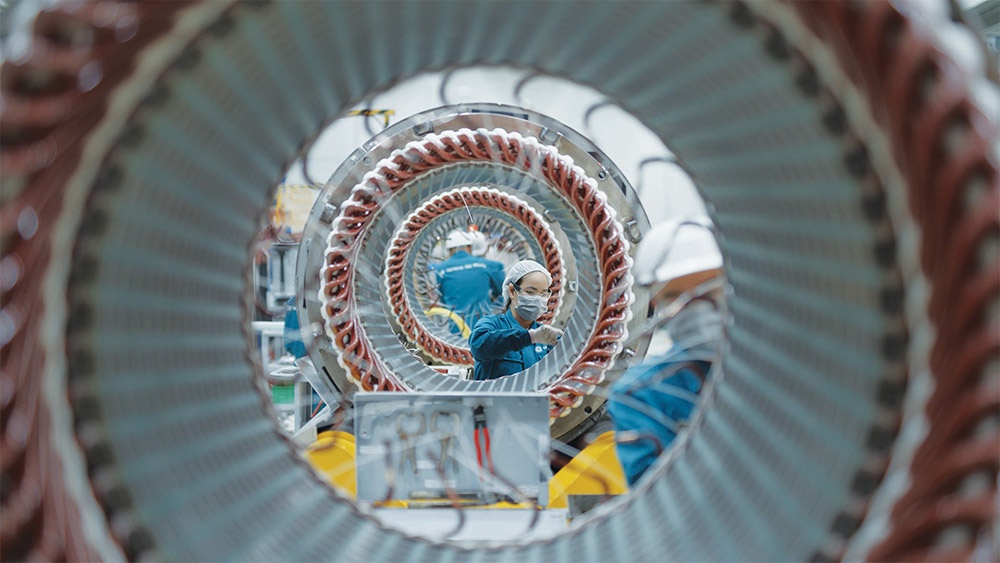 |
| The company has two factories that support its gas business, and will be adding a grid factory |
What would you hope to see as GE’s Vernova’s most significant contribution in Vietnam’s portfolio or large-scale projects in the long term?
This is the first time we’ve done an Energy of Change event in Asia, and the fact that we chose to do it in Vietnam is illustrative of how important it is to us. Globally, we’ve only done three of these events over the last three years. So it is significant, choosing to do this event in Vietnam.
But if I look ahead 10 or 15 years, I hope we’ve built a more sophisticated and a more mature ecosystem in Vietnam to meet its needs. Now, we’ll play a part with that. But it’s by being a member of the community, investing in the Electric Power University, building a new factory, and having events where we drive conversation in the industry as a convener. It brings us closer to being a catalyst towards Vietnam building the ecosystem they need to meet all of their dreams and expectations.
For the ambition and capabilities of this country, it’s going to need a lot more electric power to meet this moment. And 10 to 15 years from now, I don’t think Vietnam is going to look the same as today because of all the infrastructure that’s going to be built. I’m confident and hopeful that GE Vernova will play an important role in serving the country, meet the ambitions that start with its overall power plan.
But that’s really just the next five years. There will be updated power plans in the future, and I hope we’re well positioned to serve the market through each of those chapters.
What the stars mean:
★ Poor ★ ★ Promising ★★★ Good ★★★★ Very good ★★★★★ Exceptional
 Tag:
Tag:Related Contents

Latest News

More News
- Vietnam’s registered FDI surpasses $50 billion in nine months (October 07, 2026 | 10:30)
- Samsung Electro-Mechanics to add $1.85 billion semiconductor investment in Thai Nguyen (October 06, 2026 | 18:23)
- Electronics funding will be won via a capable ecosystem: SGS (October 06, 2026 | 09:00)
- LNG power plant projects risk falling behind schedule (October 03, 2026 | 09:00)
- Pandora opens world’s largest fine jewellery crafting facility (October 02, 2026 | 22:21)
- An Phat 5 Industrial Park positions for new wave of investment in northern Vietnam (October 02, 2026 | 09:00)
- Hanoi to launch portal to ease hurdles for tech businesses (October 01, 2026 | 09:00)
- Foreign investors to be widened for market access (September 30, 2026 | 17:54)
- Phu Quoc Airport planning adjusted to serve APEC 2027 (September 30, 2026 | 17:35)
- Nearly 200 foreign-invested enterprises in Vietnam to pay global minimum tax (September 30, 2026 | 17:26)


Latest News




 Mobile Version