

How Siemens supports the green and digital transitions

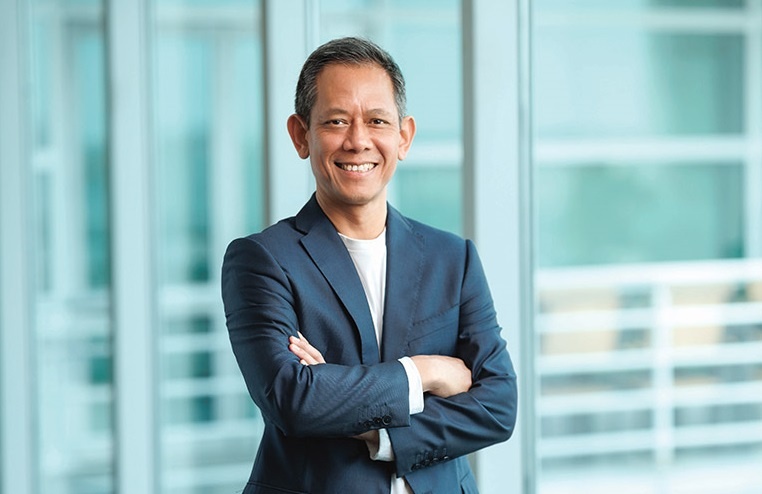 |
| CEO Pham Thai Lai |
How has the EU–Vietnam comprehensive strategic partnership, and particularly the Global Gateway initiative, influenced Siemens’ investment or expansion plans?
We believe these will positively influence Siemens’ investment and expansion decisions in Vietnam. By providing a stable and predictable framework for European businesses, it strengthens confidence for long term investment.
With its strong focus on sustainable infrastructure, green energy, and digital transformation, Global Gateway aligns closely with Siemens’ strategic priorities. It enables deeper public private collaboration, supports the transfer of advanced European technologies and standards, and reinforces our commitment to delivering inclusive growth solutions.
We see Global Gateway as a catalyst for Vietnam’s development and high quality EU investment, with Siemens well positioned to contribute to its success.
What specific opportunities do you see for Siemens in Vietnam’s green and digital transition, particularly in energy, transport, and infrastructure?
Vietnam’s green and digital transition presents strong opportunities to support growth, energy security, and long term competitiveness, particularly in energy, transport, and critical infrastructure. Modernising the power system to integrate renewable energy, improve efficiency, and enhance grid resilience will be essential to meeting rising demand while advancing climate objectives.
In parallel, green and digital transport solutions, especially in rail and urban mobility, can help address congestion, reduce emissions, and improve connectivity and quality of life. Digitalisation across industry also supports Vietnam’s ambition to build a more innovative, resilient, and competitive economy, while moving up the global value chain.
As a long term partner, Siemens contributes by providing world class European technologies, standards, and system integration expertise, alongside digital capabilities and implementation experience, in support of these priorities. The most recent example is Siemens Mobility’s comprehensive strategic cooperation agreement with VinSpeed, which lays the foundation for developing Vietnam’s first high speed rail projects through technology transfer, system integration, and international standard rail solutions.
What are the main challenges Siemens faces in Vietnam when advancing green transformation goals, and what policy support would help address them?
While Vietnam offers strong potential for green investment, companies such as Siemens face several challenges when investing and operating in support of green transformation goals.
A key challenge is the need for a stable, transparent, and predictable regulatory and policy framework, particularly for large scale, capital intensive projects in energy and transport that require long planning horizons. Clear long term signals on renewable integration, grid development, rail standards, and public private partnership models are essential to reduce investment risk and enable timely decision making.
To help address these challenges, stronger support from Vietnamese and EU policies and institutions would be highly beneficial. This includes clearer investment incentives and financing frameworks for green infrastructure, coordinated smart infrastructure planning across energy and transport, and joint EU–Vietnam initiatives on skills development, technology transfer, and standards alignment.
How has Siemens fostered partnerships with Vietnamese stakeholders, and what success stories stand out?
Siemens has built strong partnerships with Vietnamese enterprises, government entities, and other stakeholders over the past three decades, guided by the belief that collaboration is essential to sustainable and inclusive development. Our approach is rooted in long term engagement, technology transfer, and capacity building, aligning global expertise with Vietnam’s development priorities.
Notable success stories include our collaboration with VinFast, where Siemens’ Digital Enterprise portfolio has assisted this company to fulfill its ambition of building the first made in Vietnam car in record time. In the energy sector, Siemens has worked closely with Vietnam Electricity on power grid modernisation, deploying smart grid technologies that enhance stability, automation, and renewable energy integration.
In buildings, Siemens technologies have helped customers achieve energy savings of 20–30 per cent, including the German House in Ho Chi Minh City, which has become one of the greenest and most energy efficient office buildings in Vietnam through Siemens’ building management solutions.
Siemens also supports Vietnam in advancing its digital transformation journey and embracing Industry 4.0 opportunities. For example, the Siemens Xcelerator portfolio enables the management of A Vương Hydropower Plant to make faster and more accurate decisions.
How do you assess Vietnam’s overall economic outlook in the context of global shifts, and what practical steps could Vietnam take to attract more high-quality EU investment in key areas?
The outlook remains highly positive despite ongoing global uncertainty. Strong fundamentals, a young and dynamic workforce, and deepening integration into global value chains position Vietnam well for continued growth. The EU–Vietnam Free Trade Agreement has already strengthened trade and investment ties, reinforcing Vietnam’s attractiveness as a strategic destination for high quality EU investment.
To attract more high quality EU investment in key areas, several practical steps could further enhance Vietnam’s competitiveness. These include maintaining a stable, transparent, and predictable regulatory environment, accelerating skills development to support advanced industries, and continuing investment in digital and smart infrastructure across energy, transport, and industry.
Clear and consistent green economy policies, stronger local supply chains, and a strategic focus on high value added sectors, innovation, and research/development would also be important. Finally, sustained and structured public private dialogue between government and investors will remain critical to addressing challenges early and fostering long term, trust based partnerships with EU companies.
What the stars mean:
★ Poor ★ ★ Promising ★★★ Good ★★★★ Very good ★★★★★ Exceptional
 Tag:
Tag:Related Contents



Latest News

More News
- Molex opens its expanded manufacturing facility in Hung Yen (September 17, 2026 | 15:57)
- SACE announces $200 million financing for VinFast Vietnam (September 17, 2026 | 15:52)
- World Bank Group supports Vietnam's trade connectivity and coastal livelihoods (September 16, 2026 | 18:24)
- Beacon Fund invests in Vipep to strengthen Vietnam's agricultural value chain (September 15, 2026 | 16:11)
- Electronics FIEs asked to expand Vietnamese supplier networks (September 15, 2026 | 15:50)
- Hung Yen accelerates infrastructure development (September 14, 2026 | 15:36)
- New decree aims to modernise contractor selection procedures (September 14, 2026 | 14:46)
- AEON continues Vietnam expansion with two new malls (September 13, 2026 | 10:21)
- Vietnam turns to specialised chips for its semiconductor industry (September 11, 2026 | 17:43)
- AEON accelerates expansion with 10th shopping centre in Vietnam (September 11, 2026 | 13:53)






 Mobile Version