

Five million household businesses to adopt self-declared tax system

 |
| Photo: TheLEADER |
Speaking at a seminar on easing the transition from presumptive tax to self-declaration for household businesses, held on December 10 by the Vietnam Association of Corporate Directors (VACD) and TheLEADER, VACD chairman Nguyen Duc Thuan emphasised the pivotal role of the household business sector, which employs millions and contributes significantly to local economic activity.
However, the presumptive tax model, applied for decades, has shown limitations in transparency, fairness, and its ability to reflect actual business performance.
“The shift to self-declared taxation is not only aligned with modern tax administration principles but is also inevitable given the rapid rise of digital transactions and deeper international integration,” Thuan said.
He noted that many small-scale businesses remain concerned about electronic invoices, bookkeeping, software adoption, and the risk of errors or penalties.
Under the amended Law on Tax Administration adopted in May 2025, household businesses with annual revenue from VND1 billion (approximately $40,000) must issue e-invoices to the tax authority or invoices generated from cash registers connected to tax authorities. Those below the threshold are not required but are encouraged to do so if they meet the technical conditions.
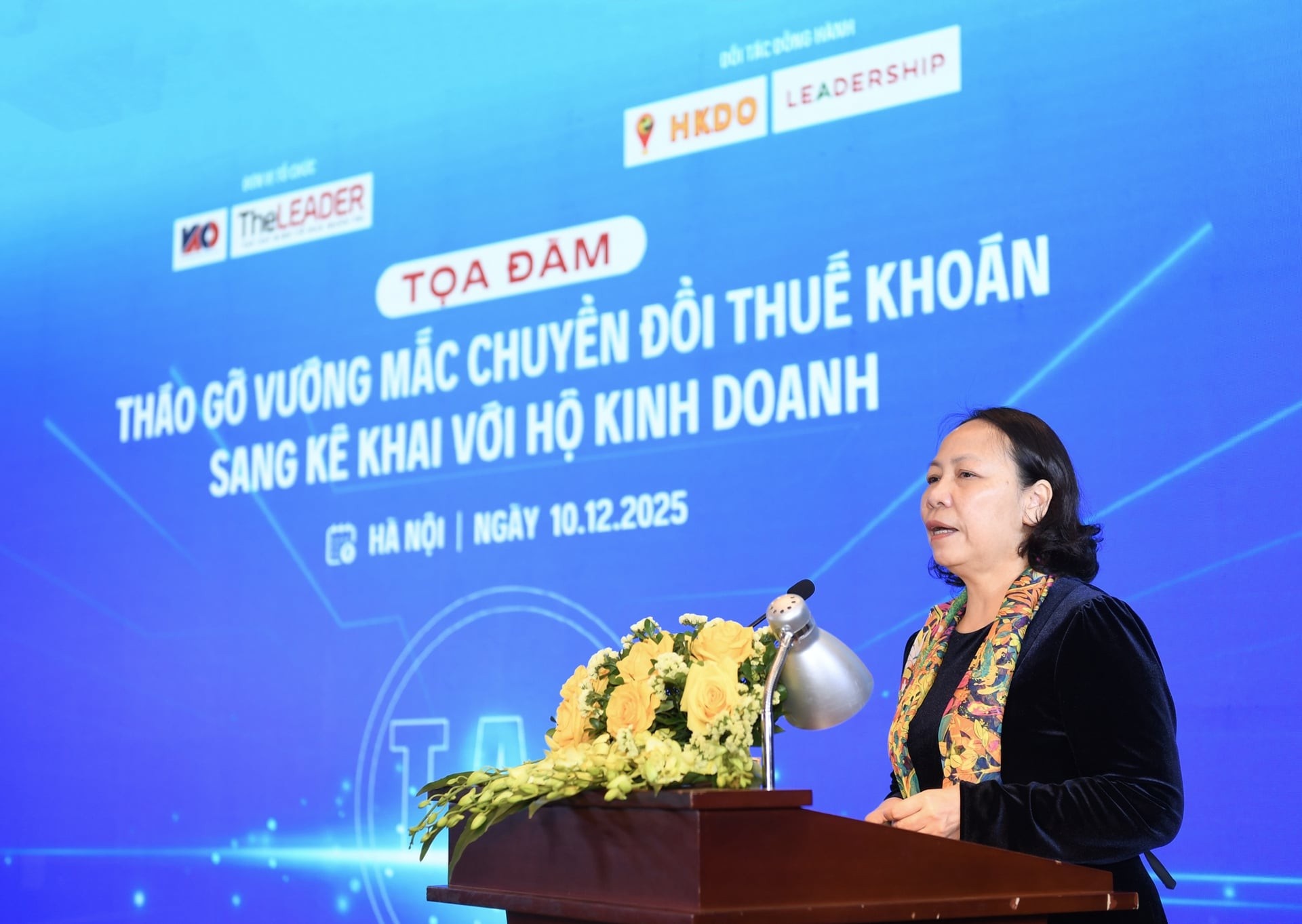 |
| Le Thi Duyen Hai, deputy secretary-general of the Tax Consultants' Association. Photo: TheLEADER |
According to the Ministry of Finance, more than 110,000 national households already use e-invoices generated from cash registers, including over 20,000 previously subject to presumptive tax who have voluntarily joined the system.
From January 1, 2026, the presumptive tax regime will be abolished entirely, with all household businesses required to declare and pay tax based on actual revenue. Tax authorities view this as a necessary step to support household businesses transitioning into formal enterprises, enabling them to access incentives and resources for expansion.
Le Thi Duyen Hai, deputy secretary-general of the Tax Consultants' Association, noted that households earning less than $20,000 annually will not be subject to tax or invoicing requirements. However, she advised early preparation to avoid disruption when the new rules take effect.
“Practising electronic invoicing and tax software use will help businesses avoid policy shocks and maintain transparent revenue records,” she said.
Although initial implementation of Decree 70 on e-invoicing in early 2025 sparked concerns, prompting some households to suspend operations due to fear of higher costs and increased scrutiny, awareness has improved as businesses understand the policy's purpose and benefits, she added.
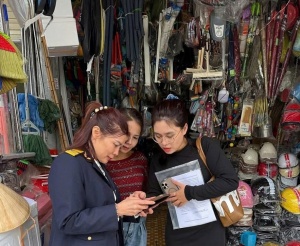
As of the end of 2024, Vietnam has around 3.6 million household and individual businesses, with 2.2 million operating stably. Yet, the rate of transition into formal enterprises remains extremely low, with only 1,474 households converting in the first half of the year, accounting for just 0.04 per cent.




What the stars mean:
★ Poor ★ ★ Promising ★★★ Good ★★★★ Very good ★★★★★ Exceptional
 Tag:
Tag:
Related Contents




Latest News





More News
- From loans to women’s economic empowerment (October 06, 2026 | 17:58)
- VIB named Outstanding Retail Bank 2026, targets transaction banking (October 06, 2026 | 10:52)
- FTSE upgrade paves way for stronger stock market development (October 05, 2026 | 18:44)
- coLoan to empower women through inclusive green finance (October 05, 2026 | 18:42)
- Techcombank CEO: AI no longer a tool but a new operating foundation (October 05, 2026 | 18:11)
- Banks sustain profit growth as funding costs squeeze margins (October 02, 2026 | 22:22)
- Nam A Bank delivers strong breakthrough in 2026 (October 02, 2026 | 19:00)
- Policy credit builds sustainable livelihoods from the grassroots (September 29, 2026 | 07:48)
- VIB deploys Front Arena treasury and foreign exchange trading system on AWS (September 28, 2026 | 16:46)
- Nam A Bank receives $60 million loan from FMO (September 28, 2026 | 12:37)


Latest News






 Mobile Version