
Vietnam’s challenge to turn market reform into long-term capital

 |
| Mickey Maini, founder of Solstice Laboratory. Prior to founding Solstice Laboratory, Mickey Maini spent two decades as a senior banker, chief executive and adjunct professor. He is the author of the Entropy Trap and writes The Solstice Letter. |
You argued that Vietnam’s market upgrade was “a receipt, not a prize.” What do you mean?
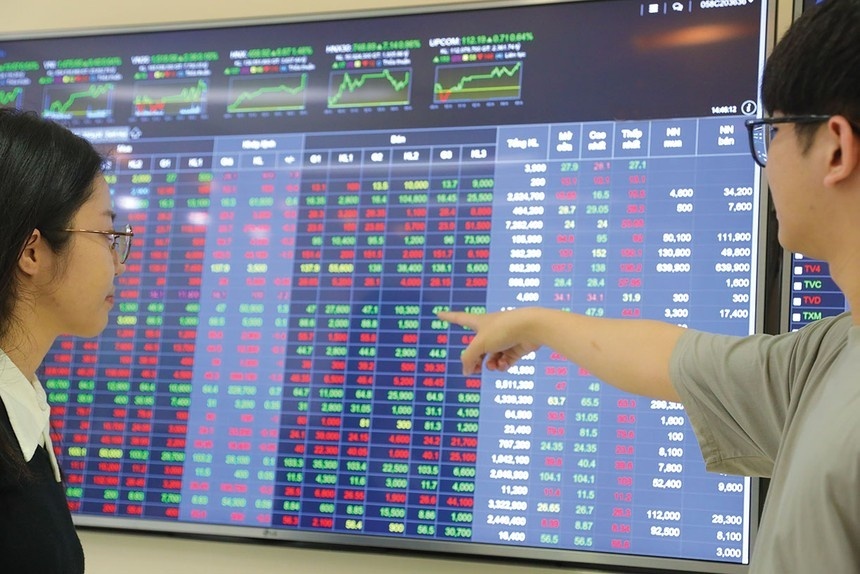
Start with one unusual number. Foreign investors have sold about $3 billion worth of Vietnamese shares this year, while Vietnamese investors absorbed the selling and the index remained near record levels. The reason is that Vietnam did much of the work before receiving the reward.
For years, a barrier stood at the market’s border: foreign investors had to pre-fund the full value of a trade before buying a share. The rule was designed for safety, but it also kept some serious international capital on the sidelines. That barrier has gradually become a valve. Pre-funding requirements were removed in 2024, a new trading system was introduced in 2025, and failed trades could be handled through market mechanisms rather than simply being prevented.
Those changes allowed smaller risks to emerge and be priced. The September upgrade is therefore a receipt for work that has already been done. Vietnamese investors understood that progress before many foreign investors did.
What practical advice would you give Vietnamese managing wealth today?
The old rules are changing. The traditional 60 per cent stocks, 40 per cent bonds portfolio and the assumption that prices will always recover worked for decades because we lived within a relatively stable dollar-based financial system built around promises. That system is now changing shape.
You do not have to take my word for it. Watch the central banks. They have bought more than 1,000 tonnes of gold a year for three consecutive years. When the institutions at the centre of the system start buying insurance, investors should pay attention.
The new rules begin with identifying the source of stress before choosing an asset. Economics, geopolitics and technology now interact as a single chain. Own things that are scarce and needed, rather than assets whose value depends solely on continued growth. Respect volatility because it shows where the system is under pressure, and keep cash available for those moments.
Most importantly, measure wealth against real things, not only against paper money. Five principles have survived previous financial resets: real assets over financial claims, scarce assets over abundant ones, short-duration over long-duration exposure, distributed systems over concentrated ones, and liquid assets over illiquid ones.
Plan calmly and act when the signal is clear.
What advice would you give founders raising capital today?
First, understand that the investment story has changed. My decade was largely a consumption story: roughly 90 million people entering the modern economy. Today, capital is increasingly targeting technology and resources: chips, data centres, energy and minerals.
The bigger opportunity lies in bringing those two stories together: applying technology to agriculture, manufacturing and household consumption. Vietnam is one of the few countries that has all three ingredients: consumers, resources and engineers.
That leads to five rules. Pitch the combination of technology and the real economy, not the consumption story alone. Make your business verifiable. In 2011, we closed what was then the largest private-equity deal in Vietnam’s history, and the cheque came after two years of preparing to be thoroughly checked.
Own something that is difficult to replicate, whether that is a power contract, a long-term customer relationship or proprietary data. Take capital that raises your standards. And remember that the funds arriving after September will be new owners of Vietnam. Make your company the easiest first investment they ever make in the country.
Which major trends should Vietnamese businesses build towards over the next decade?
One rule comes first: the trend gets the headlines, but the bottleneck inside the trend gets the money. Businesses should therefore look for the queue rather than simply follow the story.
Four queues matter most for Vietnam. First is the rerouting of global production. Every factory moving to Vietnam needs to demonstrate to Western buyers where and how its products were made. Helping companies provide that traceability and verification is becoming a major business opportunity.
Second is the power grid. Factories locate where power infrastructure is available, while critical equipment can now take years to order. Vietnam is among the countries building power capacity ahead of demand, which is relatively rare. Companies that can shorten equipment and infrastructure bottlenecks could capture significant value over the next decade.
Third are minerals. The opportunity is increasingly in processing rather than simply extracting resources. Vietnam’s policy direction points toward processing more materials domestically and exporting higher-value products rather than raw rock.
Fourth is the market infrastructure created by the upgrade itself. As foreign capital enters Vietnam, investors will need custody, market data, English-language research and fund services. Gulf markets spent years building those layers after 2014. Vietnam is now entering that phase. The index brings the customers; businesses will need to provide the tools.
What makes you worried about Vietnam, and what keeps you optimistic?
My concern can be summed up in one word: pace. My optimism comes from a 40-year perspective.
Much of what remains on Vietnam’s market-development checklist is now visible. Ownership room, information flows and market infrastructure have been identified, published and, in many cases, scheduled by the Vietnamese authorities. A graduation certificate is also a job description: the challenge is to keep moving after the ceremony.
The long-term picture is encouraging. Vietnam had just two listed companies in 2000. Today it has more than 1,600, with the market’s value equivalent to roughly a year of national output. Doi moi began in 1986, and the market’s progress over the past 40 years has come through patient, incremental steps rather than a single leap.
I have watched Vietnam absorb shocks for 25 years, first as someone building businesses inside the country and now as someone measuring its systems from outside. I would not bet against that habit of adaptation.
Your book, The Entropy Trap, uses physics concepts to explain market breakdowns. How did leading a business shape your understanding of how systems fail?
They break at the weakest link, not at the average. An average can look healthy right up until the moment the system fails.
A company’s balance sheet can double in three months. A port cannot double its capacity that quickly. Neither can a cold chain or a trained workforce. Serving 90 million consumers taught me that the real constraint is usually something tangible, and that the most dangerous problems often sit at the edges of an operation rather than in the middle of a spreadsheet.
So I learned to walk the edges. Which supplier, licence, employee or machine could we not afford to lose? Write those down and you have the beginning of a real risk report.
Countries work in much the same way. That is why I now spend my time measuring the weakest links in entire systems. The method came from the factory floor.
What are the three things you watch in Vietnam from outside the country?
Three numbers, and all three are about motion rather than levels. First, does the new foreign capital stay? Money that turns over quickly can import global shocks; money that stays has more capacity to absorb them.
Second, watch credit against production. Every failed upgrade in history has had periods when lending moved faster than the underlying economy’s ability to produce. Vietnam currently has the relationship in the healthier direction: last quarter, producers grew profits about three times faster than lenders. That is one of the strongest signals a market can have during an upgrade. It will be important to protect that balance when cheaper money arrives.
Third, watch the pace of reform after the applause. Central clearing is due next year, while listed companies are expected to provide English-language reports by the end of this year. Both are part of Vietnam’s published roadmap.
Reforms undertaken for a review can fade. Reforms built into the system are much more likely to survive the celebration.
What the stars mean:
★ Poor ★ ★ Promising ★★★ Good ★★★★ Very good ★★★★★ Exceptional
 Tag:
Tag:
Related Contents






Latest News


More News
- Smarter infrastructure design key to Vietnam’s AI ambitions (August 24, 2026 | 16:27)
- Strategic vision key to high-speed rail success in Vietnam (August 07, 2026 | 10:03)
- DSV backs Vietnam's push for more sustainable logistics (August 04, 2026 | 17:10)
- Roche Pharma Vietnam appoints new general manager, reinforcing commitment to Vietnam healthcare (July 23, 2026 | 15:41)
- Constant Energy on Vietnam solar power and policy hurdles (July 22, 2026 | 08:00)
- Key points when drafting a company charter to reduce disputes in Vietnam (July 20, 2026 | 08:00)
- AkzoNobel executive on sustainability as a manufacturing growth driver (July 10, 2026 | 14:53)
- LivWell expands holistic health ecosystem for businesses and communities in Vietnam (July 09, 2026 | 16:43)
- Thai beverage group sees Vietnam as long-term growth partner (July 02, 2026 | 08:30)
- AstraZeneca chief on Vietnam's healthcare financing shift (June 30, 2026 | 16:47)










 Mobile Version