
AI agents reshape Vietnam’s social commerce landscape

How would you describe the current level of AI adoption among Vietnamese businesses?
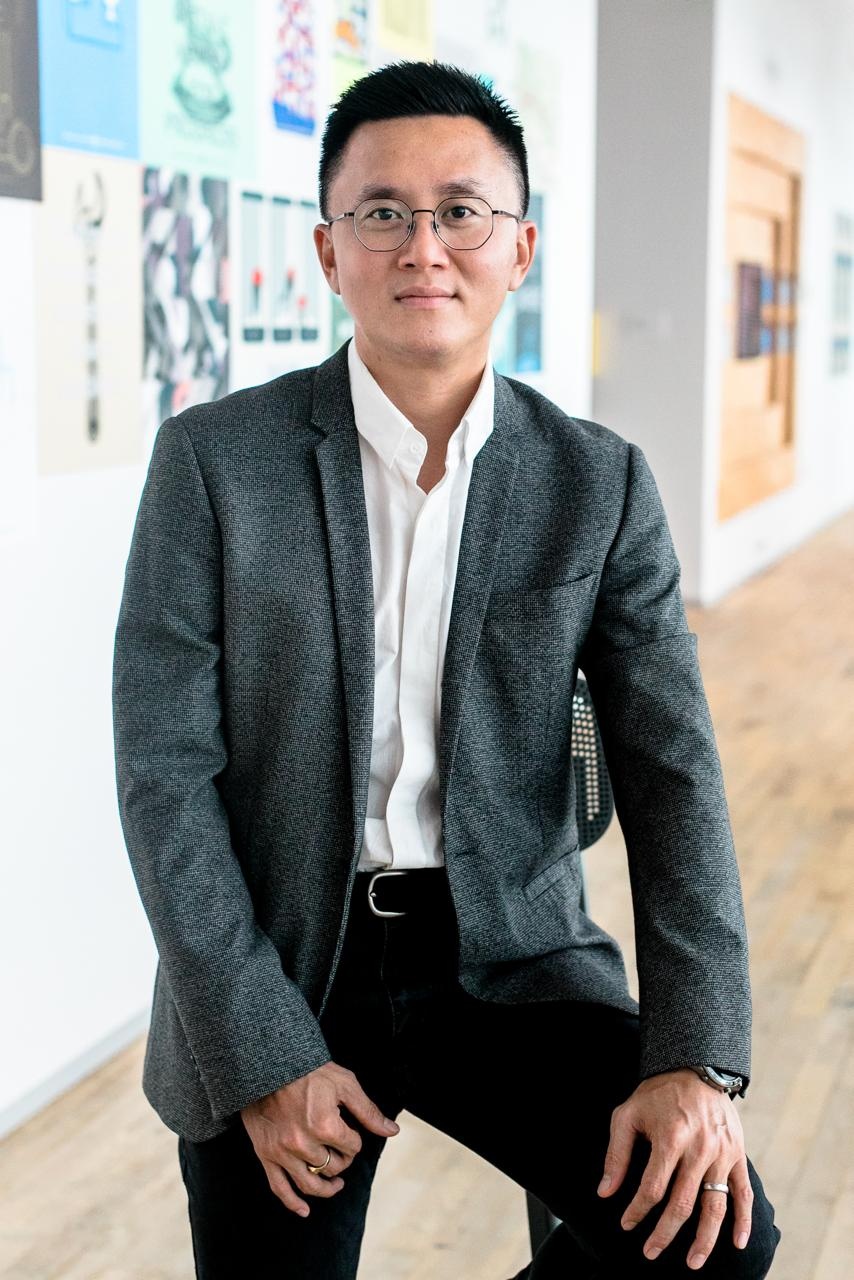 |
| Khoi Le, country director of Meta Vietnam. Image courtesy of Meta Vietnam |
Khoi Le: Adoption is already broad and moving fast. Around 96 per cent of small businesses surveyed in Vietnam say they are using AI in some form, and six in 10 want more training for their staff on the technology.
That appetite matters because small and medium-sized enterprises (SMEs) stand to gain the most from AI, given how much it can do for a business that does not have large teams or big budgets. AI can absorb tasks that once required significant resources to handle manually, freeing owners to focus on growth rather than day-to-day operations.
Vietnam has a genuine opportunity to build on its agentic social commerce model the same way social commerce itself took root here. That is also a chance for SMEs to scale and reach more customers as AI takes on work that used to demand far more manpower.
Vietnamese consumers increasingly expect fast, highly personalised interactions with brands. How do you see AI reshaping the customer journey?
Khoi Le: Messaging is already central to how people in Vietnam shop. About 83 per cent of those surveyed say messaging is their preferred way to reach a business, and 61 per cent message a company every day. At the same time, close to 86 per cent want personalised messages or offers tailored to them, yet 70.2 per cent say they already receive too many irrelevant messages from businesses.
That tension is precisely where AI agents add value. Rather than sending more messages, businesses need to send the right ones, at the right moment, to the right customer. With Meta’s ecosystem of AI-powered tools, a business can run part or all of its sales process on Facebook and Messenger, including payment. Our Pay by Bank feature lets customers settle an order directly inside Messenger through banking apps and e-wallets such as ACB, BIDV, MBBank, Techcombank, MoMo, and ZaloPay and businesses can train their AI agent to guide that final step.
In your view, what are the main barriers preventing businesses, particularly SMEs, from integrating AI into their daily operations?
Khoi Le: Cost is a common concern, and it is worth noting that Meta Business Agent is currently offered free of charge across our platforms. Our approach is to make AI tools accessible to businesses of every size, so nobody is priced out of the benefits.
Beyond cost, the more useful mindset shift is to focus on returns rather than expense. Businesses should ask whether AI is lifting order volumes or revenue growth, conversion rate, operating efficiency, and build their investment plans around those outcomes.
 |
| Nguyen Viet Anh, chief technology officer of PMAX. Image courtesy of Meta Vietnam |
Viet Anh: Many SMEs still lack a standardised operating process for sales and customer service. Without that foundation, there is nothing concrete to train an AI agent on, and no benchmark to judge whether the deployment is succeeding. Building that structure first is often the real barrier, more than the technology itself.
How will AI change the roles of sales and marketing staff?
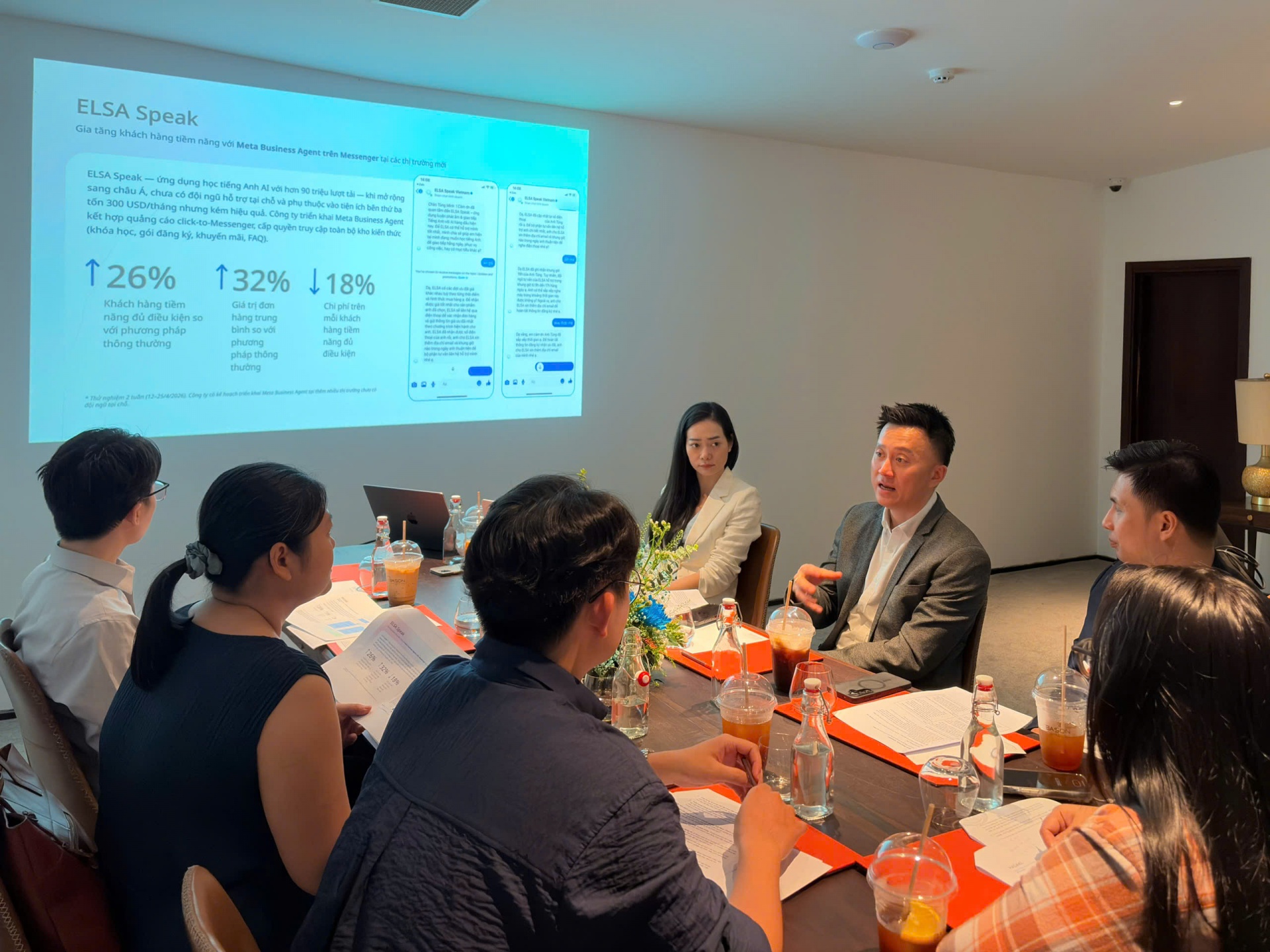 |
| A glimpse of the internview. Image courtesy of Meta Vietnam |
Khoi Le: AI is changing marketing roles from execution towards design and continuous system improvement. Take livestream shopping as an example, where hosts and AI can complement each other well.
The host focuses on content, engagement and drawing in viewers, while AI handles the messages, product questions and order confirmations that spike once interest builds.
The goal during a livestream is not simply attracting a large audience; it is not losing the buyers hidden inside that audience. A stream can draw huge viewership, but if messages go unanswered during peak interest, that opportunity is wasted.
AI extends a business’s capacity to respond the moment a customer signals intent, while people remain essential for the parts of the interaction that need nuance and expertise.
Viet Anh: AI is moving staff from an 'operating' role to a 'building and upgrading' one. Instead of handling repetitive tasks like answering individual customer messages, teams can use AI to analyse thousands of queries, pinpoint core issues, design new solutions, and refine them continuously.
That also means SMEs can scale without simply adding headcount. So instead of serving 50 customers, one person can now serve 100, 200 or 300, and not just in volume but at higher quality because they can spend time deepening the solution.
Could you share a few success stories of Vietnamese businesses effectively leveraging Meta’s AI-powered business and messaging solutions?
Khoi Le: ELSA Speak, the AI-powered English learning app, combined Meta Business Agent on Messenger with click-to-Messenger ads to better filter potential customers and support users in markets where it does not yet have a local service team.
Drawing on ELSA Speak’s own customer support knowledge base, the agent guided users from initial questions through to signing up. The results were a 26 per cent rise in qualified leads, an 18 per cent drop in cost per qualified lead, and a 32 per cent increase in average order value.
HADAKI, a Vietnamese e-commerce brand specialising in sportswear and protective gear, used Meta Business Agent on Messenger to handle a large volume of customer enquiries and automate its sales advisory process.
The brand saw its conversion rate rise 20 per cent, doubled its message-handling capacity, and lifted average order value thanks to fast, accurate support available around the clock.
Heading into the peak year-end shopping season, how should businesses leverage AI and conversational commerce tools to capture surging consumer demand?
Khoi Le: Vietnam’s shopping calendar has stretched into an extended period of high intent, running from Mega Sales Days such as 10.10, 11.11 and 12.12 through year-end and into Lunar New Year, which 85 per cent of shoppers cite as the country’s dominant occasion. That means businesses need to sustain engagement across the whole stretch, not just react to a single sales day.
This is precisely when an AI agent proves its worth, since it can absorb the surge in enquiries that comes with peak shopping periods, answer questions, recommend products and support sales conversations using content the business already has, all while remaining available around the clock and handing over to a human team when needed.
More than one million businesses already use Meta Business Agents every week on WhatsApp and Messenger for exactly this purpose.
My advice for businesses preparing for Mega Sales Days, year-end shopping and Lunar New Year is to start testing AI-powered solutions now, learn what resonates with their own customers, and treat this season as a chance to convert short-term shopping intent into longer-term growth.
 | AI agents pave way for greener exports AI agents are emerging as a driving force helping Vietnamese businesses optimise operations, reduce emissions, meet green standards, and strengthen their competitiveness in international markets. |
 | AWS ramps up security tools amid growing AI risks As AI moves rapidly from experimentation into production, Amazon Web Services is expanding its security portfolio to help businesses manage emerging risks while scaling AI capabilities. |
 | USTDA funds study for major Vietnam AI data centre campus The US Trade and Development Agency is supporting the development of the Stavian Digital Park, an AI data centre campus in Vietnam. |
 | Vietnam’s finance sector moves to build an AI-driven digital ecosystem As digital systems across taxation, customs, the State Treasury, and securities become increasingly connected, Vietnam's finance sector is turning to AI and advanced data analytics to extract greater value from its expanding digital infrastructure. |
What the stars mean:
★ Poor ★ ★ Promising ★★★ Good ★★★★ Very good ★★★★★ Exceptional
 Tag:
Tag:





Latest News


More News
- DKSH's blueprint for resilient supply chains (September 14, 2026 | 14:00)
- Vietnam’s challenge to turn market reform into long-term capital (September 08, 2026 | 09:16)
- Smarter infrastructure design key to Vietnam’s AI ambitions (August 24, 2026 | 16:27)
- Strategic vision key to high-speed rail success in Vietnam (August 07, 2026 | 10:03)
- DSV backs Vietnam's push for more sustainable logistics (August 04, 2026 | 17:10)
- Roche Pharma Vietnam appoints new general manager, reinforcing commitment to Vietnam healthcare (July 23, 2026 | 15:41)
- Constant Energy on Vietnam solar power and policy hurdles (July 22, 2026 | 08:00)
- Key points when drafting a company charter to reduce disputes in Vietnam (July 20, 2026 | 08:00)
- AkzoNobel executive on sustainability as a manufacturing growth driver (July 10, 2026 | 14:53)
- LivWell expands holistic health ecosystem for businesses and communities in Vietnam (July 09, 2026 | 16:43)








 Mobile Version