
Vietnam enters defining phase of M&A growth

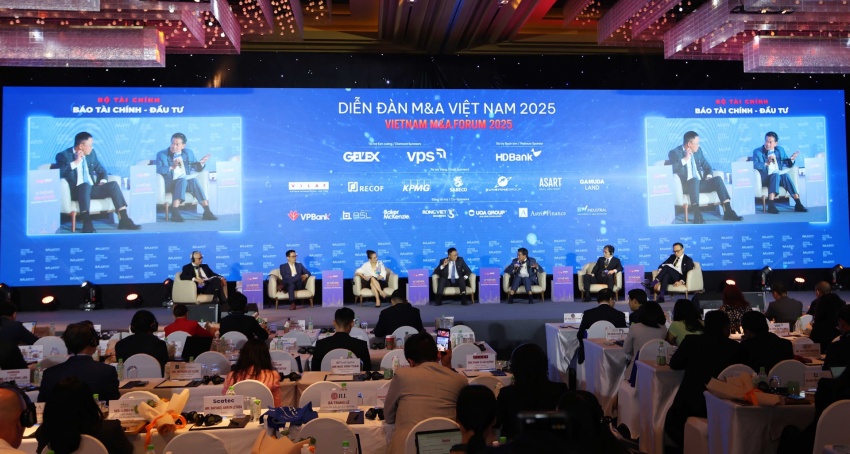
At the first panel discussion of the Vietnam Mergers and Acquisitions (M&A) Forum 2025 hosted by VIR in Ho Chi Minh City on December 9, experts and businesses offered in-depth analyses of Vietnam’s new position within global investment and M&A flows.
Discussing M&A procedures, Vo Ha Duyen, chairperson of VILAF, noted that Vietnam has recently introduced a series of legal reforms aimed at increasing transparency, improving governance, and enhancing foreign investor access.
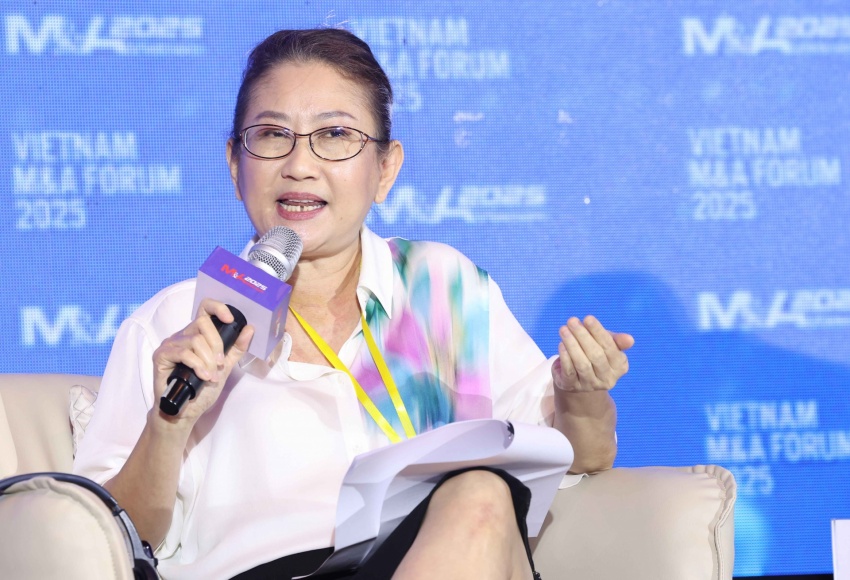 |
| Vo Ha Duyen, chairperson of VILAF |
“The most notable change is that the government has issued 28 decrees delegating authority to local authorities to approve numerous business, investment, and construction licensing procedures previously under the jurisdiction of central ministries,” said Duyen.
“Additionally, the Law on Investment has been amended so that approval authority for many large-scale projects has been shifted from the prime minister to provincial governments,” she added. “The current Law on Investment introduces a special investment mechanism for high-tech sectors, reducing licensing and construction approval timelines from 9-12 months. This demonstrates Vietnam’s ambition to compete for high-tech and sustainable capital flows.”
Duyen emphasised that M&A approvals have become faster and more predictable, especially for conditional business sectors. Although foreign ownership caps still apply in certain industries, the overall trend is improving.
“Ongoing efforts to upgrade Vietnam’s stock market classification underscore improvements in investor accessibility and market infrastructure. M&A deals in Vietnam are now clearer, more transparent, and more favourable. For well-prepared companies, 2026 will be an ideal time to execute strategically important transactions,” she added.
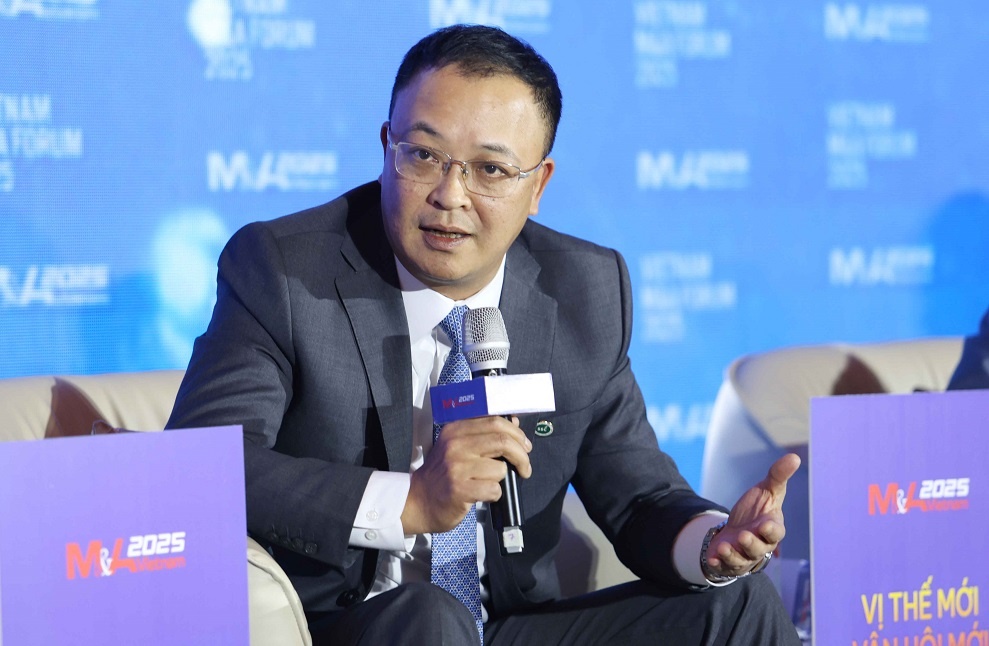 |
| Bui Hoang Hai, vice chairman of the State Securities Commission |
From the regulatory perspective, Bui Hoang Hai, vice chairman of the State Securities Commission, said Vietnam has implemented a comprehensive modernisation of trading infrastructure, enhanced transparency, and raised overall market quality.
“As a result, Vietnam is considered one of the most dynamic emerging markets, with vibrant capital-raising activity and stronger participation from both domestic and foreign investors,” added Hai.
He noted that the government remains committed to reviewing and reforming the legal framework to support market development.
“Regulatory reforms such as Decree 155 have made the initial public offering (IPO) process smoother, clearer, and more time-efficient, while removing the requirement for indirect investors to obtain trading codes,” said Hai.
Recent reforms have already translated into tangible improvements in M&A activity. Khanh Vu, managing director and portfolio manager of the VinaCapital Vietnam Opportunity Fund, observed that the past six months have seen a significant uptick in transactions as legal stability, policy direction, and the business environment have improved.
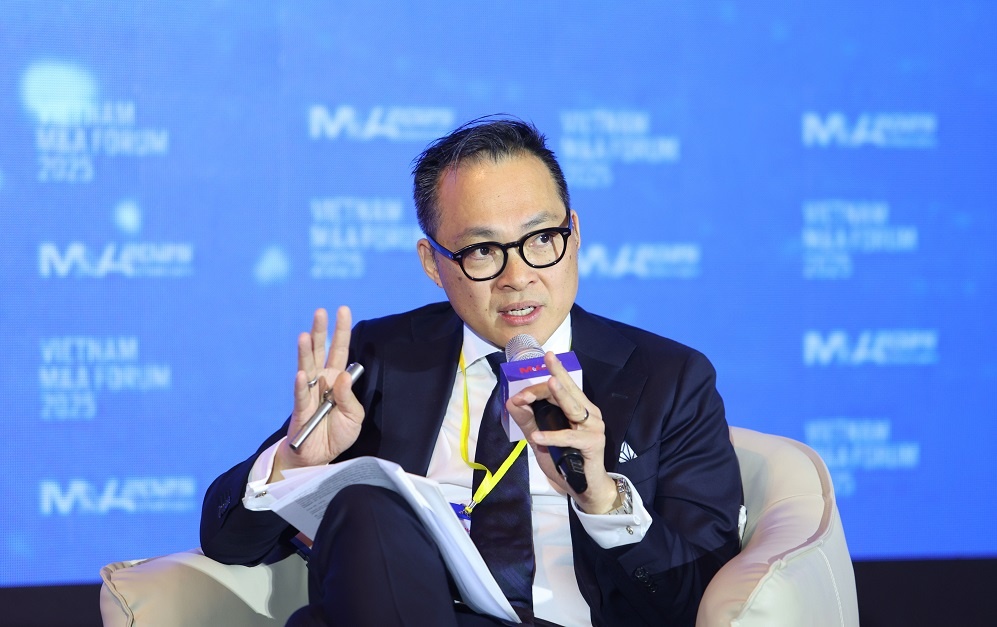 |
| Khanh Vu, managing director and portfolio manager of the VinaCapital Vietnam Opportunity Fund |
“From Resolution 68 to the ongoing market upgrade process and revisions to the Land Law, these changes have reinforced foreign investor confidence,” he noted. “This renewed optimism is reflected in the revival of M&A activity in the second half of 2025, with major deals progressing and transaction volumes rising across sectors such as retail, healthcare, and infrastructure, not just technology.”
According to Vu, when capital markets improve, liquidity increases and regulations become more open, investors are more willing to deploy larger and longer-term investments.
“Clarity creates confidence; confidence drives action; and action leads to investment. We expect more deals and more opportunities heading into 2026 and beyond,” he said.
Foreign investors also share strong confidence in Vietnam’s M&A landscape, as Tamotsu Majima, senior director at RECOF Corporation, said many Japanese companies have established a presence in Southeast Asia and view Vietnam as the final piece in their regional investment strategies.
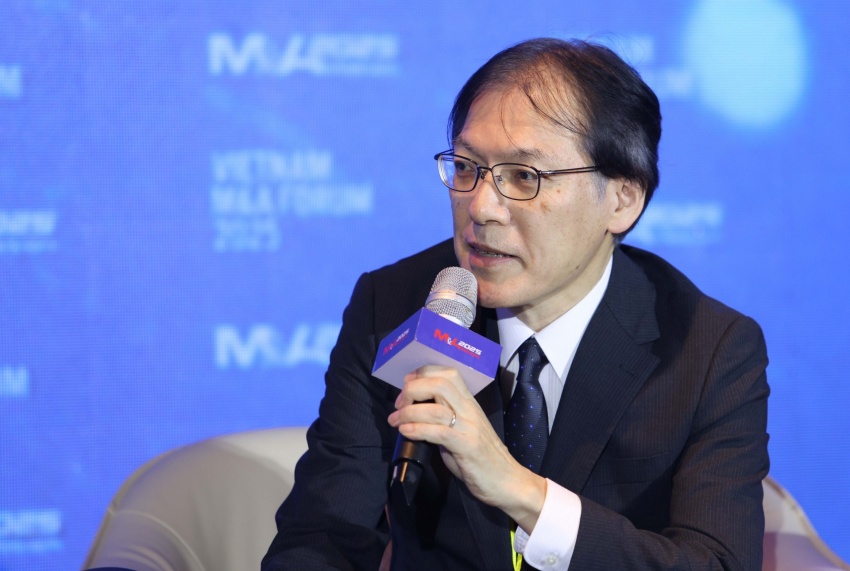 |
| Tamotsu Majima, senior director at RECOF Corporation |
He cited that Vietnam continues to lead the M&A market, accounting for over 30 per cent of total disclosed deal value with $712 million, surpassing Singapore ($613 million), Japan ($214 million), the US ($150 million), and South Korea ($122 million). This underscores sustained investor confidence in Vietnam’s medium- and long-term prospects.
“A recent major deal was Kokuyo Group’s acquisition of Vietnamese office-supplies leader Thien Long Corporation for 27.6 billion Yen. Japanese investors view Vietnam as a high-growth market with extensive free trade agreements and expanding strategic partnerships with major economies, creating an attractive and safe environment for international capital,” said Majima.
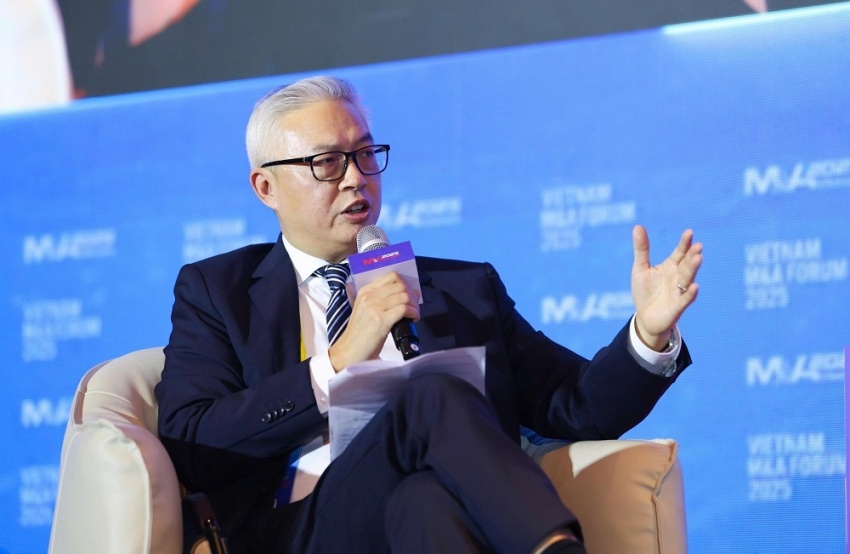 |
| Seck Yee Chung, partner at Baker McKenzie |
Seck Yee Chung, partner at Baker McKenzie, added that geopolitical shifts are accelerating supply-chain reallocation to Asia and Southeast Asia, including Vietnam.
“However, Vietnam must compete with ASEAN neighbours for investment flows. The government’s direction in infrastructure and investment is encouraging, and Vietnam is also pushing innovation, AI, and its ambition to build an international financial centre,” he said.
Comparing Vietnam’s capital market with regional peers, Chung noted that, “SGX is trying to reinvent itself, Hong Kong is actively attracting more international issuers, and Vietnam is on track to achieve emerging market status. Regulatory reforms are under way, and we hope the IPO process continues to become smoother, clearer, and faster.”
Drawing from practical business experience, Dang Van Thanh, chairman of TTC Group, said that aside from government policies, Vietnamese enterprises must proactively improve governance, identify opportunities, and be ready to absorb foreign capital.
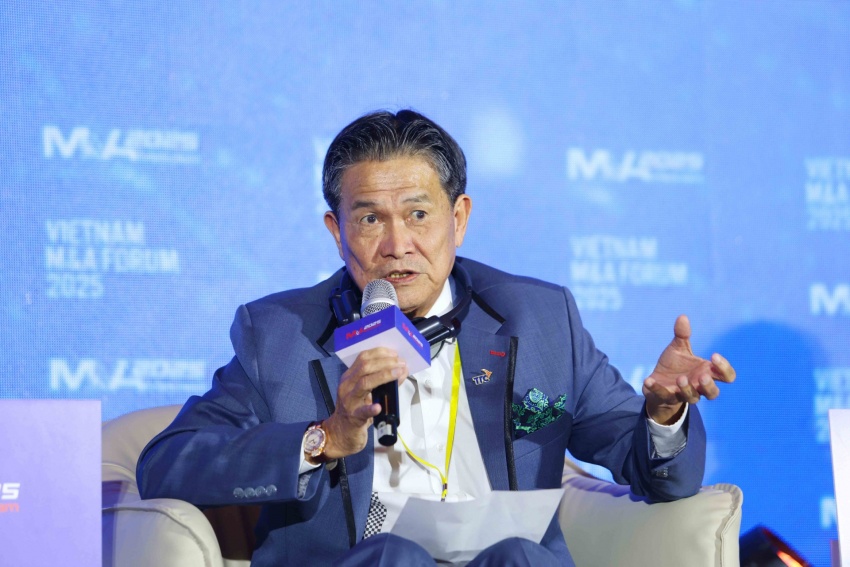 |
| Dang Van Thanh, chairman of TTC Group |
Dinh The Anh, head of corporate finance at KPMG Vietnam, said that as an advisory firm, one of KPMG’s priorities is to help Vietnamese clients better prepare in terms of compliance, data readiness, and strategic thinking.
“Currently, not many Vietnamese companies or business owners prepare clear exit plans. Therefore, KPMG always looks for ways to facilitate sell-side transactions, which requires advisors to take a broader, more holistic view,” he said.
“We are waiting for the stock market upgrade. Once this happens, investors will have better avenues for exits,” he said. “For private equity investors across Southeast Asia, not only in Vietnam but also in Malaysia and Thailand, exits have always been challenging and critical. We hope that after the upgrade next year, the stock market will become a key exit channel.”
 | |
|
 | Vietnam’s M&A market opens new opportunities amid strong economic momentum The Vietnam Mergers and Acquisitions (M&A) Forum 2025, themed “New Position, New Momentum”, took place with the economy on track to complete the government's 2025 targets and the entire 2021-2025 socioeconomic plan. |
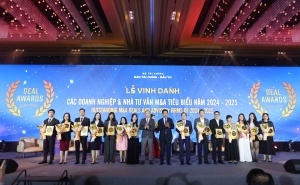 | Forum honours outstanding M&A deals, strategies, and advisory firms At the 17th Vietnam Mergers and Acquisitions (M&A) Forum held on December 9, the organising committee announced the outstanding M&A deals and advisory firms of 2024-2025, as evaluated by an independent selection committee. |
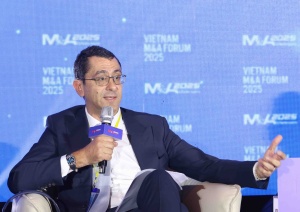 | Unpacking new momentum in Vietnam’s M&A market Participants at the Vietnam Mergers and Acquisitions (M&A) Forum 2025 delved into the new momentum driving Vietnam's M&A landscape, highlighting emerging opportunities and practical solutions for executing successful transactions. |
What the stars mean:
★ Poor ★ ★ Promising ★★★ Good ★★★★ Very good ★★★★★ Exceptional
 Tag:
Tag:
Latest News
More News
- Vietnam’s registered FDI surpasses $50 billion in nine months (October 07, 2026 | 10:30)
- Samsung Electro-Mechanics to add $1.85 billion semiconductor investment in Thai Nguyen (October 06, 2026 | 18:23)
- Electronics funding will be won via a capable ecosystem: SGS (October 06, 2026 | 09:00)
- LNG power plant projects risk falling behind schedule (October 03, 2026 | 09:00)
- Pandora opens world’s largest fine jewellery crafting facility (October 02, 2026 | 22:21)
- An Phat 5 Industrial Park positions for new wave of investment in northern Vietnam (October 02, 2026 | 09:00)
- Hanoi to launch portal to ease hurdles for tech businesses (October 01, 2026 | 09:00)
- Foreign investors to be widened for market access (September 30, 2026 | 17:54)
- Phu Quoc Airport planning adjusted to serve APEC 2027 (September 30, 2026 | 17:35)
- Nearly 200 foreign-invested enterprises in Vietnam to pay global minimum tax (September 30, 2026 | 17:26)


Latest News




 Mobile Version