
UK experience complements Vietnam’s financial ambition

The UK is increasing its ties with Vietnam in many sectors, and particularly in supporting Vietnam’s ambition to develop an international financial centre (IFC). How is the economic cooperation being advanced?
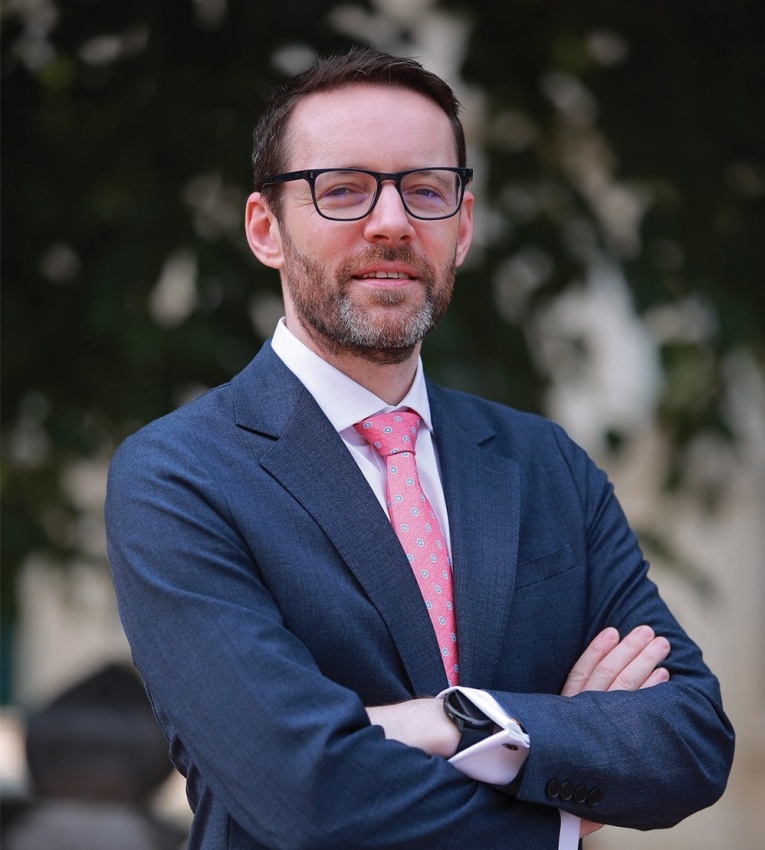 |
| British Ambassador to Vietnam, Iain Frew |
I’m delighted that this year has been a milestone in our bilateral relationship, with the upgrade between the UK and Vietnam to a comprehensive strategic partnership. That reflects the progress we’ve made over recent years on our economic relationship. We have seen trade over the past decade almost triple in scale to now £9 billion ($12.16 billion) per year between our two countries.
Also, the UK has now joined the Comprehensive and Progressive Agreement for Trans-Pacific Partnership, and UK and Vietnamese companies are increasingly working together.
This is all very positive, but we also want to build on that in the next phase. The upgrade of our relationship and the strong signal we have sent to the businesses of the two sides is that we want to see this develop further in new areas.
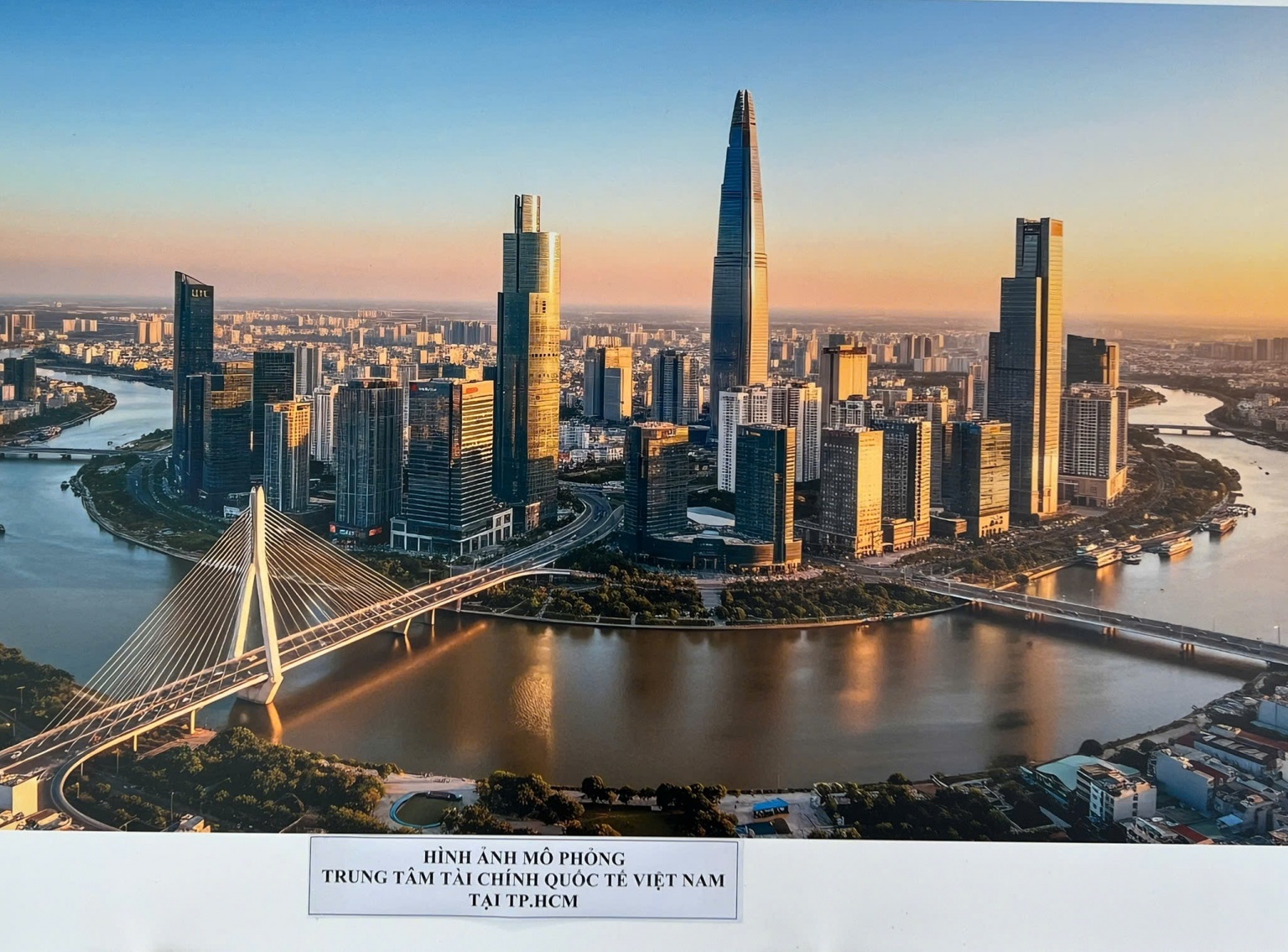
The ambition to build an IFC is very positive. It is now taking real momentum and real steps forward. This is a very natural stage for Vietnam as it moves up our middle income to high-income status by 2045. The UK has been working very closely to share our experience with the Vietnamese government, the regulatory authorities, of how we have done development of London’s financial centre.
But Vietnam’s model will be for Vietnam to decide and it will be appropriate to Vietnam. I am really pleased to see that so far we have a direction for the international financial centre in Ho Chi Minh City and Danang, including some key elements and outlines for how the IFC will be set up, including for a specialised court.
What fundamental factors have enabled London to sustain its international financial role over time, and what high-level lessons could Vietnam consider in developing its own IFCs?
That’s not something that you can easily recreate, but the factors that underpin London’s success are actually something that are common to other centres’ success as well.
The first of those is a stable and predictable regulatory and legal basis so that those investors coming in understand what they can and cannot do, and if there is a problem or a dispute between parties, getting them resolved.
The second thing that is important is infrastructure: traditional infrastructure that you need of the financial quarter with buildings; technical and IT infrastructure; and infrastructure of training institutions and professional bodies, for example in accountancy, to help to develop skills and set high standards.
In addition to that and more, very relevant to Vietnam’s own IFC is working out what the specialism is. What do people go there for? Over London’s history, people have gone there for different things. Sometimes it is trade finance, green finance, commodities, etc. And nowadays, fintech and financial innovation is a big part of London’s brand.
What key strengths and potential does Vietnam currently have for developing an IFC?
Market players understand how to agree contracts, how to move forward with deals. And they understand that there is a clear macroeconomic stability.
The regulators and the State Bank of Vietnam have set a framework under which the macroeconomic stability has maintained clearly over recent years. And where elements like currency or inflation are set within very clear boundaries that investors can understand. That is all very helpful.
At the same time, there is a network of international agreements that Vietnam has increasingly either created or become part of. They are all vital underpinnings because they send strong signals to investors that Vietnam’s environment and the rules under which trade and investment happens are governed under these ways that have been agreed internationally. That all provides a lot of confidence.
But there is room for Vietnam’s IFC to emerge as a key element. The country’s location is helpful and the population is young and well-educated. These are all elements that are attractive to any investors. If you’re looking at where you might have a financial transaction or how you might develop an IFC, these factors are all important underpinnings.
There are some clear advantages, but there are obviously some challenges as well. It’s a competitive marketplace internationally, and it’s really important to keep moving with the times. Continuing to send strong signals of stability, predictability, and rule of law to the international market, but showing a willingness to listen and to adapt, will be important factors going forward.
How do you expect financial cooperation between Vietnam and the UK to contribute to sustainable development and the international standing of both countries?
One of the reasons why trade is really brewing between our two countries is because our economies are very complementary.
The UK has been traditionally very strong in services and some very specific areas in the manufacturing industry, like pharmaceuticals or specific kind of high-tech areas. As Vietnam develops, we’re going to see that complementarity fit together really well. Vietnam’s development means there is a growing demand for some of the services that the UK is really specialist in, like financial services, education, and healthcare.
These are all areas that are in demand. At the same time, what Vietnam has to offer as it’s moving up the value chain is of huge interest to the UK. Vietnam is a key part of manufacturing supply chains, increasingly advanced manufacturing supply chains, and UK consumers and businesses are benefiting from this by linking into Vietnamese producers, linking into Vietnamese capability.
If I go to the UK, there are some very visible elements of that. If I go to a shop or a supermarket, Vietnamese products from cashews to electronic goods are all very visible and very present. But that’s going to only develop a little bit further.
Meanwhile, Vietnam is pushing for English to be the second language of education in the country. The UK boasts many world-leading institutions and universities, and they are building partnerships with Vietnamese institutions. If you look at areas like life sciences and healthcare, you’ve got leading UK companies working and investing here because they know that there is a future of advanced health technology, AI in medicine, and innovative treatments and vaccines. These are going to be developed not just in the UK and sent to Vietnam, but developed together.
And I can’t finish without mentioning the energy transition and the green transition as well, because this has been fundamental to the UK’s recent development over the last decade, moving away from fossil fuels and towards renewable energy. Vietnam is on its way on that journey, and the UK is working very closely with Vietnam on developing the regulatory frameworks and also bringing investment to the table. This is because a fast-growing economy needs more energy, particularly renewable energy. Offshore wind, solar, transmission technology, and areas like hydrogen all need investment and collaboration.
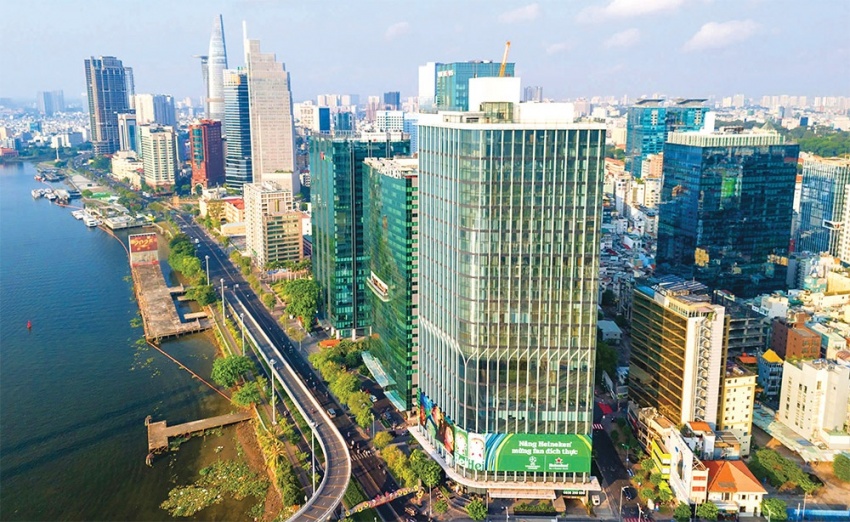 |
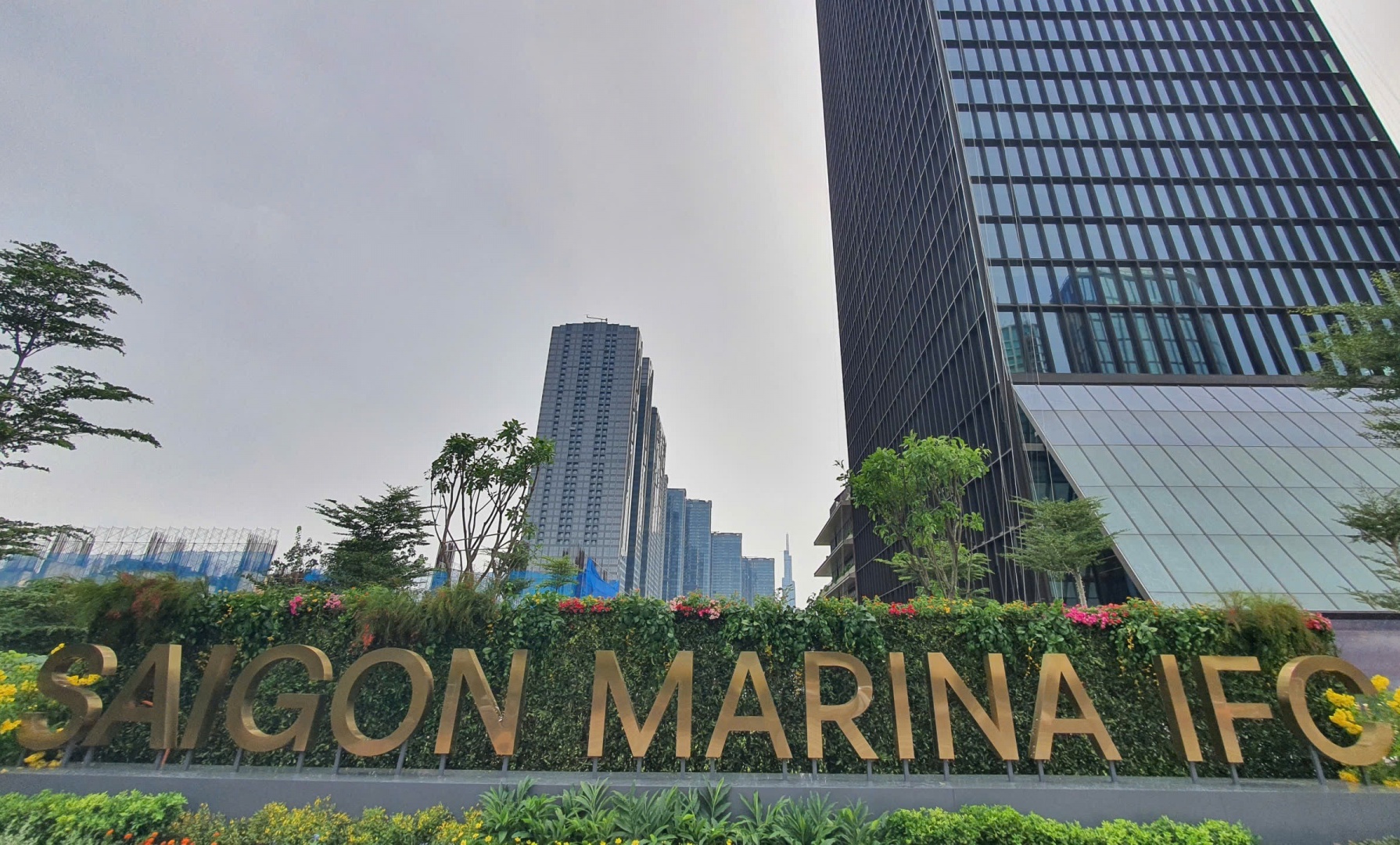
| Infrastructure across buildings, IT, and professional bodies are all required for a financial centre that works |
| Under Decree No.324/2025/ND-CP dated December 20 on financial policies in the international financial centres (IFC) in Vietnam, when it comes to corporate income tax (CIT), the government shall: . Apply a CIT tax rate of 10 per cent for a period of 30 years, with a maximum exemption of no more than four years and a 50 per cent reduction in tax payable for a maximum of nine subsequent years, for income of enterprises from implementing new investment projects in the IFC area. The projects operate in industries prioritised for development at the IFC. . Apply a CIT rate of 15 per cent for a period of 15 years, with a maximum exemption of no more than two years and a 50 per cent reduction in tax payable for a maximum of four subsequent years, for income of enterprises from carrying out new investment projects in the IFC area that are not listed in the prioritised industries in the IFC. The period for applying preferential tax rates to income earned from the implementation of new investment projects as stipulated in these two points is calculated from the first year the project generates revenue. The tax exemption and reduction period is calculated from the first year of taxable income from the investment project. In cases where there is no taxable income in the first three years, starting from the first year of revenue from the implementation of the new investment project in the IFC area, the tax exemption and reduction period is calculated from the fourth year. |
What the stars mean:
★ Poor ★ ★ Promising ★★★ Good ★★★★ Very good ★★★★★ Exceptional
 Tag:
Tag:Related Contents


Latest News


More News
- Vietnam’s registered FDI surpasses $50 billion in nine months (October 07, 2026 | 10:30)
- Samsung Electro-Mechanics to add $1.85 billion semiconductor investment in Thai Nguyen (October 06, 2026 | 18:23)
- Electronics funding will be won via a capable ecosystem: SGS (October 06, 2026 | 09:00)
- LNG power plant projects risk falling behind schedule (October 03, 2026 | 09:00)
- Pandora opens world’s largest fine jewellery crafting facility (October 02, 2026 | 22:21)
- An Phat 5 Industrial Park positions for new wave of investment in northern Vietnam (October 02, 2026 | 09:00)
- Hanoi to launch portal to ease hurdles for tech businesses (October 01, 2026 | 09:00)
- Foreign investors to be widened for market access (September 30, 2026 | 17:54)
- Phu Quoc Airport planning adjusted to serve APEC 2027 (September 30, 2026 | 17:35)
- Nearly 200 foreign-invested enterprises in Vietnam to pay global minimum tax (September 30, 2026 | 17:26)


Latest News




 Mobile Version