
Rice stocks struggle to gain traction despite strong export growth

The global rice market experienced significant volatility in 2025 after India completely lifted its export restrictions, leading to a rapid increase in supply and putting downward pressure on global rice prices.
Meanwhile, Thailand recorded a sharp decline in rice exports, while Vietnam faced a double challenge from India's price competition and tighter import policies in several overseas markets.
Entering 2026, the rice industry continues to operate in an intensely competitive environment.
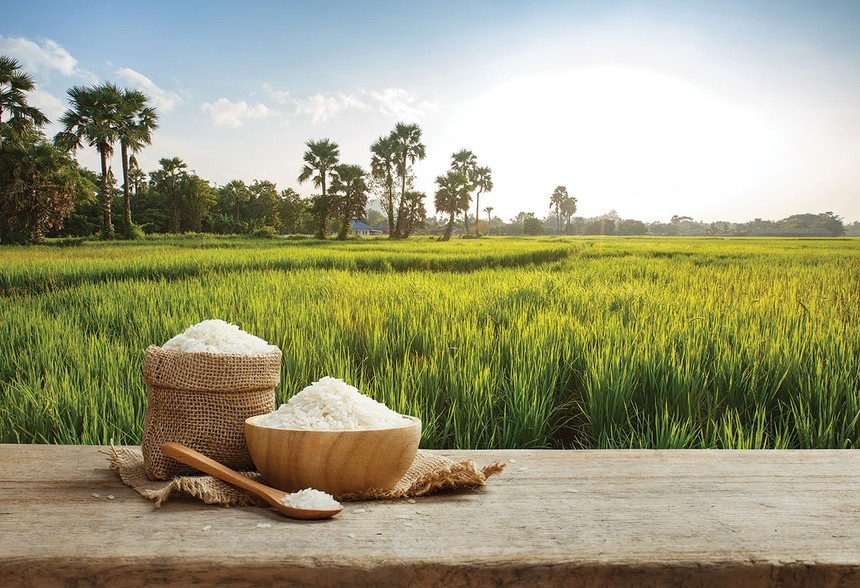 |
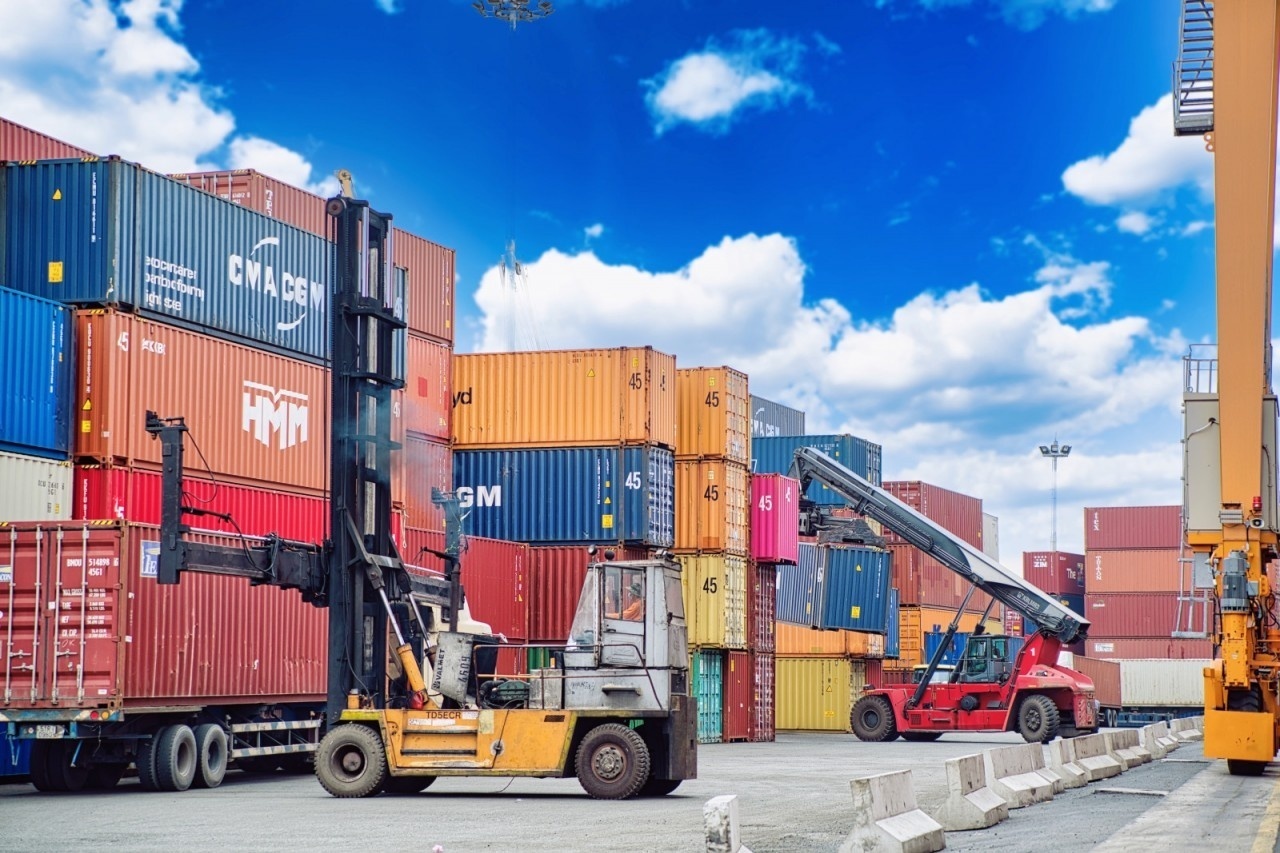
| Vietnam maintained strong rice export volumes in the first half of 2026, but export earnings declined amid intensifying global competition |
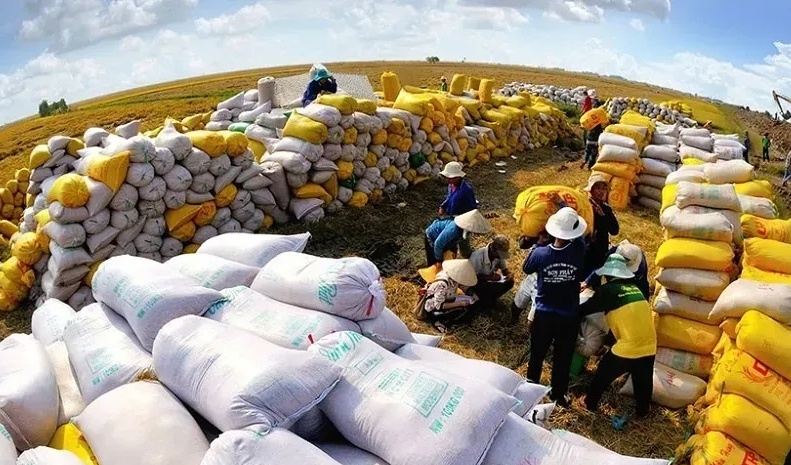
According to the Ministry of Agriculture and Environment, Vietnam exported approximately 5.2 million tonnes of rice in the first six months of the year, generating $2.38 billion in export revenue, up 9.9 per cent in volume but down 2.5 per cent in value from a year earlier.
The figures highlight a familiar reality for the rice industry: companies may increase sales volumes, but profitability does not necessarily improve in tandem because of lower selling prices, higher logistics and financing costs, and intense international competition.
Nevertheless, many companies are pursuing new strategies to increase value-added products.
For instance, Vietnam National Seed Group (NSC), whose two main businesses are seed production and rice exports, is expanding into markets including China and the United States while developing high-quality raw material areas to support exports to Japan.
According to the company's management, its strategy has shifted away from simply increasing output toward developing premium rice varieties, applying advanced technology and building brand recognition to enhance product value.
For 2026, Vinaseed targets revenue of $114 million, up 24 per cent from the previous year, and pre-tax profit of $12.6 million, representing growth of 14 per cent, while still factoring in weather-related risks that could affect crop yields.
Similarly, Trung An High-Tech Farming JSC (TAR) continues to pursue a strategy focused on premium-quality and low-emission rice.
The company is participating in the development of around 20,000 hectares of raw material areas in the Long Xuyen Quadrangle, while restructuring its finances by working with banks to refinance outstanding loans and divesting stakes in several subsidiaries to reduce interest expenses.
Even so, Trung An's earnings target remains modest. In 2026, the company aims to generate consolidated revenue of $140 million and after-tax profit of just $480,000, reflecting the structurally thin profit margins typical of the industry.
Despite stronger export performance, rice stocks have remained largely subdued on the stock market.
Currently, only ticker NSC continues to trade above par value, while TAR, LTG, AGM and FCS are all trading below par.
Ticker LTG of Loc Troi Group JSC has been placed under warning status and is subject to trading restrictions after the company failed to publish its audited financial statements for 2024 and 2025.
Valuations also remain depressed. TAR is trading at a price-to-book (P/B) ratio of around 0.21 times, while LTG has a P/B ratio of 0.24 times and a price-to-earnings (P/E) ratio of approximately 2.87 times. NSC is trading at a P/B ratio of 0.82 times and a P/E ratio of 5.66 times.
However, low valuations alone have not been sufficient to attract investors, who remain concerned about earnings prospects and the financial health of the companies.
Beyond the prolonged losses at An Giang Import-Export JSC (ticker AGM), Loc Troi Group has become a prime example of the challenges facing the industry. Once one of Vietnam's leading rice exporters, the company has endured two years of financial, debt and corporate governance difficulties.
At its extraordinary general meeting of shareholders on May 11, the management said the company was implementing a restructuring programme, working with two lenders TPBank and MB to restructure outstanding loans, while securing a credit facility of around $60 million to supplement working capital.
Loc Troi aims to complete its audited financial statements in the third quarter of 2026 after appointing a new external auditor.
Meanwhile, Trung An is also addressing outstanding legal issues while restructuring its operations and capital structure.
The company believes its recovery prospects will improve in 2026, supported by its premium rice export business.
However, the management acknowledged that the restructuring process will require more time before its benefits are reflected in financial results.
Even companies with relatively stable operations continue to demonstrate the industry's structurally thin margins.
Ho Chi Minh City Food JSC generated revenue of more than $13.1 million in 2025, but reported after-tax profit of only about $9,200.
For 2026, the company targets revenue of nearly $15.6 million, while its after-tax profit target is only $8,200. exchange rate fluctuations, interest rates, funding costs and credit policies are expected to remain key factors affecting business performance.
According to analysts, rice stocks are highly cyclical, with performance heavily influenced by global agricultural commodity prices, export policies, weather conditions and climate change. At the same time, the industry's thin profit margins make it difficult for companies to deliver substantial earnings growth even when export volumes are strong.
Over the longer term, the sector's growth prospects lie in the development of premium-quality rice, low-emission rice and stronger brand positioning in high-value export markets.
However, for rice stocks to become more attractive, investors will need to see meaningful improvements in profitability, cash flow and corporate governance, rather than relying solely on export volume growth.
 | Rice stocks not a cause for concern Despite growing complexities of disease and salt intrusion, Vietnam has enough rice for both exports and domestic consumption. |
 | 10 companies honoured for efforts to expand sustainable rice farming The Netherlands Development Organisation SNV in Vietnam, on May 19, organised the Award Ceremony for the Summer–Autumn Season of 2025 to recognise 10 companies demonstrating outstanding performance in partnering with smallholder farmers on sustainable rice farming practices. |
 | Vietnam rice exports to recover on high-quality demand Following a decline at the beginning of the year, Vietnam's rice exports are expected to recover thanks to increased import demand and a consumer trend favouring high-quality rice. |
 | Rize raises $31 million to accelerate sustainable rice farming in Vietnam and Southeast Asia On July 16, Rize, Southeast Asia's leading sustainable rice platform, announced the close of a $31 million Series B funding round, comprising $20 million in equity and $11 million in debt financing. |
What the stars mean:
★ Poor ★ ★ Promising ★★★ Good ★★★★ Very good ★★★★★ Exceptional
 Tag:
Tag:
Related Contents



Latest News





More News
- Sojitz in Vietnam: 40 years from individual projects to a business cluster 'KATAMARI' (October 08, 2026 | 09:00)
- Coteccons targets 'Quality Growth' with 25 per cent dividend plan (October 07, 2026 | 13:00)
- Vietnam Education Forum opens UK Education Mission's Hanoi visit (October 07, 2026 | 12:27)
- Tax authorities deactivate TINs of nearly 180,000 businesses (October 07, 2026 | 12:08)
- World Bank raises Vietnam's 2026 GDP growth forecast to 7.4 per cent (October 07, 2026 | 11:41)
- Vietstock 2026 to spotlight livestock innovation and green transition (October 07, 2026 | 09:00)
- Vietnam’s GDP grows over 9 per cent in first nine months (October 05, 2026 | 18:45)
- Vietnam earns $56.3 billion from agro-forestry-fishery exports (October 05, 2026 | 18:32)
- DSV balances resilience and decarbonisation in supply chains (October 05, 2026 | 18:20)
- Electronics exports reach $175.4 billion in the first nine months (October 05, 2026 | 18:12)



Latest News




 Mobile Version