

Insurance market splits in Q1 amid market divergence

Data released by the National Statistics Office on April 4 shows that total insurance premium revenue in the first quarter of 2026 was estimated at $2.28 billion, up 2.5 per cent on-year.
 |
Of this, life insurance generated $1.32 billion, down 2.5 per cent, while non-life insurance reached $0.96 billion, surging 10.2 per cent.
These figures highlight a clear divergence between the market’s two core pillars. While the non-life segment has maintained positive growth momentum, supported by rising demand for asset protection, healthcare, and short-term risk coverage, life insurance has yet to emerge from the prolonged downturn that began in 2025.
Speaking to VIR about shifting consumer sentiment, BIDV MetLife CEO Elena Butarova noted that inflation is not only a cost issue but also a factor that was significantly reshaping consumer behaviour.
“As living costs rise and household budgets tighten, consumers tend to shift from needs-based spending to prioritising essential values. In that context, insurance is not eliminated from spending plans, but customers become more selective, demanding transparency, efficiency, and optimised protection value. This creates pressure for life insurers to restructure both their products and market approach,” she said.
To adapt, insurers are rapidly transitioning towards flexible, personalised product design models. Instead of rigid insurance packages, customers are increasingly empowered to adjust product structures according to their financial circumstances at different life stages. At the same time, companies are placing greater emphasis on the long-term value of insurance.
According to industry experts, the impact of current geopolitical and economic conditions is not merely cyclical but is reshaping how the life insurance sector operates and grows.
Interest rate pressures, inflation, and financial market volatility are forcing insurers to shift from scale-driven expansion to quality-focused strategies, prioritising risk control, capital optimisation, and sustainable product development.
One clear example is the rollout of next-generation product ecosystems that integrate protection, savings, and healthcare benefits, aligned with the practical needs of Vietnamese consumers.
Alongside product innovation, pricing strategies are also being adjusted towards a more long-term and sustainable direction
According to Butarova, the challenge of inflation can only be addressed through disciplined investment thinking and prudent financial management.
In addition, to ease cash flow pressure on customers, insurers have diversified premium payment options. Allowing quarterly payments instead of annual schedules enables policyholders to better balance their finances while maintaining long-term coverage.
Another notable trend, according to Butarova, is the shift from a ‘pay-out upon risk occurrence’ model to one focused on ‘accompaniment and value creation’. Under this approach, insurance is no longer a passive product but becomes part of a broader health and lifestyle ecosystem.
Companies such as BIDV MetLife are integrating additional services including health consultations, testing, at-home vaccinations, and programmes aimed at raising awareness of self-care.
The goal is to deliver tangible value in the present, rather than focusing solely on future benefits. This approach not only strengthens customer engagement but also helps reshape perceptions of insurance – from a purely financial instrument into a life companion.
Given current developments, the insurance market in 2026 is expected to remain polarised. The non-life segment is likely to sustain growth on the back of demand for asset and health protection, while life insurance may require more time to recover.
However, inflationary pressure and shifting consumer behaviour could also act as catalysts for industry restructuring. Companies that adapt quickly, enhance product value, and maintain financial discipline are likely to gain a competitive edge in the period ahead.
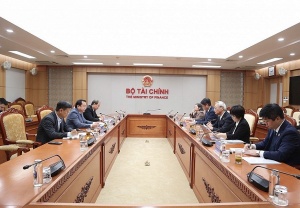 | Vietnam, MS&AD Group deepen insurance ties for market growth The Ministry of Finance is strengthening its partnership with Japan’s MS&AD Insurance Group to promote risk-based management and sustainable growth in the insurance sector, aiming to unlock the market’s untapped potential. |
 | Non-life insurance market in sees bright spots in H1 despite rising challenges Vietnam's non-life insurance sector continues to expand, posting double-digit growth in the first half of 2025, fuelled by new products, digital initiatives, and robust underwriting performance. |
 | Insurance market building the next chapter of protection After a prolonged period of adjustment and restructuring, Vietnam’s insurance market is turning a corner. As the industry enters a new development cycle, 2026 is shaping up to be more than a growth milestone; it marks a defining moment for insurers to rethink their role, shifting from product-led providers to long-term partners that help build resilience for businesses, individuals, and the wider Vietnamese economy. |
What the stars mean:
★ Poor ★ ★ Promising ★★★ Good ★★★★ Very good ★★★★★ Exceptional
 Tag:
Tag:






Latest News





More News
- Insurance struggles to keep pace with electric vehicle boom (July 28, 2026 | 17:27)
- AM Best maintains stable outlook on Vietnam's non-life insurance sector (July 27, 2026 | 11:59)
- Non-life insurers rebound on strong first-half results (July 24, 2026 | 16:24)
- Hanoi Re named “Best (Re)Insurer” as record profits and ratings upgrade mark 15th anniversary (July 24, 2026 | 09:00)
- NNX opens first insurance centre in Hanoi (July 08, 2026 | 16:17)
- Vietnam to unlock long-term savings through expanded pension fund (June 11, 2026 | 14:04)
- Infrastructure boom fuels expansion of non-life insurance market (June 06, 2026 | 14:40)
- Igloo expands into life insurance with Chubb Life partnership in Vietnam (June 06, 2026 | 11:25)
- Vietnam targets 25 per cent micro-insurance coverage by 2030 (June 05, 2026 | 14:42)
- Willis and Global Parametrics deliver payouts to coffee farmers hit by storms (May 22, 2026 | 09:39)


Latest News






 Mobile Version