
AI reshapes securities market as technology meets new test of trust

At the Vietnam Securities Tech Summit 2026, organised by IEC Group on August 21 in Ho Chi Minh City, experts and regulators said that the modernisation of the securities market is entering a new phase, with the focus shifting from simply expanding scale towards data interoperability, the use of AI to better understand investors, and stronger system security, in preparation for a historic market-upgrade milestone.
Trinh Son Hong, acting chairman of the Ho Chi Minh Stock Exchange (HSX), said market modernisation should not be understood simply as investment in new technologies.
“More importantly, it requires building an infrastructure that can connect more effectively, leverage data more efficiently, scale more flexibly, and operate more securely,” Hong said. “AI, cloud computing, big data and other advanced technologies are transforming the way the financial sector operates, is governed and delivers services. However, alongside these opportunities come new requirements for data governance, privacy, system security and managing dependence on technology providers.”
Hong said the modernisation process requires coordination among regulators, stock exchanges, market participants and the technology community. Such coordination aims to identify practical needs, share implementation experience, and gradually establish appropriate standards for data, technology and system security.
“From HSX’s perspective, developing technology infrastructure, strengthening data capabilities and ensuring system security are identified as key factors in supporting stable market operations in the new phase. The ultimate goal of digital transformation is to build a market that operates more efficiently, is better connected, makes better use of data and is ready to meet emerging requirements,” he added.
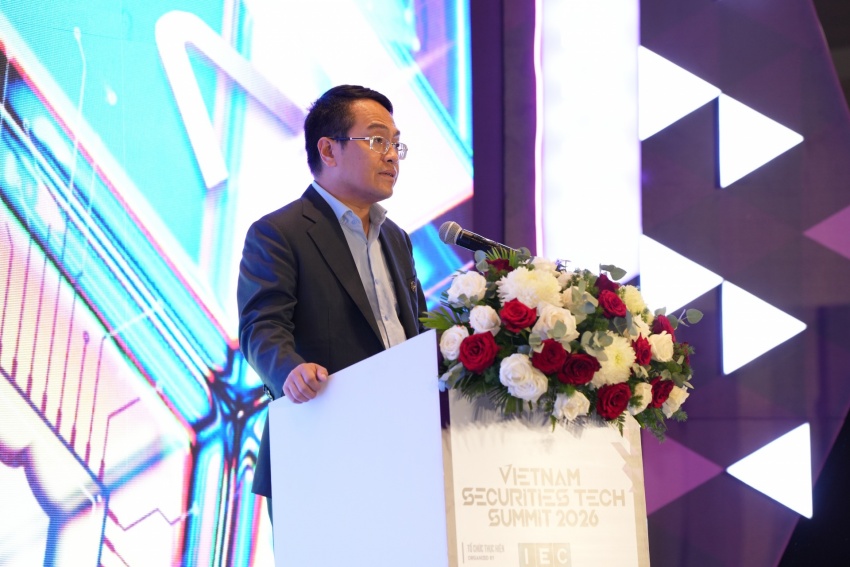 |
| Trinh Son Hong, acting chairman of the Ho Chi Minh Stock Exchange. Photo: IEC Group |
Nguyen Xuan Quang, executive assistant to the chairman of SSI Securities Corporation, said AI could help securities companies analyse customer behaviour in real time, provide recommendations tailored to individual investors, and enable chatbots and virtual assistants to respond to requests almost instantly.
“Today, not only securities companies but also many brokers are using AI to analyse stocks and provide investment recommendations. At the same time, the technology can be exploited for impersonation, generating fake investment recommendations or spreading misinformation,” he said. “However, one of the major challenges is that AI can generate inaccurate information or assessments that are presented in a convincing manner. When AI is used to provide investment advice to clients, who should be held responsible if the advice is wrong and results in losses?”
According to Quang, this risk is becoming increasingly significant as both securities companies and individual brokers adopt AI for stock analysis and investment recommendations.
“The technology can also be exploited for impersonation, generating fake investment recommendations or spreading misinformation,” he said. “Therefore, at SSI, AI can support the provision of recommendations but does not replace human decision-making. AI can make recommendations, but it does not make decisions on behalf of people. Humans must retain the final decision.”
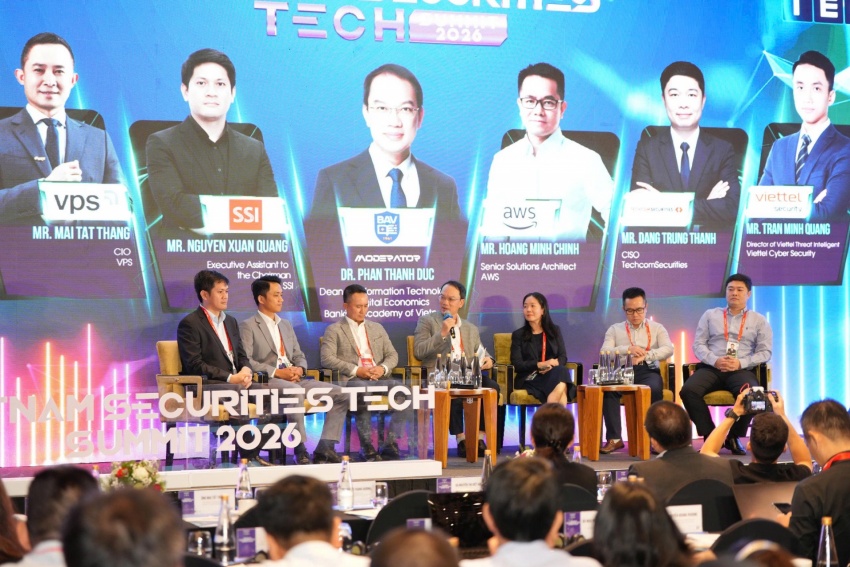 |
| Overview of the Vietnam Securities Tech Summit 2026. Photo: IEC Group |
Nguyen Thi Huong Thao, head of Digital Products & Services at Stanley Brothers Securities Incorporation (SBSI), said technology creates convenience, while data and AI, when used effectively, create deeper customer understanding, and that understanding is ultimately what keeps customers.
“Businesses that personalise effectively can generate up to 40 per cent higher revenue. At SBSI, we have developed a four-layer application framework comprising a data foundation (Customer 360), needs identification, action and measurement to turn raw data into real customer experiences. Instead of sending the same market updates to everyone, AI helps accurately segment customer needs, from new investors who require guidance, to active traders who prioritise speed, as well as investors focused on long-term accumulation and accounts at risk of churn,” she said.
Le Van Phuong, deputy director general of the Technology and Digital Transformation Department under the State Securities Commission (SSC), said that alongside the rapid development of digital technologies, the securities market was facing risks including cyberattacks, data breaches, high-tech fraud and digital scams.
“This creates a need to further strengthen information security capabilities while enhancing measures to protect investors,” he said. “The SSC will accelerate the application of digital technologies in regulation, inspection and market supervision, enhance its ability to detect early signs of irregularities, and strengthen risk management. The objective is to help ensure that the market operates in an open, transparent and secure manner as technology becomes increasingly embedded across the market.”
 | Securities firms post diverging results as margin lending boosts some Second-quarter 2026 earnings of securities firms revealed a stark divergence, with a number of companies posting record profits thanks to margin lending and proprietary trading, while many others saw earnings plunge due to underperforming investment portfolios. |
 | FDI listing hurdles lie beyond securities law With the current position of Vietnam's stock market, the State Securities Commission expect foreign-invested enterprises to become one of the key providers of high-quality listings for the market, reflecting its integral role in the economy. |
 | AI banking reshapes future of finance Global stablecoin transaction volumes have surged nearly 10,000-fold over the past seven years, underscoring the rapid transformation of the financial sector under the impact of AI, blockchain, and fintech, while demand for tech-driven financial talent continues to rise. |
What the stars mean:
★ Poor ★ ★ Promising ★★★ Good ★★★★ Very good ★★★★★ Exceptional
 Tag:
Tag:
Related Contents





Latest News



More News
- Vietnam and Switzerland to deepen financial cooperation (October 19, 2026 | 13:24)
- Carbon finance hinges on viable ventures (October 19, 2026 | 09:59)
- AI to transform the future of finance (October 19, 2026 | 09:04)
- Government proposes relaxing IPO conditions (October 19, 2026 | 08:00)
- Citi warns of intensifying competition for capital amid higher rates (October 16, 2026 | 16:54)
- Banks poised for Q3 profit growth amid margin pressure (October 16, 2026 | 16:51)
- Eximbank to strengthen corporate governance structure (October 16, 2026 | 11:32)
- Citi honours 13 banks with 2025 STP Awards (October 15, 2026 | 16:01)
- Green transition requires realistic roadmap (October 14, 2026 | 17:31)
- VIR workshop explores credit policy and carbon market development (October 14, 2026 | 11:22)








 Mobile Version