
SMRs seen as strategic solution for Vietnam’s energy security

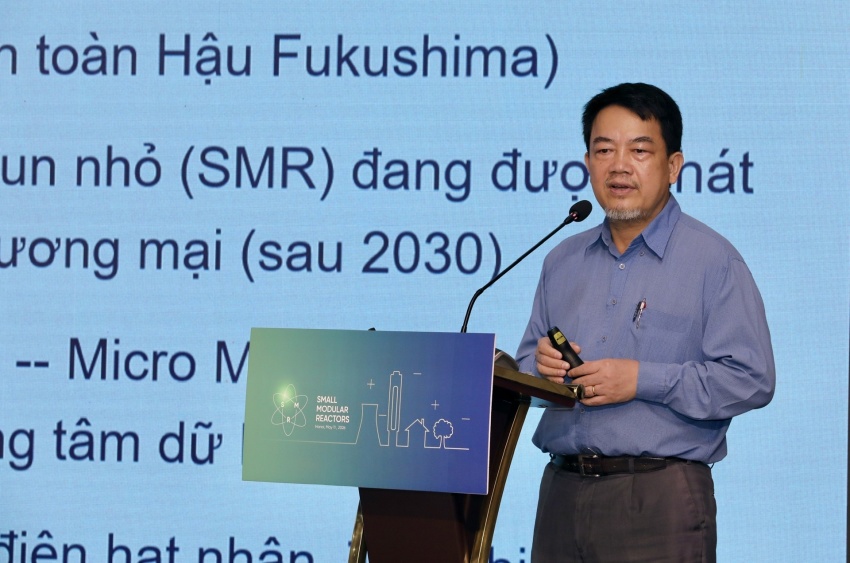 |
| Tr an Chi Thanh, president of the VINATOM |
The event took place on May 11 in collaboration with the Vietnam Atomic Energy Institute (VINATOM), bringing together senior diplomatic representatives from Russia and India, along with global nuclear industry experts and executives from leading nuclear corporations.
Tr an Chi Thanh, president of the VINATOM,the world is facing both a climate crisis and mounting pressure from disruptions to traditional energy supply chains. Against this backdrop, the global commitment to achieving Net-Zero emissions by 2050 has become a new rule shaping international trade and investment flows.
“Nuclear power is no longer viewed solely from the perspective of emissions reduction, but is increasingly tied to the broader challenge of energy security and the long-term stability of the economy,” he said. “This is why many countries are bringing nuclear power back into their Net Zero and energy transition strategies. According to international forecasts, global nuclear power capacity could double by 2050 compared to current levels, alongside the emergence of next-generation technologies designed to meet higher safety standards following the Fukushima accident.”
Among these, Small Modular Reactors (SMRs) are emerging as a particularly notable trend. Compared with conventional nuclear power plants, SMRs have smaller generating capacity, shorter construction timelines, and are expected to offer greater deployment flexibility.
“Small Modular Reactor technology is one of the nuclear technologies attracting strong international interest and has already become a growing trend, with deployment beginning across the region,” Thanh noted. He also referred to Micro Modular Reactors (MMRs), ultra-small reactors with a capacity below 10 MWe, which are currently being studied by several countries for specialised applications.
He said that the gap in technological capability and operational experience between developed countries and nations newly entering the nuclear energy sector remains substantial. “European countries and other developed economies have decades of experience in nuclear power, giving them a very advanced level of expertise, while many developing countries still lack sufficient operational experience,” he said.
Dmitry Aleksandrovich Raspopin, country director of Rosatom State Atomic Energy Corporation in Vietnam, said Rosatom currently accounts for 88 per cent of the global nuclear power plant export market. Of the 25 large-scale nuclear power projects currently under construction worldwide, 22 are being implemented by Rosatom across multiple countries.
Regarding SMR technology, the Rosatom representative highlighted the company’s RITM-200 reactor line. Russia has already commissioned four icebreakers powered by RITM-200 reactors and is continuing construction of three additional vessels, along with modernised floating nuclear power units.
"SMRs are increasingly viewed as a promising answer to modern energy challenges thanks to their flexibility and broad range of applications. Beyond electricity generation, SMRs can support district heating and cooling systems, supply power for data storage and processing centres, and replace conventional thermal power plants," Raspopin said.
"From an infrastructure planning perspective, the compact design of SMRs and the optimisation of emergency planning zones allow projects to be integrated without disrupting urban development. The technology is particularly suitable for smaller grids and remote regions facing logistical constraints," he added. "In addition to efficient land use and near-zero emissions, SMRs provide a stable, reliable, and continuous electricity supply regardless of weather or climate conditions."
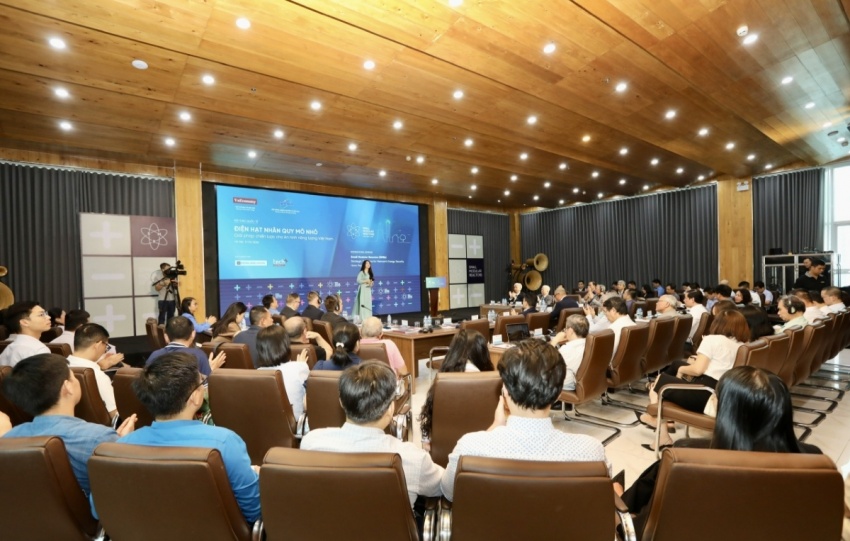 |
Tran Thu Quynh, from the Vietnam Trade Office in Canada and coordinator of the Canada-Vietnam Energy Working Group, joined the seminar virtually from Canada to discuss bilateral energy cooperation. She highlighted seven strategic advantages of Canada's CANDU technology for Vietnam: government-to-government cooperation; fuel independence using natural uranium without enrichment; 60-70 per cent localisation of the supply chain; shorter project completion timelines; the DUPIC fuel recycling cycle that converts spent fuel into reusable resources; a public-private partnership financing model developed by AtkinsRéalis; and the production of Cobalt-60 for cancer treatment and agricultural irradiation.
Susie Ho, director at Laurentis Energy Partners (Canada), also shared lessons from Poland, Sweden, and Canada that could inform Vietnam’s nuclear and SMR development pathway.
The period from 2026 to 2030 is expected to mark a significant milestone in global SMR deployment. According to reports from the International Atomic Energy Agency (IAEA) and RBC Energy, between 20 and 30 SMRs are projected to enter construction or advanced licensing stages during this period, with the global SMR project pipeline estimated at $150 billion.
In Poland, for example, Orlen Synthos Green Energy (OSGE) is actively planning the deployment of 24 BWRX-300 reactors across six sites. The company’s strategy demonstrates how industrial off-takers, digital economy demand, and a network of standardised reactors can form the foundation for scalable SMR development.
The reactors are planned for locations such as Włocławek, adjacent to chemical plants where they can provide high-temperature steam for chemical production, hydrogen manufacturing, and district heating, helping ensure both energy security and price stability. Many sites are also strategically located near retiring coal plants, enabling a smoother energy transition for industrial communities.
OSGE has additionally established a dedicated task force with the Polish Data Centre Association. Poland’s data centre sector alone could require up to 1,000 MW of power by 2034, driven by hyperscalers such as Google, Amazon, and Microsoft, all of which require access to clean 24/7 electricity.
Sweden, meanwhile, has reversed four decades of nuclear phase-out policies and is now targeting 2,500 MW of new nuclear capacity by 2045.
Canada is also emerging as a pioneer in nuclear deployment models by prioritising projects at existing nuclear sites to establish scalable templates for future expansion. By leveraging existing regulatory and environmental approvals at Darlington, the approach avoids many of the uncertainties associated with greenfield developments while accelerating site readiness and reducing project risks. Darlington remains the only site in Canada to have completed and received approval for an Environmental Assessment for new nuclear generation, giving it a major regulatory advantage.
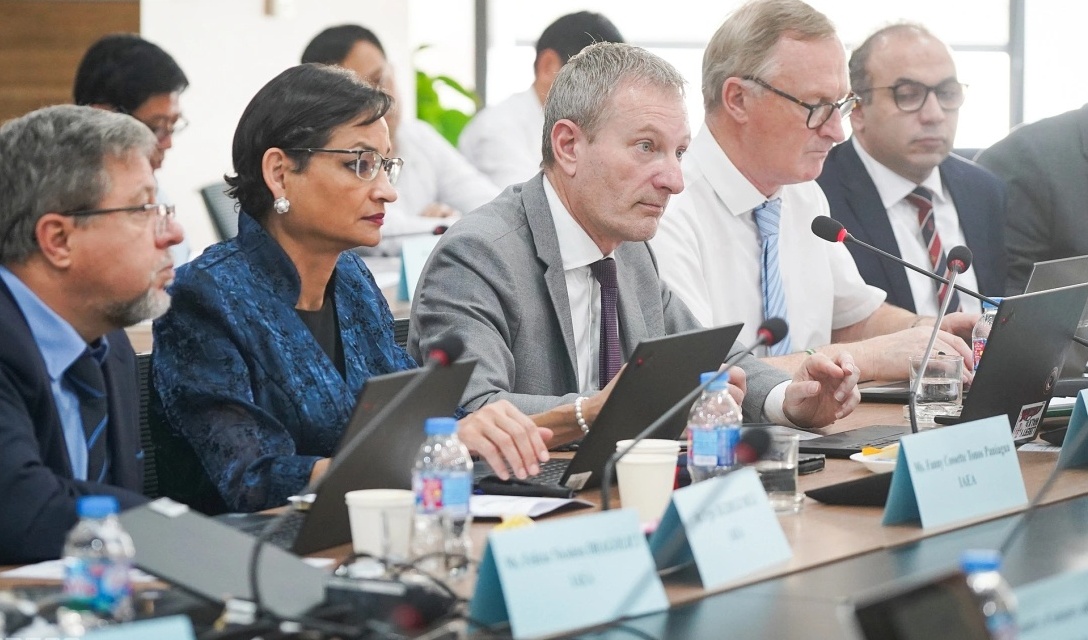
 | Vietnam undergoes IAEA nuclear infrastructure assessment The International Atomic Energy Agency (IAEA) has begun an 11-day mission to Vietnam to carry out an Integrated Nuclear Infrastructure Review (INIR) as the country advances preparations for developing nuclear power. |
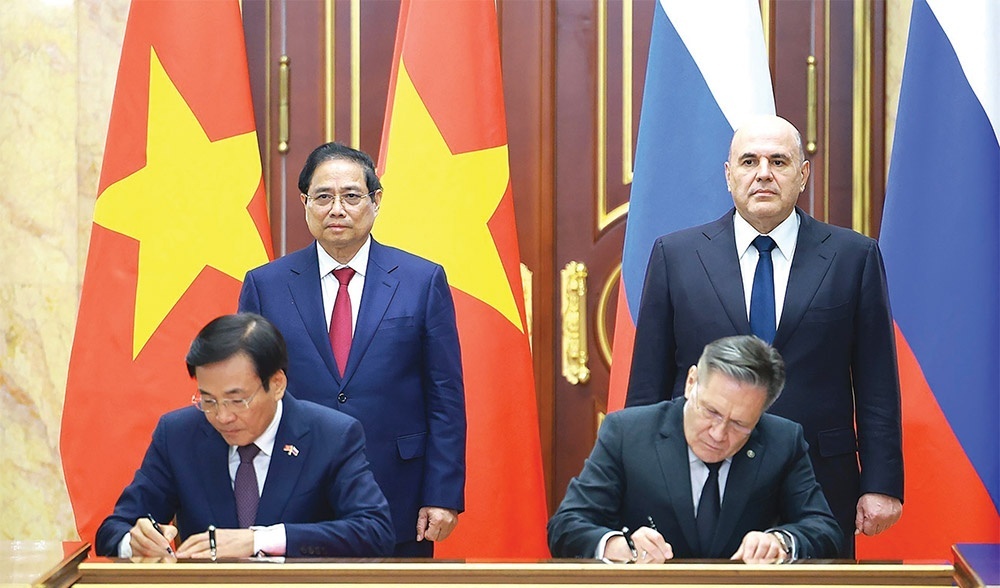
 | Russia to build 2,400 MW nuclear plant in Vietnam under new deal An intergovernmental agreement on cooperation to build the Ninh Thuan 1 Nuclear Power Plant in Vietnam has been signed during Prime Minister Pham Minh Chinh's official visit to Moscow. |
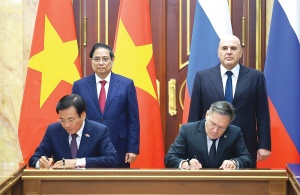 | Nuclear plans develop as crucial cornerstone Vietnam is accelerating plans to develop nuclear power as a cornerstone of future energy security. |
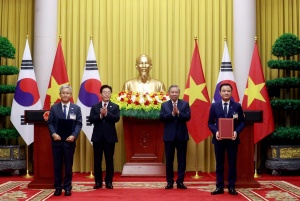 | South Korea and Vietnam agree deal on nuclear power development Korea Electric Power Corporation and the Vietnam National Industry - Energy Group have signed an MoU on potential cooperation in new nuclear power development. |
What the stars mean:
★ Poor ★ ★ Promising ★★★ Good ★★★★ Very good ★★★★★ Exceptional
 Tag:
Tag:Related Contents





Latest News
More News
- CME Solar strengthens position in Vietnamese renewables (December 30, 2025 | 11:21)
- France pledges $550 million to support Vietnam’s energy transition (October 27, 2025 | 12:16)
- ETS pilot to support Vietnam’s clean energy transition (September 26, 2025 | 14:22)
- Quang Trach II LNG-fired power plant to break ground this year (September 26, 2025 | 13:32)
- Vietnam and Germany applaud success of solar power initiative (January 21, 2025 | 09:00)
- SC VivoCity becomes the first mall in Vietnam with LEED Certification (December 18, 2024 | 15:00)
- Efficient technology solutions key factors in energy transition (September 25, 2024 | 09:00)
- Sao Do Group gears towards energy savings (December 07, 2023 | 12:01)
- Vice President Vo Thi Anh Xuan visits Copenhagen Infrastructure Partners headquarters (November 23, 2023 | 10:37)
- A wind turbine tower collapses in China (November 20, 2023 | 19:36)









 Mobile Version