

Smarter trade moves within a shifting landscape

 |
| (L-R) Runa Baksi, head of Southeast Asia Global Trade Solutions, HSBC and Surajit Rakshit head of Global Trade Solutions HSBC Vietnam |
Despite this, a curious paradox has emerged: global trade is not just surviving, but thriving. The first half of 2025 saw global trade volumes reach new highs, expanding approximately $300 billion, with a growth pace that’s rarely been seen.
However, this surge isn’t a sign of universal confidence. It is overwhelmingly driven by the front-loading of imports into the US – a rush by businesses to get ahead of the newly imposed protectionist tariffs.
While trade flows into the US have spiked, other key trade corridors, such as those from Asia to Europe, have barely deviated from pre-existing trends. This dynamic confirms that US protectionist policies are not only the biggest factor reshaping trade flows but also a source of deep, systemic uncertainty.
Since the US introduced so-called reciprocal tariffs in April, foreign delegations, including those from ASEAN, rushed to Washington, to negotiate trade deals. After months of intense negotiations, the situation appears to have stabilised somewhat. Almost every major ASEAN economy now falls into a similar 19-20 per cent tariff bracket, though the concessions made to achieve this vary.
Vietnam, a country long praised as a beneficiary of trade and foreign direct investment (FDI) diversion, received its own tariff verdict in early July, settling on a 20 per cent rate. To secure this, Vietnam has offered a number of substantial concessions, including eliminating tariffs on all imported US products, committing to significant purchases of US aircraft and agricultural goods, and implementing stricter regulations to combat trade fraud and ensure proper rules of origin.
In the near term, this similar tariff environment across ASEAN provides a level playing field, potentially maintaining the competitive advantage of existing trade and FDI beneficiaries like Vietnam, Thailand, the Philippines, and Malaysia. This may also offer some certainty for investors who have been hesitant in the past few months. However, the tariff saga is far from over, as bilateral trade negotiations are still ongoing and many questions remain unanswered.
The rise of protectionist trade policies from the US presents a complex challenge for ASEAN, creating both short-term volatility and a long-term push for strategic reorientation. In the near term, the region faces significant trade uncertainties as it is not easy to find alternative markets to replace the US, the world’s top consumer.
Some ASEAN nations initially responded to tariff threats with accelerated shipments, leading to temporary spikes in growth but also creating a sense of lingering uncertainty in the mid-term. To weather these near-term trade headwinds, ASEAN nations must demonstrate resilience and adaptability.
In the long term, however, the shift underscores the necessity for trade diversification. While the US remains a crucial partner, ASEAN’s broader trade strategy increasingly focuses on strengthening ties with other key partners like China, Japan, and South Korea, whose trade with the region collectively exceeds that of Europe.
Governments across the region are also pursuing negotiation over retaliation, boosting intra-ASEAN trade, and leaning into regional frameworks to bolster resilience, harmonise standards, and reduce their reliance on any single market. This multi-faceted approach aims to preserve long-term trade relations while unlocking new opportunities in populous economies across the Middle East, Latin America, and India.
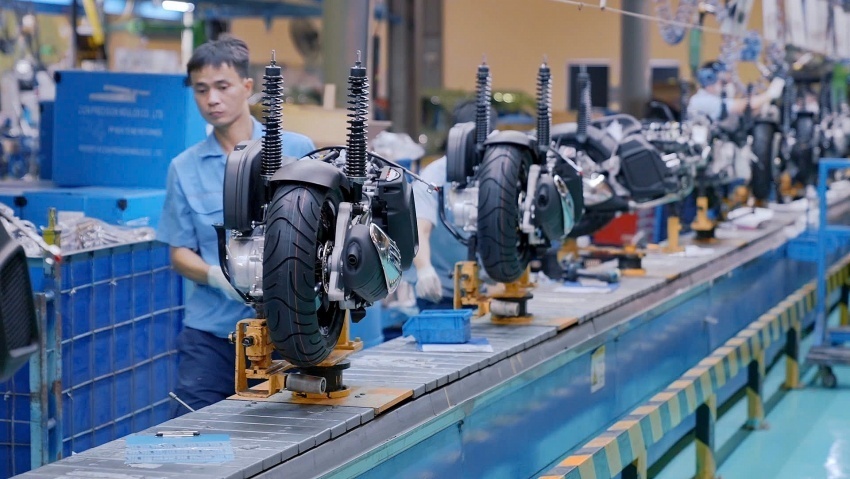
Vietnamese businesses are facing a complex set of challenges. The US shift from an anticipated 46 per cent tariff to a 20 per cent rate has led to volatility, particularly for exporters in apparel, electronics, and footwear. Some manufacturers, such as Samsung and Pegatron, initially increasing output to beat the tariff window while others, like LG, temporarily halted production due to delayed orders. This has forced companies to rethink their market exposure and seek new opportunities elsewhere.
Compounding this, a recent rollback of renewable energy subsidies for over 170 wind and solar projects has raised investor confidence concerns, as this move risks undermining power reliability - a crucial factor for Vietnam’s manufacturing boom.
Despite a thriving FDI ecosystem, Vietnam’s local upstream production has yet to develop fully. Among Samsung’s 103 core global suppliers, only 27 are located in Vietnam, and most of those are still foreign-owned firms. This dependency leaves the manufacturing base vulnerable and prevents the full capture of economic value.
To navigate this new and unpredictable landscape, Vietnamese businesses and policymakers must take proactive steps. Market diversification is crucial to reduce reliance on the volatile US market. Companies should actively explore and build demand in Europe, Japan, and other regional economies.
To enhance operational resilience, firms must prioritise supply chain agility by investing in digital integration, leveraging supply chain finance, and implementing early-warning systems. Internally, companies should invest in digital infrastructure, using APIs and ERP integration to streamline treasury processes and digitise trade documentation.
Finally, businesses must streamline compliance and human resource practices by simplifying approval workflows and strengthening internal governance.
What the stars mean:
★ Poor ★ ★ Promising ★★★ Good ★★★★ Very good ★★★★★ Exceptional
 Tag:
Tag:
Related Contents


Latest News





More News
- Partnerships streamline pathways for investors in Vietnam (September 08, 2026 | 08:58)
- Vietnam can lead the way in AI regulatory system (September 04, 2026 | 09:00)
- Vietnam's next cycle: capital shifts from low-cost manufacturing to higher-value investment and M&A (August 26, 2026 | 14:51)
- Significant steps made in related-party transactions (August 21, 2026 | 15:51)
- New challenges for workforce data and HR policy management with PIT changes (August 17, 2026 | 10:32)
- Leading in AI: from pilot initiatives to enterprise value (August 10, 2026 | 07:00)
- Programme launched to develop new Vietnamese business leaders (July 28, 2026 | 13:50)
- Vietnam must build talent and innovation to attract quality investment (July 09, 2026 | 08:00)
- AI-ready workforce key to Vietnam's next decade, analysts say (July 01, 2026 | 15:55)
- VIFC shouldn't try to be Dubai, says VinaCapital chief economist (June 24, 2026 | 14:17)








 Mobile Version