
Ride-hailing platforms shift gears in green mobility race

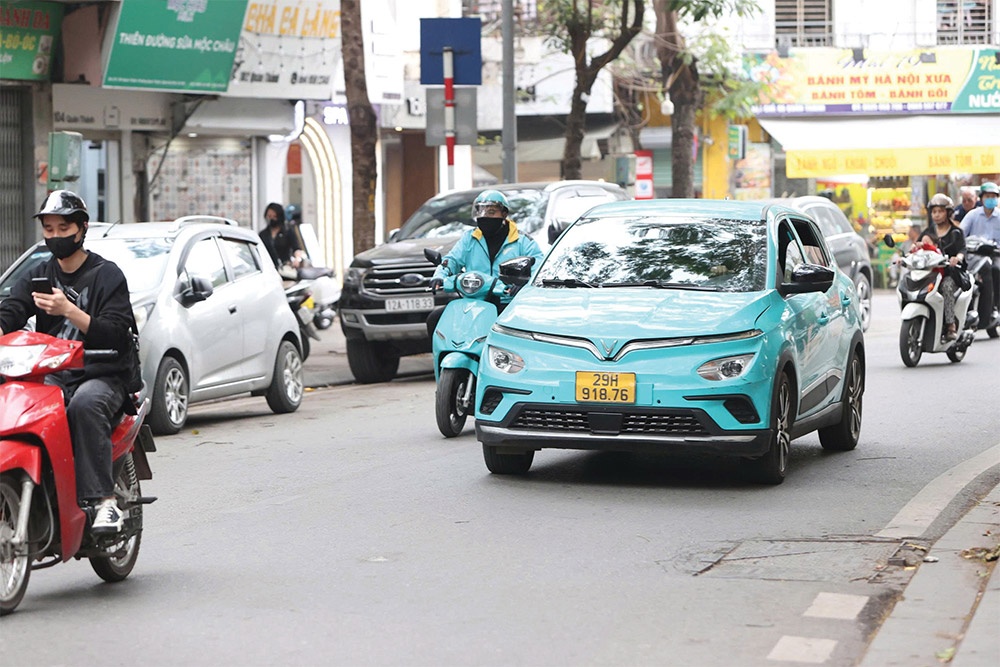 |
| Ride-hailing players in Vietnam are launching initiatives to encourage the switch to electric vehicles, Le Toan |
Last week, the Ho Chi Minh City Institute for Development Studies (HIDS) submitted a proposal to the city’s People’s Committee, supporting the city’s strategic ambition of achieving net-zero emissions and advancing transport electrification.
Le Thanh Hai, director of the Centre for Applied Economic Consulting at HIDS, revealed that Ho Chi Minh City had approximately 400,000 ride-hailing two-wheelers in operation as of late 2024. These vehicles, including passenger and delivery motorbikes, are among the highest individual emitters in the urban transport sector.
HIDS survey data showed that a typical ride-hailing driver in the city travels 80-120km per day, up to four times more than the average motorbike user. Therefore, transitioning one petrol-powered vehicle used to electric has a significantly higher environmental impact compared to regular private users.
“We chose the ride-hailing and delivery segment because it contributes the most emissions per vehicle. Addressing this group means tackling the core of the two-wheeled emission problem,” Hai said.
The conversation is also matched with the trend in the Southeast Asia. In recent years, ride-hailing platforms have actively adopted electric vehicles (EVs). In 2024, Grab announced plans to add 1,000 EVs in Indonesia, most of which will come from BYD.
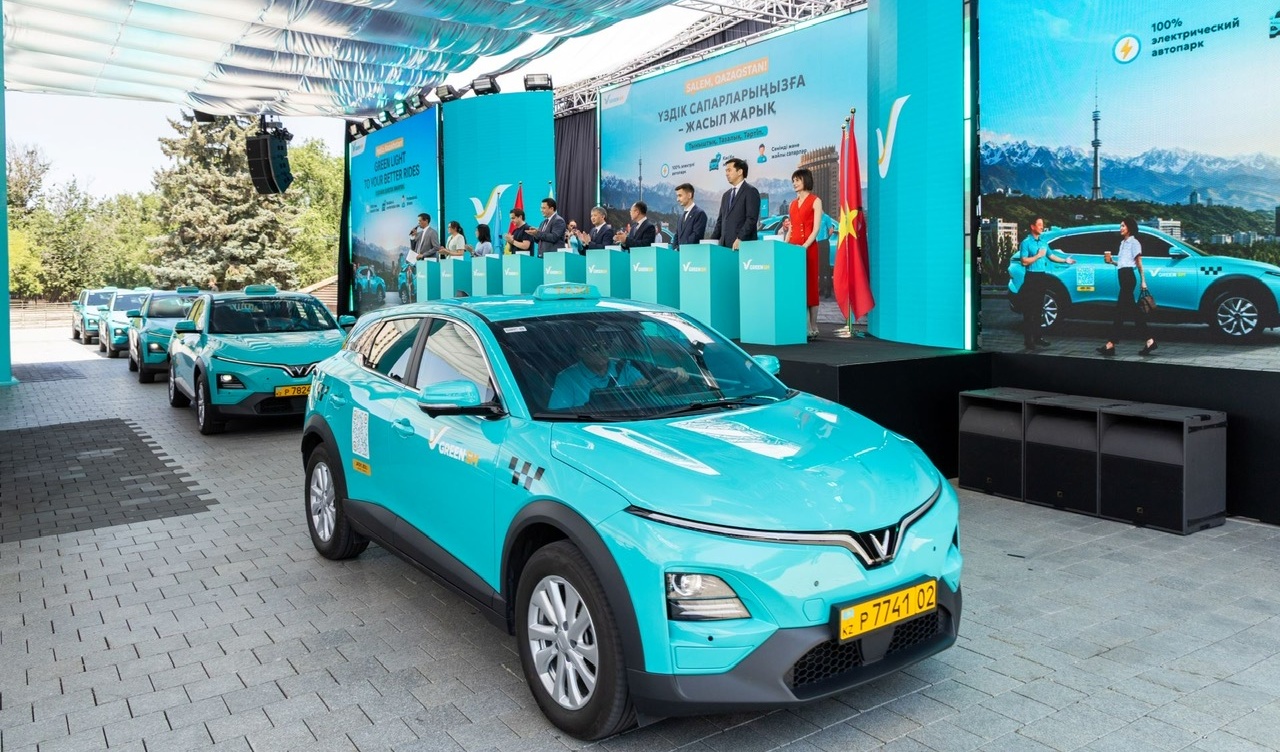
Meanwhile, Grab’s rival GoJek is focusing on the two-wheeler market and plans to convert its entire fleet to electric motorcycles by 2030, even establishing a joint venture to manufacture them. In late 2024, Vingroup launched an electric taxi service in Indonesia, leveraging its advantage as an EV manufacturer to expand its presence in Southeast Asia.
According to HIDS, the city’s air quality has seen slight improvement over the past two years, partially thanks to the growing presence of GSM’s electric motorbikes, which now account for around 40 per cent of Ho Chi Minh City’s ride-hailing market.
The proposal suggests rolling out the conversion plan from 2026, with attractive incentives to encourage drivers to shift to EVs. The roadmap includes a complete phase-out of gasoline-powered two-wheelers on ride-hailing platforms within five years.
“Electricity costs around 80 per cent less per kilometre than petrol, and EVs require less maintenance. On average, a driver could save $40-50 per month, an important margin given their typical earnings,” Hai noted.
While Ho Chi Minh City is assessing the feasibility of its plan, Hanoi has already begun preparing for its transition.
Starting July 2026, the capital will ban fossil-fuelled motorbikes within its inner Ring Road 1. The ban is expected to gradually expand to other ring roads
The assertive moves from Vietnam’s two largest markets have triggered a nationwide response from leading ride-hailing players. Grab, Xanh SM, and Be Group, currently commanding a combined 87 per cent of the national ride-hailing market, are all accelerating their green transition strategies.
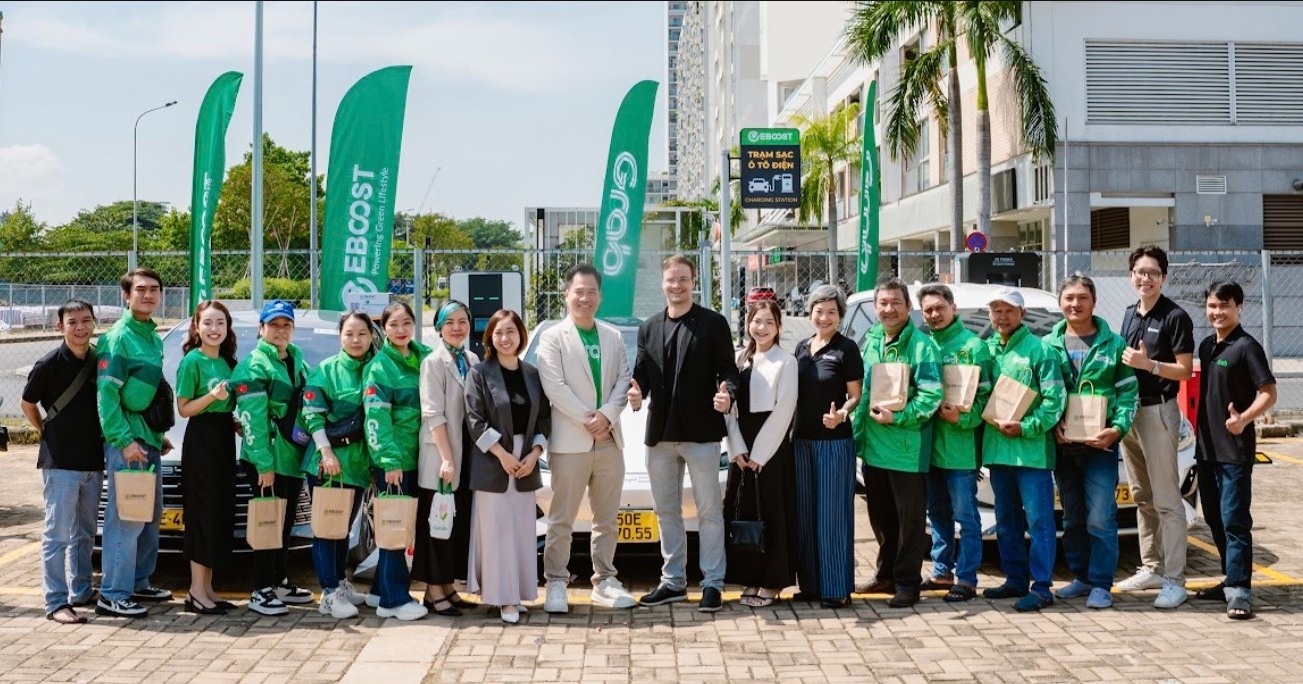
Under a programme launched in May and running through to August 19, Grab and BYD Vietnam are offering promotions to encourage drivers to switch from fuel-powered vehicles to EVs.
Perks include a guaranteed income of up to $1,000 per month for GrabCar Plus drivers, and an eight-year or 500,000-km battery warranty. The initiative highlights the BYD M6 - an electric MPV with an estimated on-road price of around $30,000 - as a recommended model for Grab drivers.
The companies say the partnership is aimed at modernising ride-hailing with quieter, more environmentally friendly vehicles, in line with growing consumer demand for premium and sustainable transport.
“This collaboration seeks to redefine ride-hailing through advanced technology and luxury comfort,” said Ouyang Xiaocheng, CEO of BYD Vietnam.
The strategy in Vietnam is a part of the regional partnership, signed in January, between Grab and BYD, China’s largest EV company, to provide Grab drivers across Southeast Asia with the right to purchase 50,000 BYD EVs at the best price.
Vietnam currently has more than 20 active ride-hailing applications, but the majority of traffic and users are concentrated on a few dominant players, according to the Ministry of Construction.
According to a Q1 report from Mordor Intelligence, Vietnam’s ride-hailing market is valued at approximately $1 billion and is forecast to reach $2.55 billion by 2030, reflecting a compound annual growth rate of 19.5 per cent between 2025 and 2033.
GSM is currently leading both the traditional taxi and app-based ride-hailing segments in Vietnam, commanding a 40 per cent market share and generating an estimated $400 million in revenue. Close behind is Grab with a 36 per cent share, while Be ranks third with just 6 per cent.
The EV segment is set to lead this expansion. Mordor Intelligence estimates a compound annual growth rate of around 45 per cent between 2024 and 2029 for EVs in Vietnam, far outpacing petrol and diesel-powered vehicle segments.
 | Capital’s e-motorbike market to surge amid looming ban A proposal to ban petrol-powered motorbikes in inner Hanoi is expected to boost demand for electric motorbikes, but concerns remain around charging infrastructure and the need for a broader product range. |
What the stars mean:
★ Poor ★ ★ Promising ★★★ Good ★★★★ Very good ★★★★★ Exceptional
 Tag:
Tag:Related Contents




Latest News






More News
- Petronas, Petrovietnam to expand energy cooperation (October 21, 2026 | 12:13)
- AI in customer experience: Finding the right level of automation (October 21, 2026 | 09:03)
- Fresh graduates fall short on soft skills, employers say (October 19, 2026 | 13:14)
- Ford innovations continue towards sustainable growth (October 19, 2026 | 09:40)
- Preparing professionals for a new business environment (October 19, 2026 | 09:13)
- KN Holdings honoured for ESG efforts in Vietnam (October 18, 2026 | 11:00)
- APEA 2026 Vietnam honours 65 outstanding leaders and enterprises (October 17, 2026 | 10:00)
- MEXC highlights AI-driven trading and broader market access at TOKEN2049 (October 17, 2026 | 09:00)
- EuroCham confidence index holds at 78.3 despite operational hurdles (October 16, 2026 | 17:27)
- Shrimp and rice firms face rising standards in export markets (October 16, 2026 | 09:00)









 Mobile Version