
Non-smoker diagnosed with early-stage lung cancer during routine health check-up

During the check-up, Cheng chose to undergo lung cancer screening with a low-dose CT scan. The scan revealed a pulmonary nodule measuring approximately 7mm.
Because the lesion was very small, doctors recommended a follow-up CT scan three months later. At the follow-up examination, the nodule had doubled in size, measuring approximately 15mm. Concerned by the rapid growth, Cheng’s daughter brought her from Cambodia to FV Hospital for further evaluation and treatment.
At FV Hospital, doctors performed a CT-guided transthoracic needle biopsy to obtain tissue samples from the lung nodule without surgery. The pathology results confirmed non-small cell lung cancer.
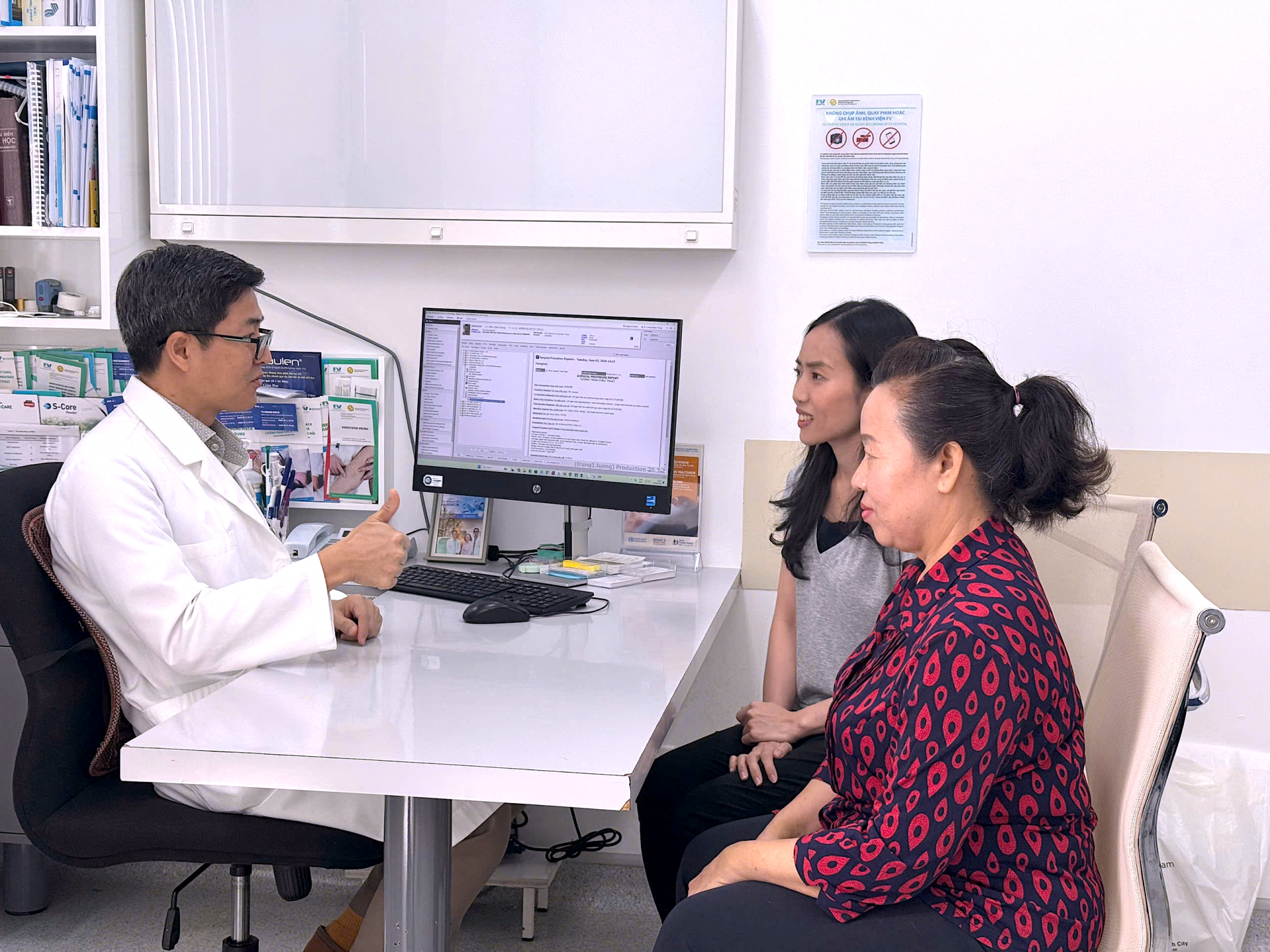 |
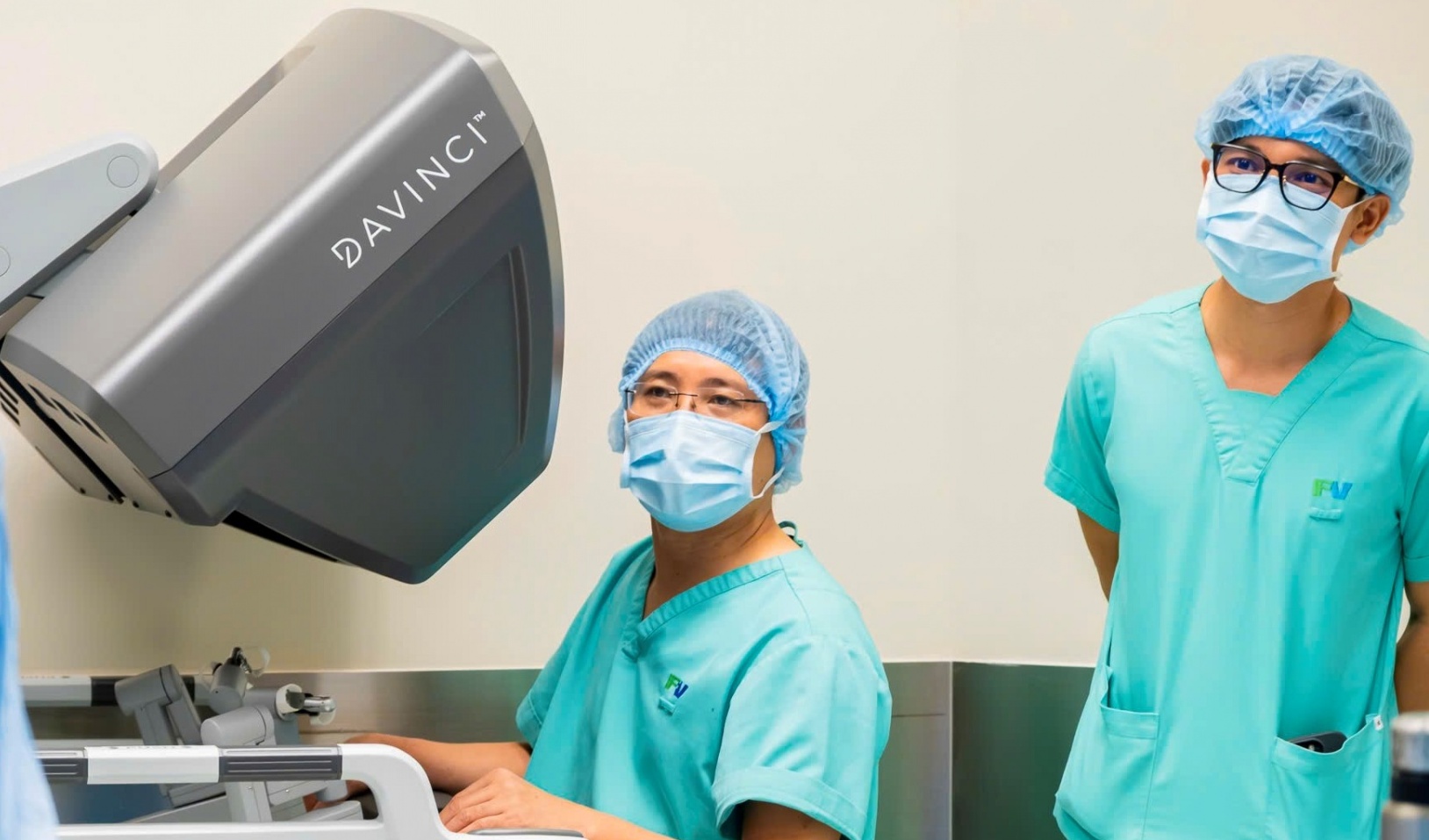
| Dr. Luong Ngoc Trung examined the patient from Cambodia. Photo: FV Hospital |
According to Dr. Luong Ngoc Trung, robotic thoracic surgeon and head of Vascular and Endovascular Surgery at FV Hospital, Cheng is a typical example of early-stage lung cancer.
"She is a non-smoker, has no family history of the disease, and experienced no symptoms at all. Without low-dose CT screening, detecting tumours at a stage when they can be completely treated is extremely difficult,” Dr. Trung said.
Following a comprehensive evaluation, Dr. Trung confirmed that the tumour remained confined to the lung, with no evidence of metastasis.
Her case was subsequently reviewed by FV Hospital’s Tumour Board, where thoracic surgeons, medical oncologists, radiologists, and other specialists unanimously recommended robot-assisted surgery using the da Vinci Xi system as the optimal treatment approach.
Early surgery
On June 2, the robot-assisted lung cancer surgery was successfully performed using the da Vinci Xi surgical system. Dr. Trung and his team completed the lobectomy and lymph node dissection in approximately 120 minutes.
With its high-definition magnified 3D vision and highly articulated robotic instruments, the da Vinci Xi system enables surgeons to operate with exceptional precision within the confined space of the chest. This helps minimise damage to healthy tissues, reduce postoperative pain, and support faster recovery.
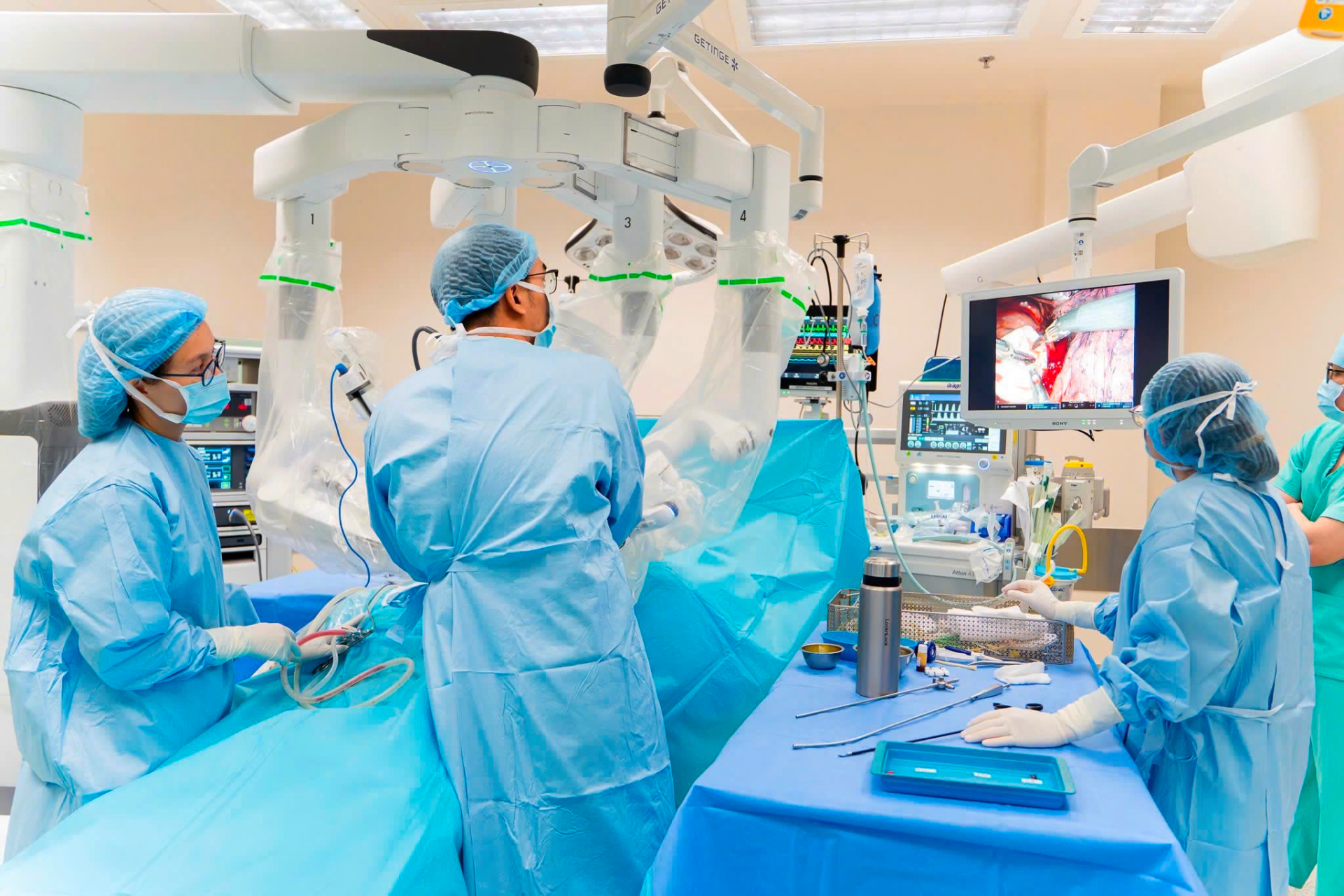 |
| Robot-assisted lung cancer surgery using the da Vinci Xi surgical system. Photo: FV Hospital |
Just one day after surgery, Cheng was able to walk independently, eat normally, and resume most daily activities. She was discharged in stable condition after three nights of postoperative monitoring.
“I am deeply grateful to all the doctors and nurses at FV Hospital. Everyone was incredibly caring and encouraging, which gave me great confidence throughout my treatment,” Cheng shared.
The final pathology report brought welcome news to the family. The tumour was confirmed as stage IA non-small cell lung cancer and had been completely removed.
According to Dr. Trung, patients diagnosed at stage IA who undergo complete surgical resection generally require only regular follow-up and do not need adjuvant chemotherapy or radiotherapy.
“The greatest relief for our family is that my mother did not have to undergo prolonged chemotherapy or radiation treatment. After just one surgery, she was able to return to her normal life,” said Kim Sovannavy, the patient’s daughter.
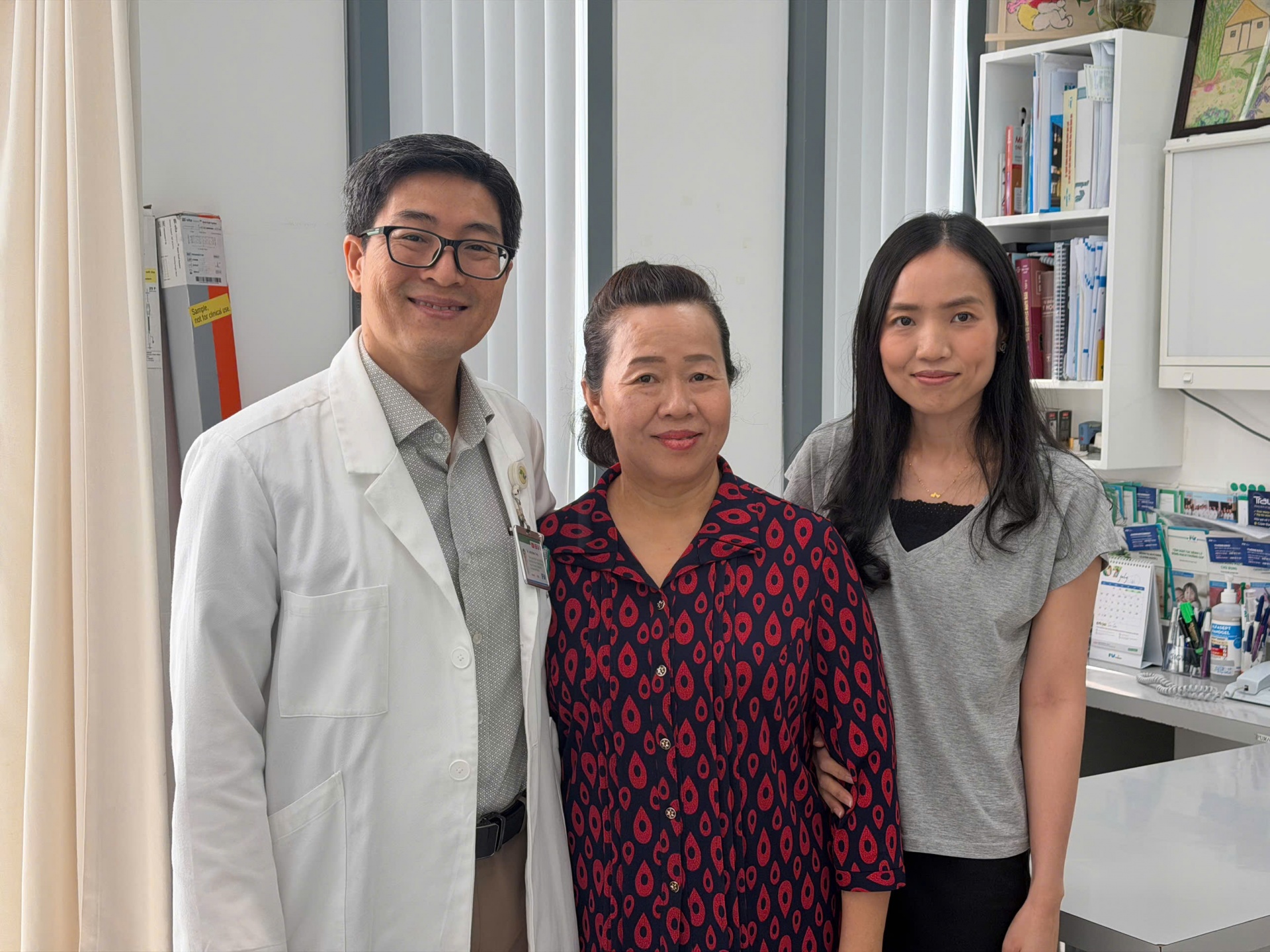 |
| Cheng had fully recovered and looked healthy at her follow-up appointment. Photo: FV Hospital |
Why low-dose CT screening matters
According to Dr. Trung, most lung cancer cases today are diagnosed only after symptoms such as persistent cough, weight loss, chest pain, or metastatic disease have developed. By then, the role of surgery becomes much more limited, and patients often require a combination of chemotherapy, radiotherapy, immunotherapy, or other systemic treatments that are more costly and generally less effective.
“When lung cancer is detected early, the five-year survival rate can reach as high as 95 per cent. This falls to around 65 per cent in Stage II, approximately 30 per cent in Stage III, and below 15 per cent in Stage IV,” Dr. Trung said.
For this reason, many countries now recommend low-dose CT screening for lung cancer in people aged 50 and older, including non-smokers and individuals without obvious risk factors.
Low-dose CT scan uses only about 1-1.5 mSv of radiation, equivalent to roughly half of the average annual background radiation exposure and approximately one-fifth of the radiation dose of a conventional chest CT scan.
Despite the lower radiation exposure, it is capable of detecting lung nodules measuring only a few millimetres. In contrast, chest X-rays may miss small lesions and are therefore no longer recommended for lung cancer screening.
FV Hospital offers flexible financial support by allowing eligible patients to combine Vietnam’s public and private health insurance, and interest-free instalment payment plans for cancer treatment and many other medical conditions.
For consultation on lung cancer screening and treatment at FV Hospital:
6 Nguyen Luong Bang street
Tan My Ward, Ho Chi Minh City ; Tel: (028) 3511 3333
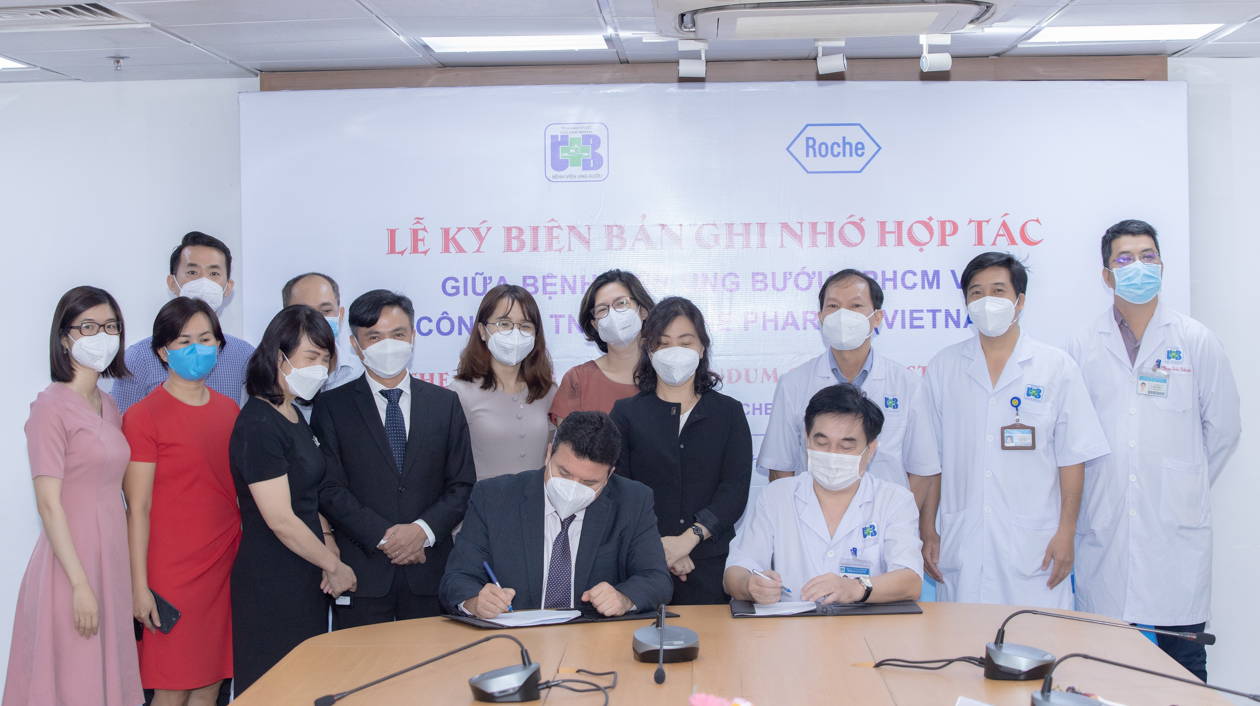 | Roche Vietnam and Ho Chi Minh City Oncological Hospital continue to improve cancer diagnosis and treatment capacity in Vietnam On March 25, Roche Pharma Vietnam and the Ho Chi Minh City Oncological Hospital (UB) signed an MoU to improve the professional capacity of the medical staff at the hospital and strengthen cooperation with domestic and foreign oncology organisations and experts for the benefit of patients and the community. |
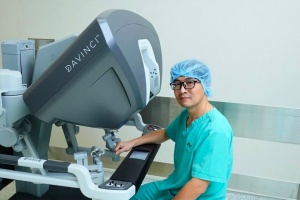 | Robotic surgery treats high-risk pulmonary mycosis After six months of unsuccessful high-dose antifungal treatment in Cambodia and Thailand, a 58-year-old Cambodian patient underwent da Vinci Xi robotic surgery at FV Hospital, preventing life-threatening massive hemoptysis and enabling rapid recovery within just three days. |
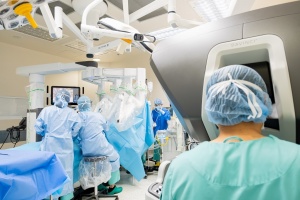 | Personalised lung cancer treatment: From genetic technology to robotic surgery The era of personalised medicine is transforming the way lung cancer is treated. By analysing the molecular characteristics of each tumour, doctors at FV Hospital can tailor treatment strategies to individual patients instead of relying on the one-size-fits-all approaches used in the past. |
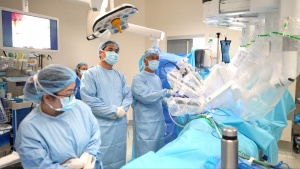 | FV doctors remove 5cm kidney tumour in time-critical robotic surgery In a four-hour robotic surgery, FV Hospital doctors successfully removed a 5cm kidney tumour, navigating a challenging tumour position and a narrow timeframe critical to preserving the patient’s kidney. |
What the stars mean:
★ Poor ★ ★ Promising ★★★ Good ★★★★ Very good ★★★★★ Exceptional
 Tag:
Tag:
Related Contents




Latest News

More News
- Carlsberg underscores long-term Vietnam commitment at Denmark talks (October 22, 2026 | 16:06)
- Brookland Group makes first investment in Vietnam's Miza Corporation (October 21, 2026 | 12:18)
- Petronas, Petrovietnam to expand energy cooperation (October 21, 2026 | 12:13)
- AI in customer experience: Finding the right level of automation (October 21, 2026 | 09:03)
- Fresh graduates fall short on soft skills, employers say (October 19, 2026 | 13:14)
- Ford innovations continue towards sustainable growth (October 19, 2026 | 09:40)
- Preparing professionals for a new business environment (October 19, 2026 | 09:13)
- KN Holdings honoured for ESG efforts in Vietnam (October 18, 2026 | 11:00)
- APEA 2026 Vietnam honours 65 outstanding leaders and enterprises (October 17, 2026 | 10:00)
- MEXC highlights AI-driven trading and broader market access at TOKEN2049 (October 17, 2026 | 09:00)









 Mobile Version