
Insurance struggles to keep pace with electric vehicle boom

Vietnam's EV market has been posting robust growth. VinFast recently announced that it delivered 17,955 electric vehicles of all types to customers in Vietnam in June alone, bringing total sales in the first six months of the year to 115,916 units, up 72 per cent on-year.
This marks the first time in Vietnam that a carmaker has surpassed the milestone of 100,000 vehicle sales within just six months, an unprecedented sales performance for an automotive brand in the country.
During the same period, Toyota Motor Vietnam sold 1,894 hybrid EVs in June, up 89 per cent from the previous month.
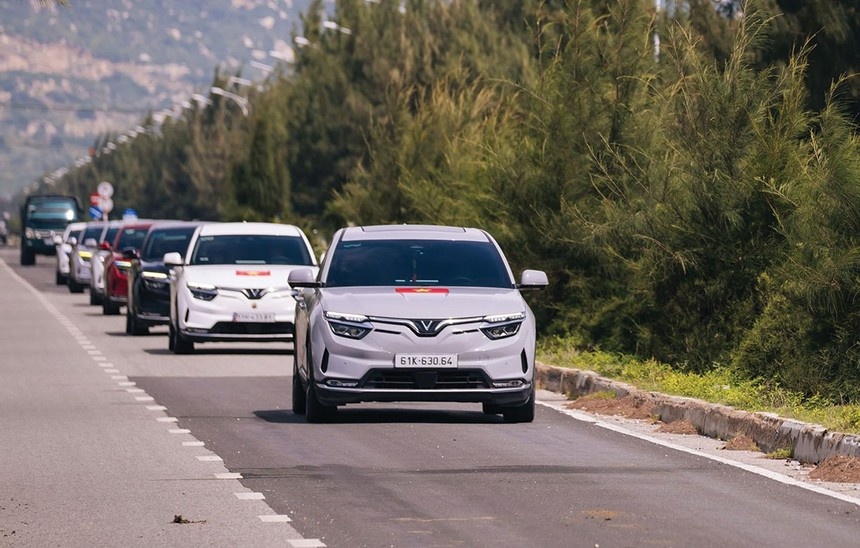 |
| EV market is developing robustly in Vietnam |
The strong growth reflects Vietnamese consumers' gradual shift towards electrified vehicles, allured by lower fuel costs and environmental benefits without requiring major changes in driving habits.
While the EV market is expanding rapidly, the domestic insurance industry's readiness to provide supporting services remains at an early stage.
The transition towards a ‘comprehensive service’ model for EVs is widely viewed as the right direction. However, given the current capabilities of local insurers, the most practical approach is largely limited to partnering with roadside assistance providers to offer emergency support when vehicles run out of battery power.
The rapid expansion of Vietnam's EV market is driving growing demand for specialised insurance solutions. Compared with internal combustion engine vehicles, EVs present a fundamentally different risk profile, with asset value concentrated in high-voltage battery systems, electric motors, control units, software and electronic components.
The battery pack alone accounts for around 30-50 per cent of a vehicle's value. In the event of a collision, flooding or thermal incident, battery replacement costs can reach several dozen thousands of US dollars, or even result in a total loss.
Given Vietnam's tropical climate, characterised by high humidity, heavy rainfall and frequent flooding, these risks are becoming an increasing concern for vehicle owners, creating demand for insurance products offering broader protection than conventional motor insurance.
According to several insurers, no company in Vietnam has yet developed a standalone motor insurance product specifically for EVs. Most continue to apply existing motor insurance policies while adding battery protection as an optional extension.
This approach is suitable during the market's early stage of development, but does not fully reflect the unique risk characteristics of electrified vehicles.
At the same time, many risk management technologies already adopted by international insurers, such as telematics, AI for analysing driving behaviour, and real-time battery monitoring, have yet to be widely deployed in Vietnam.
Meanwhile, EV data generated by different manufacturers has not yet been standardised, while data-sharing mechanisms for insurers remain highly limited.
As a result, insurers face difficulties in assessing risks at the individual customer level and continue to rely on traditional pricing methods based on vehicle specifications and claims history, rather than actual vehicle usage.
Speaking to VIR, an insurance company representative said that an EV insurance product should go far beyond simply adding battery coverage.
The characteristics of electrified vehicles require insurance coverage to be specifically designed for risks arising throughout the vehicle's lifecycle, including charging-related incidents, damage to chargers and home charging stations, high-voltage system failures, roadside assistance for battery depletion, battery health assessments, as well as usage-based pricing models built on driving behaviour and real-world operating data.
Developing such a product requires insurers not only to possess product development capabilities, but also extensive experience in motor insurance, sufficient claims data to effectively manage risks, and a nationwide network of repair garages, roadside assistance providers and loss adjusters capable of handling the specialised nature of EV claims.
In addition, close cooperation with vehicle manufacturers, repair service providers and charging network operators will be essential to gain access to data, control claims costs and enhance customer experience.
Some insurers also believe that, as EVs develop in the automotive industry, the biggest gap in Vietnam's market no longer lies in demand, but in the availability of suitable insurance products.
Developing dedicated insurance packages tailored specifically for EVs, featuring data-driven pricing models and coverage designed around the characteristics of electrified vehicles, will enable insurers to manage risks more effectively but also meet rising consumer expectations, supporting the development of Vietnam's green mobility ecosystem.
 | EBOOST secures investment from Grab to expand EV charging network Grab has announced a strategic investment in EBOOST, marking a significant milestone in the charging platform's growth and strengthening the push to expand electric vehicle infrastructure across Vietnam. |
 | GEODIS launches new EV delivery solution in Vietnam GEODIS has deployed a new electric vehicle (EV) delivery solution in Ho Chi Minh City as part of its sustainability strategy to decarbonise logistics operations and improve urban mobility. |
 | Vietnam's EV market shifts focus to software and local tech Vietnam's electric vehicle market is entering a new stage of development, with the focus expanding beyond vehicle adoption to software, connectivity, and local technology development, according to George Chia, sales director for ASEAN region at Analog Devices, Inc. (ADI). |
What the stars mean:
★ Poor ★ ★ Promising ★★★ Good ★★★★ Very good ★★★★★ Exceptional
 Tag:
Tag:
Related Contents





Latest News






More News
- Insurance's next frontier lies beyond AI (August 01, 2026 | 09:00)
- AM Best maintains stable outlook on Vietnam's non-life insurance sector (July 27, 2026 | 11:59)
- Non-life insurers rebound on strong first-half results (July 24, 2026 | 16:24)
- Hanoi Re named “Best (Re)Insurer” as record profits and ratings upgrade mark 15th anniversary (July 24, 2026 | 09:00)
- NNX opens first insurance centre in Hanoi (July 08, 2026 | 16:17)
- Vietnam to unlock long-term savings through expanded pension fund (June 11, 2026 | 14:04)
- Infrastructure boom fuels expansion of non-life insurance market (June 06, 2026 | 14:40)
- Igloo expands into life insurance with Chubb Life partnership in Vietnam (June 06, 2026 | 11:25)
- Vietnam targets 25 per cent micro-insurance coverage by 2030 (June 05, 2026 | 14:42)
- Willis and Global Parametrics deliver payouts to coffee farmers hit by storms (May 22, 2026 | 09:39)








 Mobile Version