

Free trade strategies suitable for Southeast Asia

 |
| Justine Aroll, general manager of Trade Strategy Fonterra |
Our growth in Southeast Asia has been underpinned by high-quality trade deals such as the ASEAN-Australia-New Zealand Free Trade Area (AANZFTA), the Regional Comprehensive Economic Partnership, and also the Comprehensive and Progressive Agreement for Trans-Pacific Partnership.
These agreements have helped reduce tariffs and non-tariff barriers (NTBs), simplify customs procedures, and, importantly, create mechanisms to resolve trade issues, offering much-needed business certainty amid ongoing global trade and geopolitical disruptions.
In today’s unpredictable environment, these frameworks are more critical than ever. They provide exporters like Fonterra with resilience and continuity across borders, ensuring our supply chains remain fluid.
Structural trends in the region further support this momentum. Rising incomes, urbanisation, a growing middle class, and the integration of dairy into both traditional and modern diets continue to drive demand. Western-style dining, in particular, is expanding rapidly and often incorporates dairy-rich ingredients, creating opportunities for both retail and food service growth.
New Zealand’s exports to ASEAN reached around $2.8 billion in 2024, highlighting the region’s economic weight. For Fonterra, seven of our top 15 global markets are in ASEAN - Vietnam, Indonesia, Malaysia, Thailand, the Philippines, and Singapore, with Australia included under the AANZFTA framework.
Among these, Vietnam stands out as a priority market. It combines rising demand for high-quality dairy with the potential to contribute to regional supply chains, making it a valuable partner in both market access and future production capability.
NTBs continue to create significant operational challenges, even in markets with comprehensive free trade agreements in place. One of the most common issues we face is the persistence of complex or duplicative administrative procedures.
These can affect various stages of the export process, ranging from customs clearance to product and factory registration, pre-shipment inspections, and in-country audits. Often, multiple agencies are involved, leading to overlapping responsibilities and confusion for exporters.
We also encounter non-transparent import licensing processes. These may include unclear application requirements or licences being tied to unrelated conditions, such as commitments to support local dairy industries. It’s important to note that this is not the case in Vietnam, where the regulatory environment has been notably efficient and transparent.
A second recurring challenge is the inconsistent application of rules by government agencies. This can result when centrally issued decisions are not consistently implemented across different ports of entry, leading to variable interpretations for the same shipment and adding administrative complexity.
A third issue relates to unclear or overly broad regulations, particularly around labelling requirements. In some ASEAN markets, regulations intended for consumer-facing goods are ambiguously drafted and applied to food service or ingredient products. This leads to confusion at the border about which rules apply to which product types.
When retail labelling standards are unnecessarily applied to bulk or intermediary ingredients in manufacturing, exporters face increased compliance burdens. While we fully support clear labelling for consumer safety and traceability, the same obligations may not be appropriate for business-to-business products not sold directly to end consumers.
In some instances, both product categories are treated the same during clearance, further compounding complexity. These regulatory misalignments, though often unintentional, can significantly disrupt operations, especially for those exporters navigating multiple ASEAN markets.
However, we see strong potential for deeper collaboration between New Zealand, Vietnam, and the wider ASEAN bloc to address NTBs and strengthen regional trade facilitation. While barriers exist in all markets, our experience in Vietnam has been notably positive. Vietnamese authorities are constructive and open to engagement, making the country one of the most supportive environments for exporters in the region.
On that basis, we see Vietnam as a natural leader within ASEAN on NTB reform, and a promising strategic partner for New Zealand to drive greater regulatory coherence across Southeast Asia. Practical areas for collaboration could include simplifying administrative procedures, adopting science-based international standards, and advancing mutual recognition or equivalence systems. These steps would deliver greater certainty for exporters.
More broadly, Vietnam is increasingly well-positioned to play a key role in regional supply chains. With its strong network of trade agreements, improving infrastructure, and regulatory transparency, Vietnam offers a compelling base for international firms.
 | Free trade zone impacts and future solutions for logistics A free trade zone (FTZ) is an economic area where goods can be imported, stored, processed, and re-exported without being subject to import duties or other non-tariff barriers. FTZs play an important role in promoting international trade, especially the logistics industry – a sector that plays a core role in connecting the global supply chain. |
 | Free trade zone to be established in Danang The government has signed a decision to set up Danang Free Trade Zone (FTZ) spanning across an area of 1,881 hectares. |
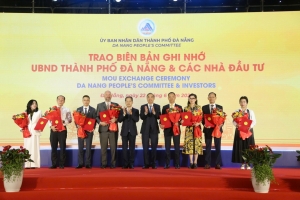 | Positive signals from Vietnam’s first free trade zone in Danang A decision by the government to launch the first free trade zone (FTZ) in Danang signals a strategic push towards deeper regional connectivity and global trade integration. |
What the stars mean:
★ Poor ★ ★ Promising ★★★ Good ★★★★ Very good ★★★★★ Exceptional
 Tag:
Tag:
Related Contents




Latest News





More News
- Partnerships streamline pathways for investors in Vietnam (September 08, 2026 | 08:58)
- Vietnam can lead the way in AI regulatory system (September 04, 2026 | 09:00)
- Vietnam's next cycle: capital shifts from low-cost manufacturing to higher-value investment and M&A (August 26, 2026 | 14:51)
- Significant steps made in related-party transactions (August 21, 2026 | 15:51)
- New challenges for workforce data and HR policy management with PIT changes (August 17, 2026 | 10:32)
- Leading in AI: from pilot initiatives to enterprise value (August 10, 2026 | 07:00)
- Programme launched to develop new Vietnamese business leaders (July 28, 2026 | 13:50)
- Vietnam must build talent and innovation to attract quality investment (July 09, 2026 | 08:00)
- AI-ready workforce key to Vietnam's next decade, analysts say (July 01, 2026 | 15:55)
- VIFC shouldn't try to be Dubai, says VinaCapital chief economist (June 24, 2026 | 14:17)








 Mobile Version