
Catalyst for growth in difficulty


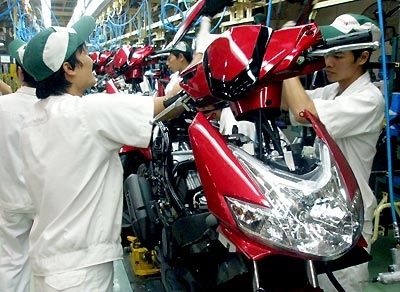 However, it seems that the country does not escape from the impact of the global recession. The development of Vietnam after the crisis is gradually slowed down and shows signs of depression.
According to World Bank, GDP growth of Vietnam is 5.7 per cent in 2012 before increasing to 6.3 per cent and 6.5 per cent in the next two years. Vietnam is ranked at number 22 in the charts with strong growth in the export products such as textile, oil, electricity, rice and machinery. However, there remain challenges for transformation of the industry structure to more high-valued industry, because the majority of the output is still based on agricultural products, seafood and natural resources.
This difficult micro-environment has cast a shadow over operations and financial results of local and foreign enterprises in Vietnam.
Looking back the investing trends in the past few years, many domestic firms followed the crowd's trends. Businesses borrowed funds from banks and invested in different (non-core) areas such as finance and real estate, without careful analysis of the internal and external situations and consultation from professionals.
As a result, many companies could not turnover investing capital and got stuck in the recession. In addition, high interest rate raised burden of debt and made it more challenging for businesses.
Consequently, in the first six months of 2012 there was more than 26,324 corporate dissolution or cessation of business operation.
Tribeco, a local company with over 20 years of history, was no longer owned by its founder. The M&A contract recently turned Tribeco into 100 per cent foreign-owned company. On the other hand, some foreign enterprises withdrew from the market for many reasons such as the current economic situation, frequent policy changes, corruption, unfavorable infrastructure, pirated product and shortage of qualified human resource. In the end, large enterprises such as Shell Gas, Beeline, Bourbon decided to exit from the market.
Despite the fact that Vietnam has serious challenges, it is certain that Vietnam is still appealing for foreign enterprises, with attractiveness of large population, competitive labour cost, and geographical advantage. The increase of foreign companies will make the market in Vietnam more competitive. In such a prospective-in-mid-term but severe-in-short-term environment, more prompt and appropriate decisions by managements are required. In some cases, restructuring of business or organisation is also necessary.
Like catalysts in chemical experiments which are used to start or accelerate chemical changes, professionals contribute clients to accelerate their growth or restructure their business and organizations. Management consultants, for instance, have expertise and knowledge based on abundant experiences of clients’ transformation all over the world. Sharp insights for customers, competitors and companies would take the clients to leading positions in the cutthroat markets.
Now is the time for generation of our own management culture; a mixture of Vietnamese own tradition and foreign advanced technology. The catalysts are not only for companies but for socio-economy.
| About the author: Tatsuhiro Ogawa currently is the general director of Corporate Direction Vietnam Co. CDI was founded in 1986 in Tokyo, Japan and had 27 years of success in management consulting and market research. Since then CDI expanded their business to Vietnam and across ASEAN countries. Please visit CDI-Vietnam for more information: www.cdi-v.com |
What the stars mean:
★ Poor ★ ★ Promising ★★★ Good ★★★★ Very good ★★★★★ Exceptional
 Tag:
Tag:
Related Contents


Latest News


More News
- Hermes joins Long Thanh cargo terminal development (February 04, 2026 | 15:59)
- SCG enhances production and distribution in Vietnam (February 04, 2026 | 08:00)
- UNIVACCO strengthens Asia expansion with Vietnam facility (February 03, 2026 | 08:00)
- Cai Mep Ha Port project wins approval with $1.95bn investment (February 02, 2026 | 16:17)
- Repositioning Vietnam in Asia’s manufacturing race (February 02, 2026 | 16:00)
- Manufacturing growth remains solid in early 2026 (February 02, 2026 | 15:28)
- Navigating venture capital trends across the continent (February 02, 2026 | 14:00)
- Motivations to achieve high growth (February 02, 2026 | 11:00)
- Capacity and regulations among British areas of expertise in IFCs (February 02, 2026 | 09:09)
- Transition underway in German investment across Vietnam (February 02, 2026 | 08:00)









 Mobile Version