
Big plans in works for Mekong Delta future

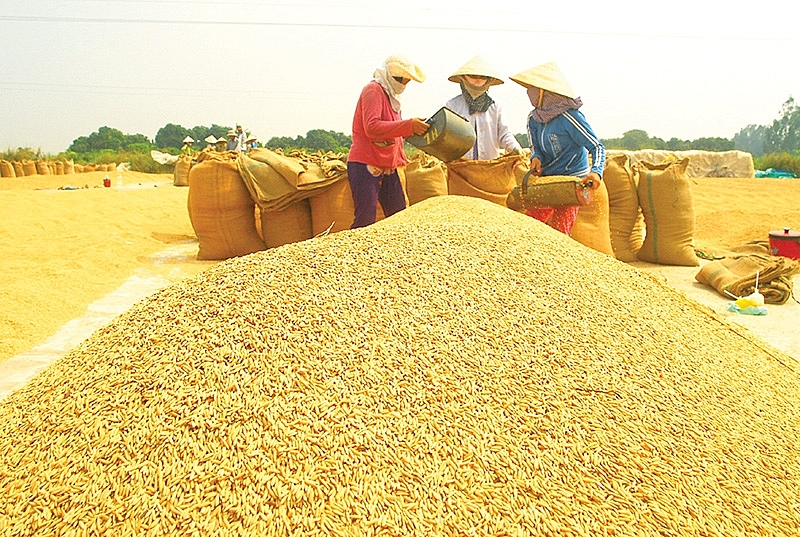 |
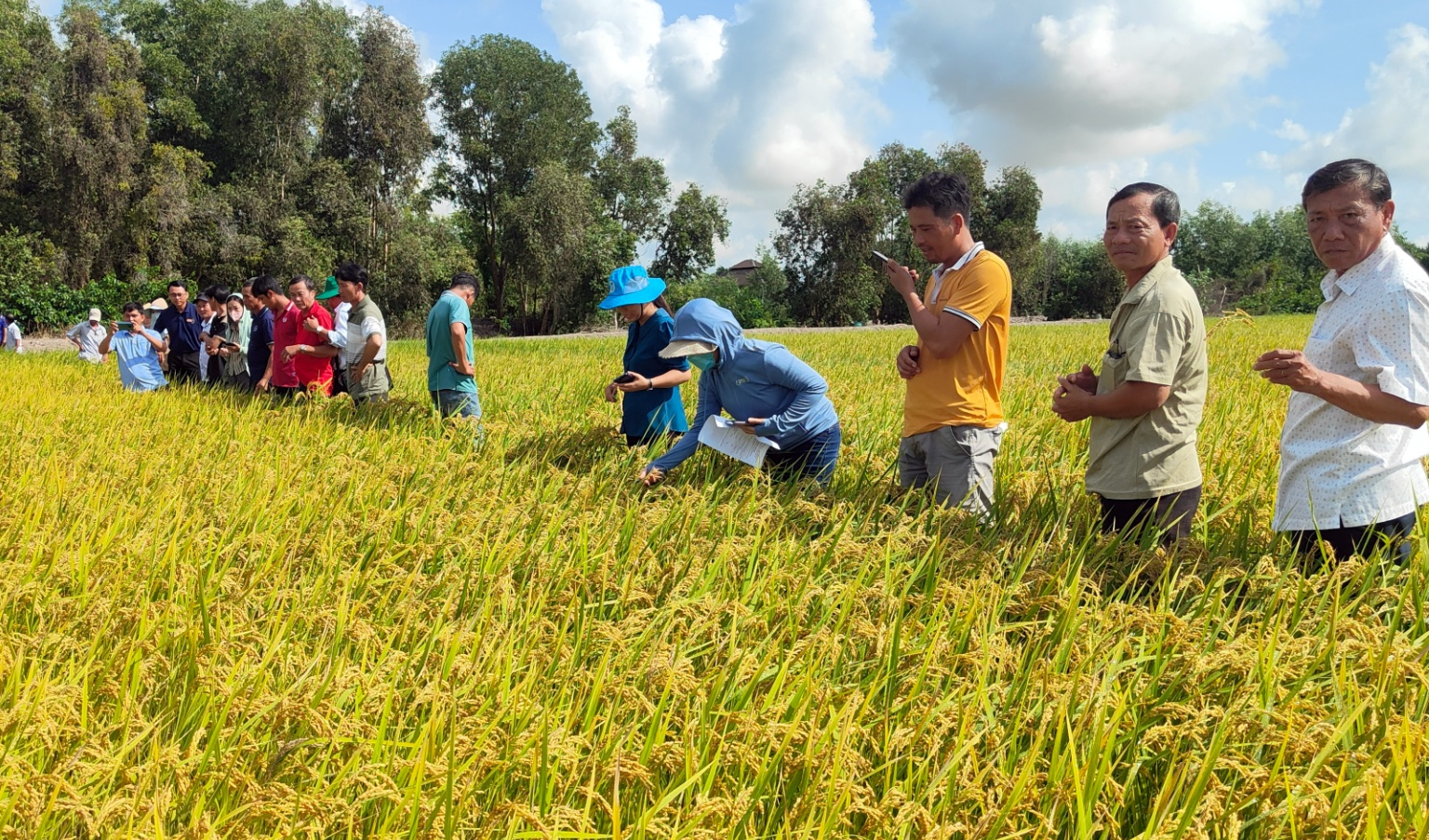
| The Mekong Delta is the rice bowl of Vietnam and the epicentre of agricultural activity in the country |
Phan Van Sau, Secretary of Soc Trang Party Committee, one of 13 leaders of the Mekong Delta region participated in last week’s conference on implementing tasks of Resolution No.20/NQ-CP and Directive No.23/CT-TTg on the Mekong Delta’s sustainable development and adaption to climate change in the 2021-2023 period.
“Although the dry season has just begun, within the last three days, two-thirds of Ben Tre area has suffered from salinisation. Most of the rice fields in Soc Trang do not have enough fresh water,” Sau announced.
According to him, over the years salinisation – referring to a build-up of salts in the soil, eventually to toxic levels for plants – has been a major barrier to the region’s development but currently, Mekong Delta is solving this issue independently without regional co-ordination or a comprehensive plan.
Another major issue according to Sau is that in the next five years, transport links and infrastructure require heavy investment and improvements.
To solve such issues, he said that both capital and rights are required. “We cannot do any of this if we have rights but no money. There must also be a strong enough mechanism and power to co-ordinate the region as a whole.”
| Nguyen Chi Dung - Minister of Planning and Investment
Currently, models of regional co-ordination in the Mekong Delta have revealed some limitations, such as not having a consensus-building mechanism which demonstrates collective benefits among stakeholders; regional co-ordination councils not having sufficient authority; a lack of resources; and localities mainly operating independently with weak connectivity. Therefore, re-planning the region is important. Planning the Mekong Delta region is not to be renewed completely but readjusted, developed, and inheriting the region’s current plans. The development strategy will be built based on the features of rivers, land, culture, and traffic corridors. We need a philosophy to link issues in the plan. Consultants have pointed out two corridors but they should suggest actions that the government and localities have to carry out. The plan must be based on traffic corridors and turn them into economic, industrial, tourism, and urban corridors. It is necessary to have a regional council to find out which model is suitable, and there should be a mechanism to ensure their best operational efficiency. Opinions from representatives will be the foundation for the strategy because they understand what issues they are facing and what they require. Another issue is resources mobilisation. There needs to be a different approach, and the World Bank will be the mediator to connect us with suppliers. We don’t have to follow all procedures – we just need to focus on the national system which is very complicated and takes up a lot of energy. Cao Van Trong - Chairman Ben Tre People’s Committee
Building a regional council based on three pillars of infrastructure, climate change, and education is necessary. However, in order for it to effectively operate, I think there should be a regional co-ordinating board. Besides this, in order to thoroughly solve capital borrowing, handling, and the operating mechanism, the introduction of a delta law as proposed by the Netherlands is also a must. The law will guide provinces. The co-ordinating board of the programme will be responsible for implementation based on the provinces’ common development programnes. If the capital is distributed to provinces, it will be used for local purposes while planning must take into account the common interests of the whole region in dealing with climate change and promoting economic development. We should have a complete regional development plan which will be a basis for decisions of borrowing and reasonable allocation under the law as well as provinces’ local development plans. And when plans are set, there should be programmes to solve any issue that arises. Pham Anh Tuan - Deputy Chairman Tien Giang People’s Committee
Any region-based development council should carry the functions of consulting with the government and the prime minister about policies, mechanisms, and capital sources for regional development. For example, proposing projects and works with high spillover effects on regional development will be one of the council’s essential tasks. It is also important to form a specialised co-ordination agency to solve the issues the region is facing. There are cases when issues go beyond the competency of provincial leaders, so it demands a co-ordination agency with jurisdiction to handle such issues. To boost the council’s operation efficiency, it is a rational proposal that one deputy prime minister will take on the role of council chair. The current World Bank capital support mechanism for the delta has many advantages as it helps address limitations when support went to each specific project as previously. We have two proposals. First, for projects and works that cope with climate change impacts or serve development needs of particular localities, the ministries and sectors shall act as developers rather than localities. Second, for projects dealing with climate change impacts that did not generate economic benefits, having government support such as interest rate subsidies for loans is necessary. |
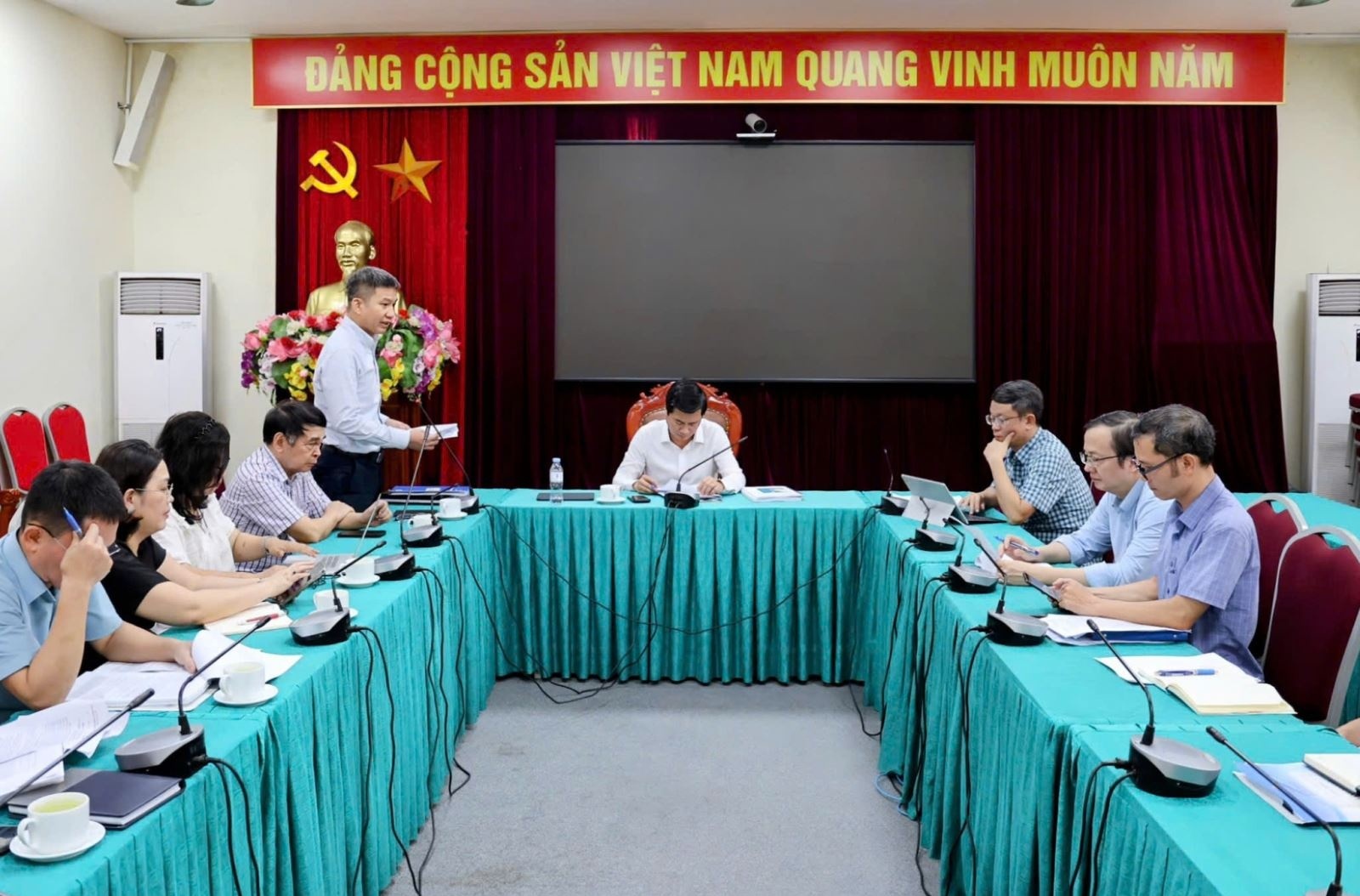
In response, Minister of Planning and Investment Nguyen Chi Dung stated at the conference that the ministry had indeed been building a mechanism to call for more investment in the Mekong Delta moving ahead. “The ministry has proposed establishment of the Mekong Delta Coordinating Council, with mechanisms strong enough to overcome the weakness of the current co-ordination models and operate effectively and substantially,” Minister Dung said.
He also informed that in the 2021-2023 period, the region will have access to just over $1 billion more to serve development goals. “This important source will be mobilised by the World Bank in Vietnam, which will call for co-sponsors from other international organisations in the form of loans to support development policies, in order to solve fundamental problems in the region.”
Thus unlike the previous supporting programmes and projects, official development assistance will focus on institutional and policy reforms, as well as investment support by choice of government and local authorities.
Dao Anh Dung, Deputy Chairman of Can Tho People’s Committee, pointed out that effective use of additional resources is paramount. “An amount of $1 billion is not actually large enough to create a spillover effect for the whole region. It should only be used for inter-regional projects, and the loan-repayment mechanism must be calculated properly,” Dung said.
Martijn van Elswijk, senior consultant at the Netherlands’ Royal HaskoningDHV, the consulting unit for the Mekong Delta region planning, said at the event that “the flows of water, people, and investment” were all vital.
According to Elswijk, the region should also pay attention to creating values with a peaceful environment, and long-lasting prosperity, identity, and equality.
Emphasis was also placed on investing in transport infrastructure connecting both vertical and horizontal axes in the region, and developing regional logistics centres and regional water storage facilities.
According to Minister Dung, regardless of investment in any project, it must be a project of inter-regional nature, creating pervasive power for the whole region.
The minister also stated that building the Mekong Delta Region Plan for the 2021-2030 period, with a vision to 2050 in accordance with the law on planning, is of vital importance. “This is the key premise for development of the Mekong Delta in the future. With a plan, we can identify the general development strategy, fields that need to be developed and projects invested in, to ensure sustainable and long-term development as well as adaptation to climate change.”
The Mekong Delta accounts for 12 and 19 per cent in terms of area and population of Vietnam, respectively. In 2018, the region continued to rank first in the country in terms of rice, shrimp, catfish, and fruit production, with export turnover of $8.34 billion.
What the stars mean:
★ Poor ★ ★ Promising ★★★ Good ★★★★ Very good ★★★★★ Exceptional
 Tag:
Tag:Related Contents

Latest News



More News
- Posco Future M’s $282 million investment set for Q3 (April 25, 2026 | 09:00)
- $2.3 billion Quynh Lap LNG plant to kick off in May (April 24, 2026 | 17:26)
- Hyosung targets high-voltage equipment investment in Vietnam (April 24, 2026 | 17:21)
- Japanese food giant chooses Vietnam for ready-mix flour production (April 24, 2026 | 16:37)
- Vietnam nears investment grade as reforms and growth strengthen outlook (April 24, 2026 | 15:02)
- AI and semiconductors drive new wave of Vietnam-South Korea business ties (April 24, 2026 | 14:57)
- Vietnam and South Korea to deepen ties on industry, investment, technology (April 24, 2026 | 12:33)
- Long Son Petrochemicals to suspend operations from mid-May (April 24, 2026 | 12:24)
- SK Group to foster AI ecosystem development in Vietnam (April 24, 2026 | 12:22)
- South Korea and Vietnam deepen strategic agricultural partnership (April 23, 2026 | 17:21)







 Mobile Version