
Agribank facilitates green capital flow

Could you share the capital demand for sustainability in Vietnam?
Vietnam is entering a new development phase where rapid growth is aligned with sustainable development. The economy is strongly shifting towards green, digital, and circular economy models. Meanwhile, it requires massive investment to fulfill international commitments, especially Vietnam’s net-zero goal by 2050.
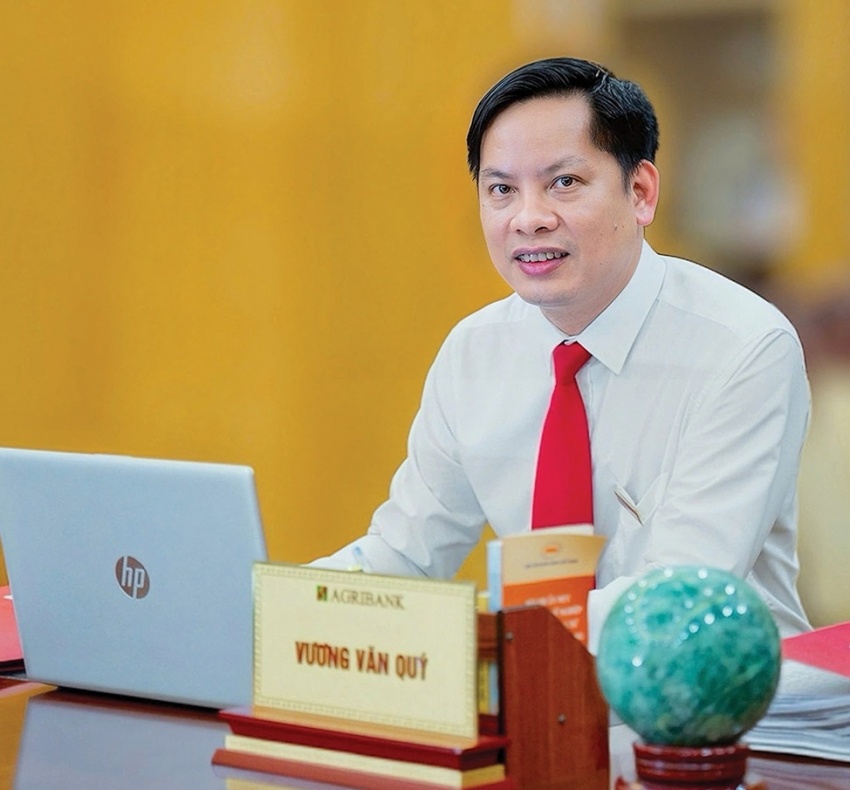 |
| Vuong Van Quy, deputy head of Agribank’s Credit Policy Department |
There is a growing capital demand for renewable energy, agriculture, and rural areas, which are Agribank’s key focus fields. Specifically, the agricultural sector is facing mounting pressure for drastic restructuring. Farmers and businesses need capital to shift from fragmented, small-scale production towards concentrated production zones that apply high technology. This creates huge capital demand for machinery, smart equipment, water-saving irrigation systems, and organic farming processes in key areas such as the Mekong Delta and specialised fruit-growing regions.
This is coupled with investment demand for green standards and environmental, social, and governance (ESG). Enterprises are required to comply with stringent ESG criteria to penetrate demanding markets such as the EU, the US, and Japan, paving the way for Vietnamese agricultural products to expand their global footprint. This requires financial resources to standardise production processes, obtain international certifications such as GlobalGAP and Organic, and build traceability systems.
Demand also arises from developing a circular economy. There is a growing popularity of circular economy models such as recycling agricultural by-products, generating biomass energy, and installing rooftop solar power across production sites. Despite significant upfront investment, these ventures play a critical role in emissions reduction and environmental protection.
According to the United Nations Economic and Social Commission for Asia-Pacific, Vietnam needs to mobilise approximately $45–55 billion annually to achieve its sustainable development goals by 2030. This enormous figure far exceeds the capacity of the state budget. It highlights the need to diversify funding sources, including bank capital, capital market funding, private capital, international capital, green bonds, ESG funds, and carbon credits.
What is Agribank’s capability to meet the substantial capital needs?
Agribank has early identified green growth and sustainable development as the cornerstone of its business strategy. We not only provide capital but also accompany the government and the State Bank of Vietnam (SBV) to implement the national green growth strategy for the 2021-2030 period.
Despite challenges, Agribank’s green credit portfolio has posted strong and stable growth. As of the third quarter, the bank’s outstanding green credit reached approximately $1.13 billion, serving nearly 40,000 customers. This portfolio structure clearly demonstrates Agribank’s commitment to sustainability-oriented lending.
Renewable and clean energy hold the largest share, comprising more than 53 per cent of total green credit, with outstanding loans of approximately $610 million. Close behind is sustainable forestry, with around $278 million in loans, or over 24 per cent, making a significant contribution to forest conservation and livelihood development beneath the forest canopy. Green agriculture accounts for about $239 million in outstanding credit, or more than 21 per cent, with a focus on clean farming models and high-tech agricultural applications.
Agribank has been introducing large-scale credit packages with preferential interest rates to unlock green capital flows. Regarding high-tech and clean agriculture, Agribank have pioneered a minimum package of $2 billion, offering interest rate reductions of between 0.5-1.5 percentage points per year for enterprises and cooperatives adopting advanced technologies.
A prime example is the one-million-hectare high-quality, low-emission rice initiative in the Mekong Delta. Agribank has committed to implementing this programme until 2030 with interest rates at least one per cent lower per year.
As of April 30, Agribank had reached thousands of farming households and cooperatives across 12 localities in the Mekong Delta to carry out the initiative. The bank is implementing three dedicated credit schemes for corporate and individual customers, with a combined scale of approximately $1.68 billion, to finance ventures and business plans related to green products, services, and green transport.
In parallel with green finance, Agribank has actively fostered cooperation programmes, and solutions that contribute to green growth and sustainable development goals. One initiative is developing an internal ESG framework to integrate ESG criteria into credit appraisal. Agribank has embedded environmental risk assessment into its lending processes, ensuring capital doesn’t flow into environmentally harmful projects.
Furthermore, the bank is expanding its cooperation with the World Bank and other similar institutions in areas of concessional lending and technical assistance. These results clearly demonstrate Agribank’s position as the most important financial driver for sustainable development in the agriculture and rural sectors.
How do domestic policies and international cooperation help Agribank mobilise and invest capital for sustainable agricultural development?
2025 marked an important turning point for the sector, with ample opportunities for green finance as regulatory reforms create a launchpad for international partnerships. Specifically, Decree No.156/2025/ND-CP, effective from July 1, represents a historic boost as it enables credit institutions to provide unsecured loans of up to 70 per cent of project value for organic agriculture and circular economy production models.
This is a golden opportunity for Agribank to be more proactive in financing cooperatives and agricultural enterprises that have traditionally struggled due to a lack of collateral. The policy effectively unlocks capital flows, enabling banks to shift from asset-based lending to cash-flow and project-efficiency-based financing for green projects.
In July, the prime minister stipulated the environmental criteria and green classification list. This marks the long-awaited legal framework for banks. With a clear set of criteria, Agribank can easily identify, appraise, and grant green credit, thereby mitigating greenwashing risks and helping businesses better access state incentives.
In addition, opportunities for international cooperation have never been greater. Agribank is currently actively working with major financial institutions to attract low-cost capital and technical support.
Looking ahead, as the green finance framework is completed in line with international standards, Agribank will leverage its reputation to attract more long-term, low-interest foreign currency capital to support Vietnamese enterprises.
What are the barriers to expanding green capital?
Firstly, there is a lack of standardised databases on green ventures. Banks find it difficult to fully assess effectiveness and risks without transparent data and emission measurements according to international standards.
Secondly, there is a lack of incentive mechanisms strong enough to encourage green credit. Interest rates for green loans have yet to make a significant difference. Green guarantee funds have not yet fully played their role.
Thirdly, ESG capabilities among businesses are still weak. A large number of firms, especially small- and medium-sized ones, fail to meet the governance, reporting, and technology criteria necessary to access green capital or green bonds.
Fourthly, green bond issuance remains challenging. Vietnam’s green bond market is still nascent, marked by a lack of diversification among both domestic and international investors. Investors also require a very high level of transparency in green cash flows. High compliance costs with green standards translate into higher issuance costs compared with conventional bonds.
Finally, raising green capital from international organisations remains a challenge. Fundraising procedures from international organisations often require high levels of transparency, compliance with international ESG standards, and environmental impact assessments. Gaps between domestic regulations and global standards make it difficult for many green ventures in Vietnam to secure funding, resulting in lengthy approval processes and low success rates.
What are your recommendations to address these challenges?
To further facilitate the flow of capital into sustainable development, we have made proposals to the government, ministries and agencies, and the SBV.
Firstly, Vietnam should establish a national database on emissions, energy, and biodiversity, making it accessible to businesses and financial institutions for project assessment. This is coupled with standardised regulations on greenhouse gas measurement and reporting.
Secondly, Vietnam should issue specific incentive policies, such as corporate income tax reductions for green loans, interest rate subsidies, or refinancing with preferential interest rates, particularly for energy transition and sustainable agriculture. Efforts should be made to establish a national green guarantee fund to share risks with banks. There are mechanisms to encourage banks to expand their green credit portfolios.
Thirdly, the SBV and international organisations should organise free training and support programmes to enhance ESG capacity for businesses, including guidance on related reporting and the application of green technologies.
Fourthly, Vietnam must also complete its legal framework for green bonds in line with international standards such as the Green Bond Principles, while encouraging stock exchanges here to develop a secondary market to enhance liquidity.
Last but not least, we propose ministries and agencies collaborate and participate in negotiations with international partners to bring Vietnamese standards closer to global benchmarks while also streamlining procedures to shorten approval times.
What the stars mean:
★ Poor ★ ★ Promising ★★★ Good ★★★★ Very good ★★★★★ Exceptional
 Tag:
Tag:Related Contents




Latest News



More News
- From loans to women’s economic empowerment (October 06, 2026 | 17:58)
- VIB named Outstanding Retail Bank 2026, targets transaction banking (October 06, 2026 | 10:52)
- FTSE upgrade paves way for stronger stock market development (October 05, 2026 | 18:44)
- coLoan to empower women through inclusive green finance (October 05, 2026 | 18:42)
- Techcombank CEO: AI no longer a tool but a new operating foundation (October 05, 2026 | 18:11)
- Banks sustain profit growth as funding costs squeeze margins (October 02, 2026 | 22:22)
- Nam A Bank delivers strong breakthrough in 2026 (October 02, 2026 | 19:00)
- Policy credit builds sustainable livelihoods from the grassroots (September 29, 2026 | 07:48)
- VIB deploys Front Arena treasury and foreign exchange trading system on AWS (September 28, 2026 | 16:46)
- Nam A Bank receives $60 million loan from FMO (September 28, 2026 | 12:37)


Latest News




 Mobile Version