
Agribank’s low-emission capital drive

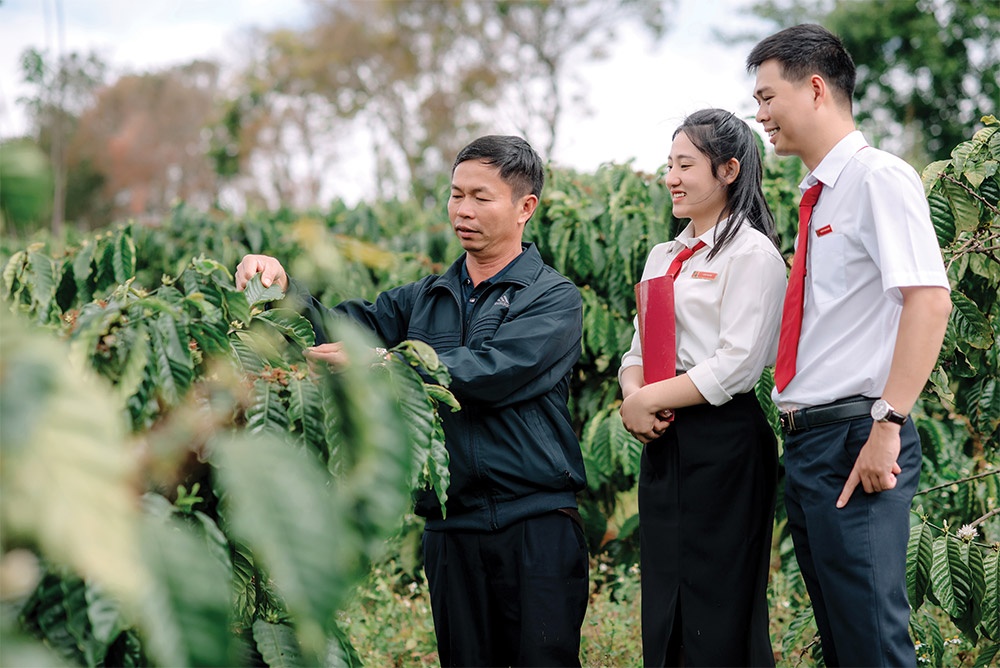 |
| Agribank is a pioneer in large-scale green financing |
In recent years, the green transition and sustainable agricultural development have become strategic priorities for Vietnam. This shift is accompanied by an increasing need for financing to support clean, circular production and low-emission agricultural models.
However, rising demand for green capital does not automatically translate into easier capital absorption. Green credit in agriculture remains a highly promising market but one that still contains significant gaps, ranging from legal frameworks to data infrastructure and corporate environmental, social and governance (ESG) readiness.
Experts note that agriculture is one of the sectors most vulnerable to climate change, while also holding strong potential to lead the emissions-reduction effort, provided capital flows are allocated to the right targets. To ensure green capital is effective, the banking system must play a guiding role and standardise criteria from appraisal through to project monitoring.
In this context, Agribank has become a key pillar of green capital supply. Since 2016, it has been proactive in anticipating market shifts by launching a $2 billion credit package dedicated to clean agriculture and high-tech agriculture. With interest rates 0.5-1.5 percentage points lower than conventional loans, this was viewed as a pioneering step towards encouraging green production, which was still a relatively new trend at the time.
Such financial support enabled many enterprises and cooperatives to invest confidently in new technologies while introducing new approaches to managing environmental and social risks in the agricultural sector.
More recently, Agribank has continued advancing green credit through a $1.2 billion package supporting the one-million-hectare high-quality, low-emission rice project in the Mekong Delta. Designed as an integrated value-chain financing scheme, the package supports activities from production and procurement to processing, logistics, and distribution.
The temporary interest-rate reduction of at least one percentage point during the pilot phase highlights the bank’s strong commitment to reducing emissions in the rice sector, which is critical not only for the economy but also for national food security.
In parallel, Agribank maintains a wide range of credit programmes for agriculture, forestry, and fisheries; off-season loans; and financing for cooperatives, farms, and enterprises across agricultural supply chains. Some loan packages carry interest rates 1-2 percentage points below market averages, enabling farmers and enterprises to access flexible financing solutions suited to the unique dynamics of agricultural production cycles.
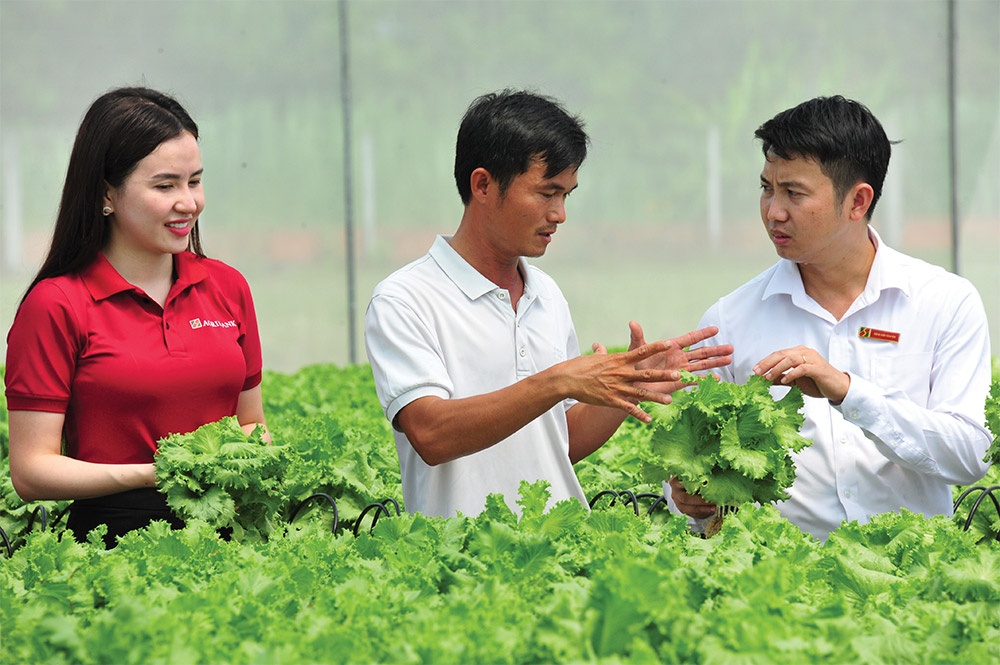 |
| The lender has launched credit packages for clean and high-tech agriculture |
Raising standards
Nevertheless, the expansion of green credit in agriculture has not been without challenges. The most significant difficulty lies in the fragmented nature of data on emissions, climate impacts, and environmental risks, which makes it difficult for banks to build standardised risk-assessment models.
Additionally, most agricultural enterprises, particularly small and medium-sized enterprises, lack structured ESG systems, are unfamiliar with regular disclosure requirements, and often lack the resources needed to invest in emissions-measurement and monitoring technologies.
These constraints inflate the cost of the green transition for businesses, while financial benefits remain under-recognised. This explains why many banks remain cautious in expanding their green loan books, given high production risks and appraisal processes that have yet to be fully adapted. Addressing this issue requires the development of a comprehensive data ecosystem, standardised green criteria, and greater transparency in corporate governance.
From the enterprise perspective, building a robust ESG system is a prerequisite for maintaining competitiveness in the long term. Standardising production processes, applying emissions-measurement technologies, ensuring transparent disclosures, and proactively partnering with banks in pilot programmes are practical steps towards improving access to capital.
In practice, when businesses standardise their production processes towards greener models, their access to financing improves significantly. This is true not only for Agribank, but also across the international financial system, where investment funds and development finance institutions are increasingly prioritising green projects in agriculture, energy, clean water, and the circular economy.
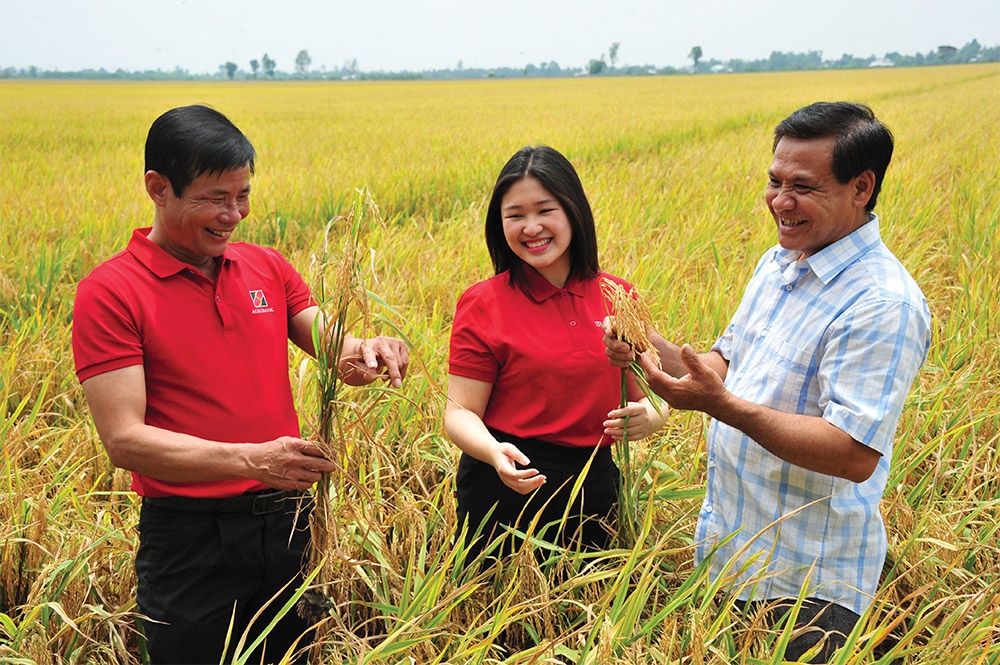 |
| Incentives help agri-companies invest in, and upgrade, technology |
A breakthrough year
For credit institutions, the priority in the coming period is to refine green-asset taxonomies, strengthen climate-risk assessment capabilities, and actively mobilise green funding from international financial institutions. The adoption of digital technology in project appraisal and monitoring will further enhance capital-allocation efficiency and ensure that environmental objectives are met in line with commitments.
The government and the State Bank of Vietnam are continuing to strengthen the legal framework for green finance, including guidance on environmental criteria and verification mechanisms for green-classified ventures, green project taxonomies, social risk management in credit activities, and transition support mechanisms for enterprises. Once fully operational, the carbon market will create additional incentives for agricultural enterprises to invest in emissions reduction and technology upgrades.
Many experts anticipate that 2026 will mark a breakthrough year for green credit in Vietnam, as the legal framework becomes more complete and enterprises adapt more effectively to ESG requirements. Coordinated efforts among authorities, banking institutions, and the business community will be crucial to the success of this transition.
Within this landscape, Agribank is expected to remain a major force in directing green capital towards the agricultural sector, supported by its extensive network, long-standing experience with farmers and agricultural enterprises, and its prioritisation of low-emission models.
The bank’s proactive and consistent engagement will play a pivotal role in advancing sustainable agriculture and supporting Vietnam’s emissions-reduction commitments in the years ahead.
What the stars mean:
★ Poor ★ ★ Promising ★★★ Good ★★★★ Very good ★★★★★ Exceptional
 Tag:
Tag:Related Contents





Latest News






More News
- From loans to women’s economic empowerment (October 06, 2026 | 17:58)
- VIB named Outstanding Retail Bank 2026, targets transaction banking (October 06, 2026 | 10:52)
- FTSE upgrade paves way for stronger stock market development (October 05, 2026 | 18:44)
- coLoan to empower women through inclusive green finance (October 05, 2026 | 18:42)
- Techcombank CEO: AI no longer a tool but a new operating foundation (October 05, 2026 | 18:11)
- Banks sustain profit growth as funding costs squeeze margins (October 02, 2026 | 22:22)
- Nam A Bank delivers strong breakthrough in 2026 (October 02, 2026 | 19:00)
- Policy credit builds sustainable livelihoods from the grassroots (September 29, 2026 | 07:48)
- VIB deploys Front Arena treasury and foreign exchange trading system on AWS (September 28, 2026 | 16:46)
- Nam A Bank receives $60 million loan from FMO (September 28, 2026 | 12:37)


Latest News






 Mobile Version