
Women’s financial wellbeing: an investment in business resilience

That should shape how Vietnam approaches financial inclusion for women entrepreneurs. Access is an essential starting point. The greater ambition is financial wellbeing, giving women the capacity to manage daily obligations, withstand disruption and invest with confidence in the future.
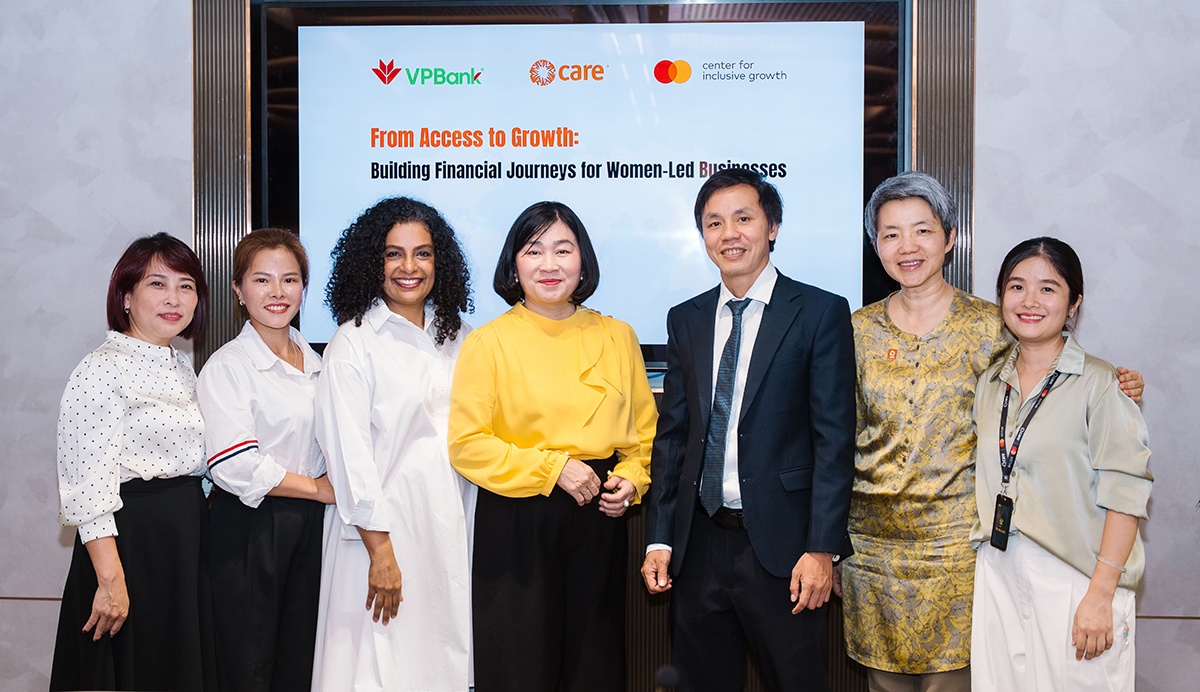 |
| The right financial support helps female entrepreneurs grow and build more resilient businesses, Photo: CARE |
For banks and investors, this has practical implications. Understanding an entrepreneur’s business cycle, growth ambitions and exposure to risk can reveal financing needs that a standard loan product may overlook. Three women leading very different enterprises illustrate why this matters.
Luong Ngoc Ha, founder and general director of Star Vietnam Global Electrical Machinery, supplies agricultural, construction and aquaculture equipment across Vietnam, Laos, and Cambodia. As her company expanded, its financial needs became more complex. Flexible working capital and digital banking tools became increasingly important for managing transactions across markets.
Her experience shows how financial services need to evolve alongside business growth. Capital enables expansion; effective payment systems and better financial information help an entrepreneur manage it. Ha also stresses that moving transactions online increases the importance of cybersecurity. Convenience delivers lasting value when businesses can trust the systems they use.
For Tran Thi Thu Trang, general director of Song Ma Company, which operates Thu Do Sao Taxi, finance has supported successive stages of a much longer journey.
When she took responsibility for operating and financing the company in 2012, it had 76 vehicles. Securing bank support was difficult given her limited management track record and the company’s financial profile. An initial VPBank loan financed 12 second-hand cars, providing a foundation for further expansion.
Before the pandemic, the fleet had grown to nearly 700 vehicles. The pandemic subsequently disrupted the business, and Trang now faces another substantial decision: transitioning from petrol vehicles to electric mobility.
She returned to VPBank in late 2024 to finance that transition. Her experience suggests that lower operating costs can strengthen the commercial case for electric vehicles, but the upfront investment remains a hurdle. Financing costs and suitable repayment terms are, therefore, central to the pace at which the company can convert its fleet.
This is a concrete opportunity for financial providers to develop products around the business transitions, covering both including the investment required today and the savings expected over time.
For Tran Thi Vuong, founder and CEO of Thach An Food Processing, financial resilience begins with an agricultural harvest.
Her company processes black grass jelly grown in Cao Bang province. Building the business required investment in factories, equipment and food safety systems. When collateral requirements restricted borrowing, she sold some of her own land and property to continue.
As the company grew, purchasing raw materials became a recurring financing challenge. The crop is harvested essentially once a year, concentrating working capital needs into a short period. Vuong describes early unsecured financing from VPBank as a turning point.
In 2025, drought affected the growing areas. At that time, raw material prices rose by around 50 per cent. Timely finance helped the company continue purchasing supplies. Thach An now aims to maintain approximately two years of raw material reserves to protect production against poor harvests.
Her story connects financial services directly with climate adaptation. Working capital can help an enterprise prepare for supply disruption and maintain operations when weather affects production. Assessing that need requires understanding the agricultural cycle behind the balance sheet.
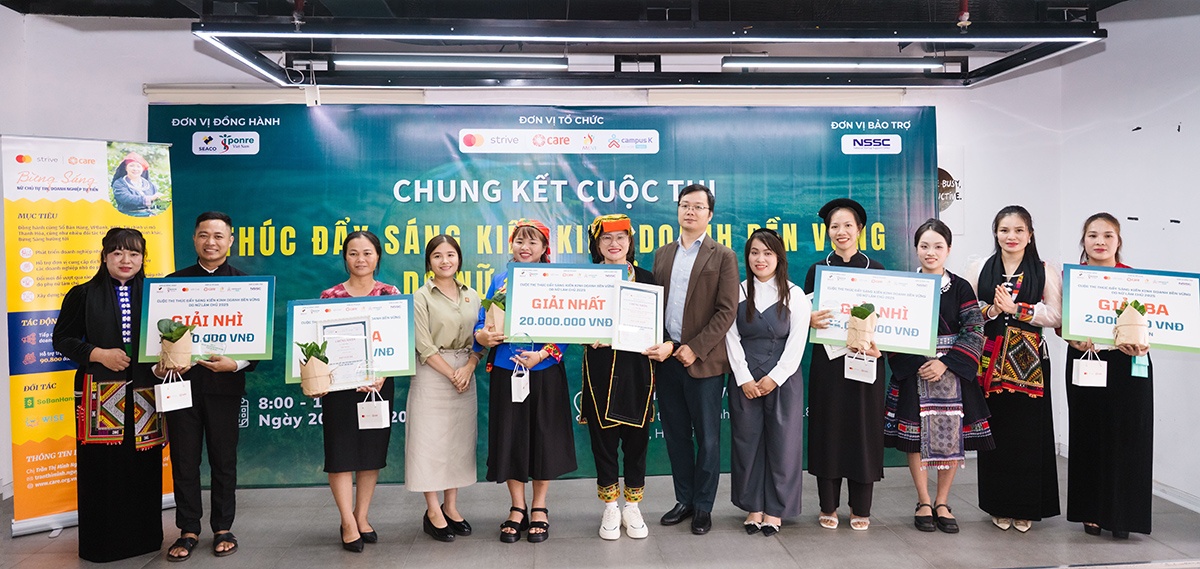 |
| Photo: CARE |
These experiences, shared through Strive Women, a four-year programme led by CARE and supported by the Mastercard Center for Inclusive Growth, point to a broader agenda for financial providers.
First, product design should reflect how businesses actually operate. Seasonal purchasing, regional expansion and fleet replacement require different structures and repayment schedules.
Second, lending assessments should give greater attention to business cash flow and prospects alongside collateral. Vuong’s experience shows how dependence on personal assets can constrain an entrepreneur even when she has a viable commercial opportunity.
Third, financial services should combine capital with practical support. Guidance on documentation, digital security, and financial management can help entrepreneurs use products effectively and make informed decisions.
Finally, success should be assessed through business outcomes as well as lending volumes. Can the entrepreneur manage a supply shock, invest in efficiency or pursue her next opportunity? And does she have greater control over her financial decisions?
Women entrepreneurs are already making decisions that shape enterprise growth, rural supply chains, and the green transition. Financial institutions can play a role in supporting these investments by responding to the business realities behind them.
When finance gives a woman greater capacity to plan and act, the benefits can extend beyond her business to employees, suppliers and customers. Investing in her financial wellbeing is an investment in the resilience of the economy.
What the stars mean:
★ Poor ★ ★ Promising ★★★ Good ★★★★ Very good ★★★★★ Exceptional
 Tag:
Tag:
Related Contents

Latest News
More News
- Vietnam’s tourism advances sustainability in 2026 (February 12, 2026 | 08:57)
- GG Corporation unveils global-facing Living Heritage initiative (November 19, 2025 | 16:00)
- Forever begins at perfect spots in Vietnam (September 04, 2025 | 10:38)
- Danang’s efforts to be the Singapore of Vietnam (August 04, 2025 | 13:05)
- Revitalising business through strategic and stylish engagement (July 11, 2025 | 09:57)
- Sheraton Hanoi West GM charts new course for business-cultural tourism (June 24, 2025 | 08:00)
- Wine securing a stronger foothold in Vietnamese market (June 09, 2025 | 10:50)
- Vibrant Vietnamese cuisine fit for global tastes (June 09, 2025 | 10:42)
- Vietnam can be global hot spot in 2025 (January 29, 2025 | 00:38)
- Promoting tourism and hospitality with sustainability (January 28, 2025 | 09:00)







 Mobile Version