
Management tips: rearrangement and restructuring


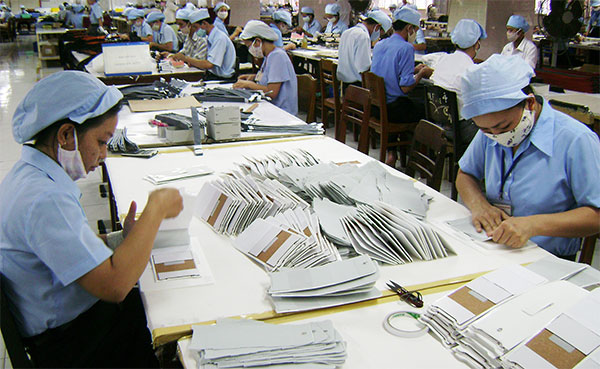
illustration photo
Vietnam’s private sector and small and medium-size enterprises (SME) have grown rapidly over the last two decades and have played an essential role in the development of the entire economy. The country expects to have around 700,000 SMEs by the end of 2015 and the sector is estimated to account for 40 per cent of total GDP and 25 per cent of total exports.
Local SMEs, however, are viewed as sub-optimal in efficiency and competitiveness due to their operating systems, human resources, risk management and brand building. According to Robert Tran, CEO of the Robenny Corporation for USA, Canada, and the Asia Pacific, owners of SMEs might all be “aware of their problems and weaknesses, yet they did not seem to address them properly”.
Robenny’s findings showed that although most local SMEs were operating businesses based on experience, trial and error, and in fact, knew how to standardise the working procedure, they however, were not familiar with how to follow up on the operating system for further improvement.
Likewise, to cut costs, SMEs would often utilise employees to cover for more than one role within the organisation, or provide little to no budget for brand building, despite conceiving that it is the most important aspect of business growth.
SMEs, when seeing signs of declining financial performance, poor sales results, accounting losses or decreasing stock prices, should seriously consider rearranging or restructuring their business. In addition, when adopting a new corporate strategy, taking advantage of a business opportunity, or correcting a major error in how the company is valued in the capital market, businesses also need to mull over measures to support such changes or rectify existing problems.
Rearrangement, according to Tran, is the most suited measure for SMEs dze to their scale and operation, whereas restructuring is often suitable for bigger corporations.
A quick survey, conducted by Robenny, of 468 senior managers of 175 local SMEs to find out when a company should consider major change involving either rearrangement or restructuring, and what critical challenges the management would face in the rearranging or restructuring project.
50 per cent of the participants stated it is issues related to sales and marketing that would prompt the business to re-organise to improve its performance. 80 per cent said that the tougher challenges the management team would face in a re-organising project came down to finances and human resources.
Local SMEs, according to Tran, can start rearrangements by instructing their sales and marketing team at first to identify all correlations between products, the sales team, market coverage, sales territories and customers. Information on sales must then be analysed to identify strengths and weakness, then the enterprises can set their business direction based on market opportunities and threats.
Business owners ought to explain their purpose of business rearrangement to all key personnel and gain their support in order to be successful in the process. Once completed with the sales stage, SMEs can move on to other areas that needed to be re-organised such as production and accounting.
What the stars mean:
★ Poor ★ ★ Promising ★★★ Good ★★★★ Very good ★★★★★ Exceptional
Latest News


More News
- State corporations poised to drive 2026 growth (February 03, 2026 | 13:58)
- Why high-tech talent will define Vietnam’s growth (February 02, 2026 | 10:47)
- FMCG resilience amid varying storms (February 02, 2026 | 10:00)
- Customs reforms strengthen business confidence, support trade growth (February 01, 2026 | 08:20)
- Vietnam and US to launch sixth trade negotiation round (January 30, 2026 | 15:19)
- Digital publishing emerges as key growth driver in Vietnam (January 30, 2026 | 10:59)
- EVN signs key contract for Tri An hydropower expansion (January 30, 2026 | 10:57)
- Vietnam to lead trade growth in ASEAN (January 29, 2026 | 15:08)
- Carlsberg Vietnam delivers Lunar New Year support in central region (January 28, 2026 | 17:19)
- TikTok penalised $35,000 in Vietnam for consumer protection violations (January 28, 2026 | 17:15)









 Mobile Version