
JICA stands alongside Vietnam’s four-pillar charge

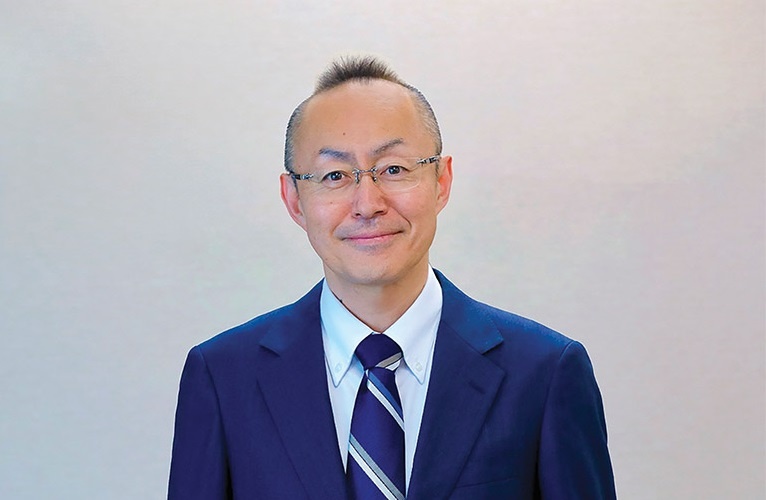 |
| Kobayashi Yosuke, chief representative, Vietnam Office Japan International Cooperation Agency |
We place a high emphasis on the four pillars of reform that Vietnam is pursuing to achieve high-income status by 2045. They include promotion of sci-tech, innovation, and digital transformation; advancement of international integration; law-making and law enforcement; and private sector development. Building on our longstanding partnership, our priority is to support these reforms by leveraging Japan’s technology, knowledge, and experience in collaboration with a wide range of Japanese stakeholders.
In the first pillar, JICA will advance cooperation centred around the Vietnam-Japan University, the symbol of the diplomatic relation between Vietnam and Japan. In September, JICA assisted the university in launching its bachelor’s degree programme in semiconductors. We will continue to cooperate in building and strengthening the semiconductor education ecosystem in Vietnam, with a focus on generating synergy between various stakeholders in Japan and Vietnam.
In relation to AI, which is gaining attention alongside semiconductors, we are working with the National Innovation Centre and the Hanoi University of Science and Technology to promote AI startups and research. On September 18, JICA invited Professor Matsuo of the University of Tokyo, one of Japan’s renowned AI experts, to deliver lectures to 1,600 students at the Hanoi University of Science and Technology.
Moreover, we believe that it is also important to utilise science, technology, and innovation to contribute to Vietnam’s climate change countermeasures. Building on longstanding cooperation relations with Vietnam universities such as the Can Tho University, we will support the development of new technologies in collaboration with Japanese universities, companies, and research institutions.
Supporting integration
In the second pillar, JICA has supported Vietnam’s international integration through various forms of cooperation, ranging from macro-level policy advice - such as the Ishikawa project and legal and judicial development cooperation - to technical assistance in specific fields such as safe agricultural products, food safety, infectious disease control, taxation, and intellectual property.
Furthermore, in terms of infrastructure, which is essential for international integration, JICA has supported the development of airports, ports, roads, bridges, railways, and customs systems, thereby contributing to the enhancement of multilayered connectivity between Vietnam and other countries, including Japan.
We will continue to support Vietnam’s integration, while also being mindful of the synergistic effects with the other three pillars of reform.
When it comes to the third pillar, or law-making and law enforcement, in 1992, the late Prof. Morishima Akio was requested by the late Minister of Justice Nguyen Dinh Loc to assist in drafting the civil code under the doi moi policy. After that, in 1996, JICA began supporting Vietnam’s legal and judicial development under the strong guidance of Prof. Morishima in collaboration with the Ministry of Justice, the Supreme Court of Japan, the Japan Federation of Bar Associations, and various universities.
The current technical cooperation project will be completed this December, and we will enter into a new phase of studying the possibility of further cooperation, while continuing with our training programmes.
A recent highlight in Vietnam’s institutional reform has been the adoption of the two-tier local governance model. Japan has operated such a two-tier system for many years, and we think that lessons from Japan’s successes and failures could be taken as good reference as Vietnam implements the new model.
JICA has been actively working with the Party Central Committee’s Organisation Commission and the Ho Chi Minh National Academy of Politics to conduct training programmes for leaders of various levels to provide opportunities for current and future Vietnamese leaders to learn from Japan’s experiences.
Committed to policy advice
In the fourth pillar, or private sector development, JICA has a long record of cooperation projects that have laid the foundation for Vietnam’s economic growth. A notable example is the Ishikawa Joint Research Project (1995–2001), through which we provided policy recommendations to support Vietnam’s transition to a socialist-oriented market economy.
JICA remains committed to providing policy advice, while also promoting initiatives such as developing personnel for small- and medium-sized enterprises (SMEs), improving access to finance, and supporting infrastructure projects that generate opportunities for growth.
In terms of human resources for SMEs, JICA has been working not only with universities such as the Vietnam-Japan University and Hanoi University of Science and Technology, but also with the Vietnam-Japan Institute for Human Resources Development of Foreign Trade University to deliver the Keieijuku entrepreneur training programme.
This initiative has offered management skills based on Japanese experiences to over 1,000 Vietnamese business leaders, thereby providing opportunities for their companies to grow further in the global market. With regard to improving access to finance, JICA has strengthened work with private financial institutions. Specifically, in July we signed a loan agreement with VPBank to support female-owned SMEs.
In infrastructure projects, JICA focuses on initiatives that could effectively utilise Japan’s cooperation experience and technology such as extensions of urban railway lines projects currently under implementation or in planning. They include routes between Noi Bai Airport and Nam Thang Long, and Ho Chi Minh City Metro Line 1 route from Suoi Tien Station to the Binh Duong New City. Through these efforts, we aim to facilitate technology transfer from Japanese companies to Vietnamese enterprises.
Underpinning all forms of cooperation is the long-standing trust built through heart-to-heart partnership between Vietnamese and Japanese people. At the forefront of our efforts are JICA cooperation volunteers and experts who have played a pivotal role in building and strengthening our diverse cooperation, and this year marks the 30th anniversary of dispatch of Japan Overseas Cooperation Volunteers to Vietnam.
Through development cooperation, JICA aims to further strengthening these ties to ensure the growth of Vietnam and Japan, and foster the heart-to-heart partnership between the peoples of the two nations.
 | FinDev Canada, JICA, and SMBC pledge $215 million to HDBank Canada's bilateral Development Finance Institution, FinDev Canada, Sumitomo Mitsui Banking Corporation (SMBC), and the Japan International Cooperation Agency (JICA) on August 2 announced the signing of a $215 million syndicated loan facility for HDBank. |
 | ADB and JICA provide $12 million loan for water plant expansion On August 1, the Asian Development Bank (ADB) and Japan International Cooperation Agency (JICA) signed a loan agreement worth $12 million with Thu Dau Mot Water JSC for expansion of Bau Bang Water Treatment Plant. |
 | JICA, ECOM boost sustainable coffee farming The Japan International Cooperation Agency (JICA) has expanded its role in global food security with its first exclusive working capital loan. |
What the stars mean:
★ Poor ★ ★ Promising ★★★ Good ★★★★ Very good ★★★★★ Exceptional
 Tag:
Tag:
Related Contents



Latest News



More News
- Vietnam CFA showcase highlights $120m funding need for climate ventures (October 16, 2026 | 17:14)
- Long-delayed LNG power projects may be replaced in revised PDP VIII (October 14, 2026 | 11:59)
- Foreign investors seeking a synchronised manufacturing ecosystem (October 14, 2026 | 11:51)
- Localities report breakthrough results in FDI in first nine months (October 14, 2026 | 11:45)
- Why Asian FDI is flowing into northern Vietnam’s industrial parks (October 14, 2026 | 09:03)
- Hung Yen unveils adjusted master plan with three economic zones (October 13, 2026 | 11:30)
- Ho Chi Minh City climbs 17 places in Global Financial Centres Index (October 13, 2026 | 11:27)
- Quang Tri province to tighten delayed power projects (October 13, 2026 | 10:34)
- $600 million Ho Chi Minh City - Long Thanh expressway expansion under pressure (October 09, 2026 | 16:00)
- Hung Yen’s regional GDP beats expectations (October 09, 2026 | 15:25)



Latest News






 Mobile Version