
Alstom works hard to help cut GHG


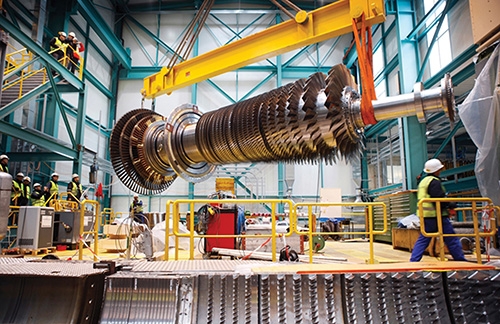
Alstom technology has developed to meet the challenges of cleaner and more efficient power
An in-depth analysis of data from 2002-2011 reveals that Alstom’s environmental measures, on both new plants and retrofits of existing power facilities, have saved a total of 207 million tonnes of carbon dioxide (CO2) equivalent annually.
The data stemmed from a 10-year research into 1,445 projects undertaken by Alstom, measuring actual emissions of an Alstom plant in the first year of its operation against the standard emissions of the local plant type that it replaces. This plant-by-plant approach of calculating displaced and avoided CO2 emissions is based on the guidelines of the World Resources Institute and World Business Council for Sustainable Development ‘Greenhouse Gas Protocol’, with the methodology and results verified by international auditor PricewaterhouseCoopers.
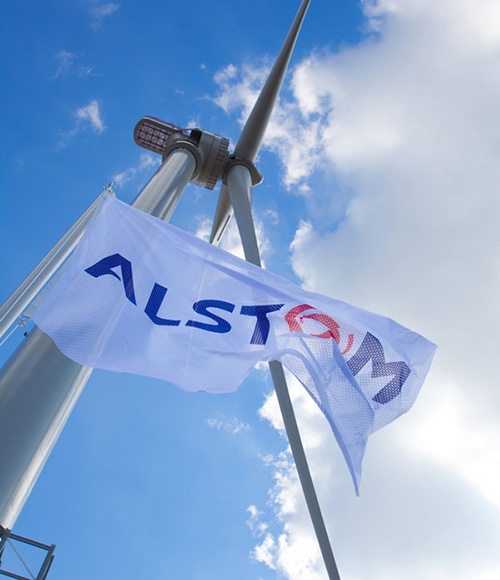
The research has found the cumulative CO2 reductions achieved on Alstom projects have risen each year on both renewable and thermal power projects. The savings made in thermal projects have grown as Alstom technology has developed to meet the challenges of cleaner and more efficient power, for new plants and for existing ones. These include more efficient gas turbines, ultra-supercritical steam turbines and boilers for coal-fired plants upgrades for the installed fleet and the pilot installations for Carbon, Capture & Storage. Savings on renewable projects, particularly hydro and wind have risen by more than 70 times in the ten years, reflecting Alstom’s broadening portfolio in green energy.
The research also indicated that Alstom’s emissions mitigation work has been particularly effective in growth markets such as China and India, where CO2 savings for every megawatt installed have reached nearly 2,000 tonnes and more than 1,500 tonnes respectively.
“Energy sustainability is the goal we aim for,” said Alstom’s president for Thermal Power Philippe Cochet.
“As these figures prove, we at Alstom push harder and harder each year to deliver cleaner power. At the heart of our work is our understanding that no single technology meets everyone’s needs, and instead to offer a range of innovative solutions to different circumstances. Common to all of them, though, is the commitment to continuous improvement – in terms of cost of electricity, environmental footprint, flexibility and reliability,” he said.
What the stars mean:
★ Poor ★ ★ Promising ★★★ Good ★★★★ Very good ★★★★★ Exceptional
Latest News


More News
- State corporations poised to drive 2026 growth (February 03, 2026 | 13:58)
- Why high-tech talent will define Vietnam’s growth (February 02, 2026 | 10:47)
- FMCG resilience amid varying storms (February 02, 2026 | 10:00)
- Customs reforms strengthen business confidence, support trade growth (February 01, 2026 | 08:20)
- Vietnam and US to launch sixth trade negotiation round (January 30, 2026 | 15:19)
- Digital publishing emerges as key growth driver in Vietnam (January 30, 2026 | 10:59)
- EVN signs key contract for Tri An hydropower expansion (January 30, 2026 | 10:57)
- Vietnam to lead trade growth in ASEAN (January 29, 2026 | 15:08)
- Carlsberg Vietnam delivers Lunar New Year support in central region (January 28, 2026 | 17:19)
- TikTok penalised $35,000 in Vietnam for consumer protection violations (January 28, 2026 | 17:15)









 Mobile Version