
Timber origin issues plague local exporters


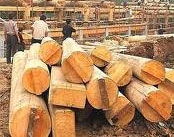 |
| illustration photo |
Forest Stewardship Council (FSC) certification proves wood products are from certified sources of origin throughout the supply chain, and guarantees that timber used has been supplied through responsibly harvested and verified sources.
Only legally harvested timber and wooden products are allowed to be imported to European markets, as regulated by the European Union's Forest Law Enforcement, Governance and Trade.
The US Lacey Act also bans the import, export and transport of illegally-exploited forest products into the US market.
To meet the foreign export requirements, Vietnam has targeted that 30 per cent of the total production forest area will meet FSC certification in 2020.
"However, to date, only 0.36 per cent, equal to 16,500ha has been certified," Nhi said.
"No practical solutions to expand the certified area have been discussed nor implemented," he added.
According to the director of Sustainable Forest Management Institute, Nguyen Ngoc Lung, irresponsible and poor land management by local authorities and inconsistency in the government's land policy have caused difficulties to forestry enterprises in obtaining certification.
Numerous forestry enterprises have not been provided certified land use rights, while many other forests have two concomitant owners, which makes it impossible to register for the certificate, Lung added.
Nhi also added that 80 per cent of processed wood is imported, while there are few wood processing workshops in forested areas. To improve the effectiveness and sustainability of forest exploitation, investment in forest plantations is desperately needed.
Vietnamese forest products are now present in 120 foreign markets, with export turnover reaching $3.4 billion in 2010, according to Nguyen Thi Hoang Thuy, deputy director of the Ministry of Industry and Trade's Multilateral Trade Policy.
However, according to Nguyen Ton Quyen, vice president of Vietnam Association of Wood and Forest Products, 90 per cent of the exported timber products are sold through middle men and most products are based on export designs leaving Vietnamese produced goods unrecognised abroad.
In addition, due to the excessive concentration on exports, the domestic market is now dominated by foreign enterprises cornering up to 80 per cent of total domestic spending on wood products, said Tran Duc Sinh, general director of the Vietnam Forestry Company .
Enterprises should be aware of the significance of using certified timber and wood products to widen export markets, while also paying attention to the domestic market, Nhi emphasised.
What the stars mean:
★ Poor ★ ★ Promising ★★★ Good ★★★★ Very good ★★★★★ Exceptional
 Tag:
Tag:Related Contents






Latest News


More News
- Hermes joins Long Thanh cargo terminal development (February 04, 2026 | 15:59)
- SCG enhances production and distribution in Vietnam (February 04, 2026 | 08:00)
- UNIVACCO strengthens Asia expansion with Vietnam facility (February 03, 2026 | 08:00)
- Cai Mep Ha Port project wins approval with $1.95bn investment (February 02, 2026 | 16:17)
- Repositioning Vietnam in Asia’s manufacturing race (February 02, 2026 | 16:00)
- Manufacturing growth remains solid in early 2026 (February 02, 2026 | 15:28)
- Navigating venture capital trends across the continent (February 02, 2026 | 14:00)
- Motivations to achieve high growth (February 02, 2026 | 11:00)
- Capacity and regulations among British areas of expertise in IFCs (February 02, 2026 | 09:09)
- Transition underway in German investment across Vietnam (February 02, 2026 | 08:00)









 Mobile Version