

Leaders must rediscover discipline of engagement

Why do you believe dialogue has become a critical leadership issue in today’s economy?
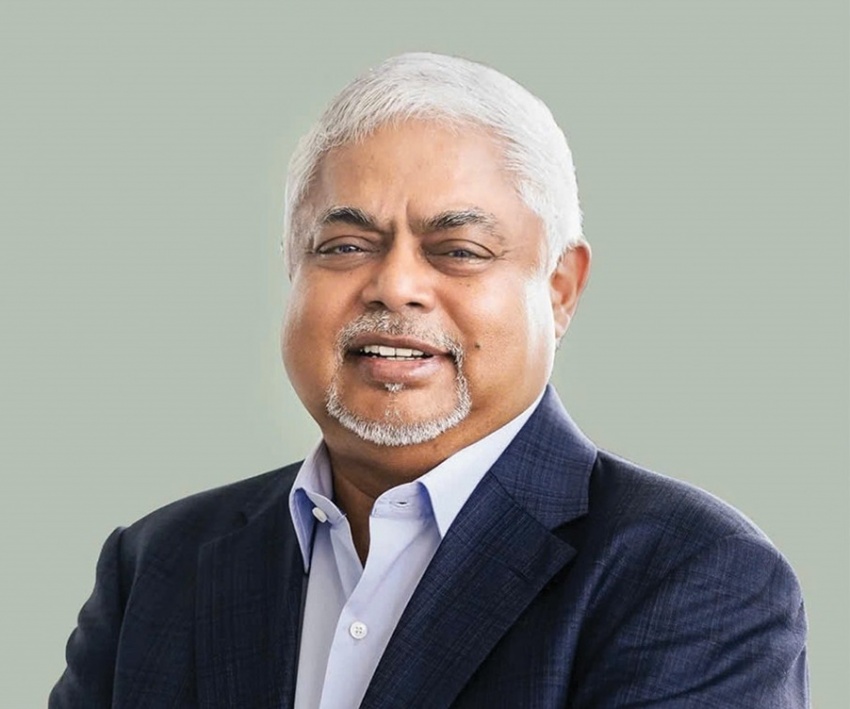 |
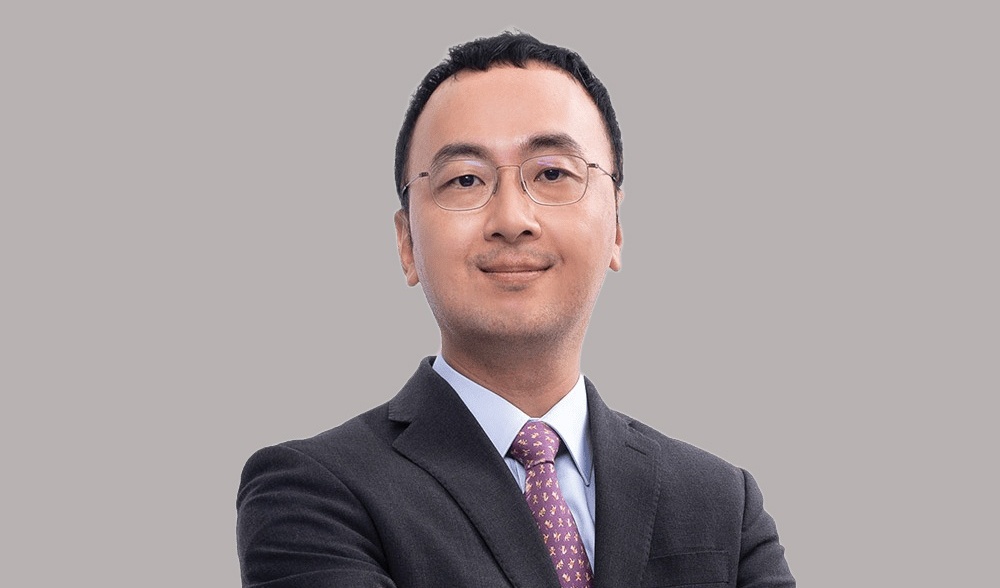
| Datuk Seri Vijay Eswaran, founder and executive chairman of Hong Kong-based multinational QI Group |
For decades, business success has been defined by efficiency, productivity, and the bottom line. This focus has undoubtedly led to impressive growth, but it has also come at a human cost. However, we are seeing fatigue, eroding trust, and a workforce that often feels treated as expendable rather than valued.
Many leaders of corporates have become fluent in the language of systems, metrics, and shareholders, but less skilled at communicating with their people. This gap, often overlooked, sits at the heart of what I would describe as a growing leadership deficit. When leaders stop listening, organisations may still expand, but they lose their ability to evolve.
This challenge extends beyond companies. We see the same pattern in societies and even in relations between nations. At a global level, the issue is not a lack of capability, but a failure to listen, understand, and lead with empathy.
The theme of the upcoming World Economic Forum’s Davos 2026 event, “A Spirit of Dialogue”, is both timely and necessary. In a fragmented world marked by polarisation and uncertainty, dialogue is no longer a soft concept, it is a strategic requirement.
The event calls on leaders to rediscover the discipline of genuine conversation through the ability to engage honestly with people and stakeholders. Dialogue underpins corporate resilience, social stability, and international cooperation.
In this sense, dialogue becomes a form of currency for the future economy. It determines whether growth is inclusive or brittle.
You argue that “growth without humanity is expansion without evolution.” What does this mean in practical terms, especially for Vietnam?
We have come to equate growth with numbers: revenue, market share, productivity, and GDP. These indicators are important, but they are incomplete. They measure output, not whether people feel capable, secure, or engaged in the process of growth.
Vietnam’s economic rise over the past two decades is remarkable. Built on speed, scale, and competitiveness, it has positioned the country as one of Southeast Asia’s fastest-growing economies. However, as Vietnam matures, some troubles are becoming more visible, like rising job mobility, and declining engagement among younger professionals.
This reflects a widening distance between corporate’s leadership and the workforce. While younger generations place a high value on empathy and purpose, many leadership models still prioritise hierarchy and control. When dialogue weakens, progress becomes fragile, driven by top-down mandates rather than trust. Over time, this undermines both organisational resilience and social cohesion.
How should we rethink the definition of growth to make it more sustainable?
Growth should not only be about what we build, but also about what we become. If progress does not make people more capable and more confident in the future, then we have scaled the machine without evolving the human being.
In Vietnam, respect for hierarchy remains deeply embedded, and dialogue is often mistaken for disagreement. This means feedback moves slowly upward, if at all. The absence of safe spaces for conversation carries real costs for a corporation or an organisation.
Sustainable growth requires broader metrics that consider human wellbeing and trust alongside economic scale. The key question should be how fast we grow and also whether that growth improves lives and strengthens institutions over time.
As AI adoption accelerates, how do you evaluate the difference between technology and human judgement?
As organisations rapidly adopt AI, a new imbalance is emerging. We are building systems that can process information at extraordinary speed, while human judgment and emotional awareness struggle to keep pace.
Vietnam is actively deploying AI across finance, manufacturing, and public administration. However, governance frameworks, workforce consultation, and ethical safeguards often lag behind. AI excels at data, but it lacks moral reasoning. This is where what I call authentic intelligence, rooted in empathy and ethics, must guide decision-making.
Dialogue is the bridge between AI and authentic intelligence. Upskilling is necessary, but insufficient on their own. Skills build capability, but dialogue builds ownership. When people are included in conversations about how tech reshapes their roles, they become partners in change rather than passive recipients of it.
What does compassionate leadership look like as Vietnam moves forward?
Compassionate leadership in a corporate is often misunderstood as softness. In reality, it is a strategic discipline. It requires leaders to move from being the loudest voice in the room to creating the quietest space, where others feel safe to speak.
As Vietnam transitions towards a higher-value, knowledge-driven economy, its competitive edge will depend on labour efficiency and leadership maturity in every corporate or organisation. The ability to listen, adapt, and align growth with human aspirations will be decisive. The next chapter of economic progress will be written in conversation.
What the stars mean:
★ Poor ★ ★ Promising ★★★ Good ★★★★ Very good ★★★★★ Exceptional
 Tag:
Tag:
Related Contents





Latest News


More News
- Vietnam can lead the way in AI regulatory system (September 04, 2026 | 09:00)
- Vietnam's next cycle: capital shifts from low-cost manufacturing to higher-value investment and M&A (August 26, 2026 | 14:51)
- Significant steps made in related-party transactions (August 21, 2026 | 15:51)
- New challenges for workforce data and HR policy management with PIT changes (August 17, 2026 | 10:32)
- Leading in AI: from pilot initiatives to enterprise value (August 10, 2026 | 07:00)
- Programme launched to develop new Vietnamese business leaders (July 28, 2026 | 13:50)
- Vietnam must build talent and innovation to attract quality investment (July 09, 2026 | 08:00)
- AI-ready workforce key to Vietnam's next decade, analysts say (July 01, 2026 | 15:55)
- VIFC shouldn't try to be Dubai, says VinaCapital chief economist (June 24, 2026 | 14:17)
- Highly skilled workforce and fiscal incentives key to driving high-tech growth (June 17, 2026 | 16:17)







 Mobile Version