
Insurers struggle to keep pace with EV rapid adoption

According to data from the Insurance Association of Vietnam (IAV), motor vehicle insurance revenue approximated $404 million in the first half of 2025, accounting for close to 23 per cent of total market revenue and marking a 13 per cent increase over the same period last year.
Compensation payouts totalled $175 million, resulting in a payout ratio of over 43 per cent.
Motor vehicle insurance remains one of the top three fastest-growing segments in the market, but it is also consistently among those with the highest payout ratios.
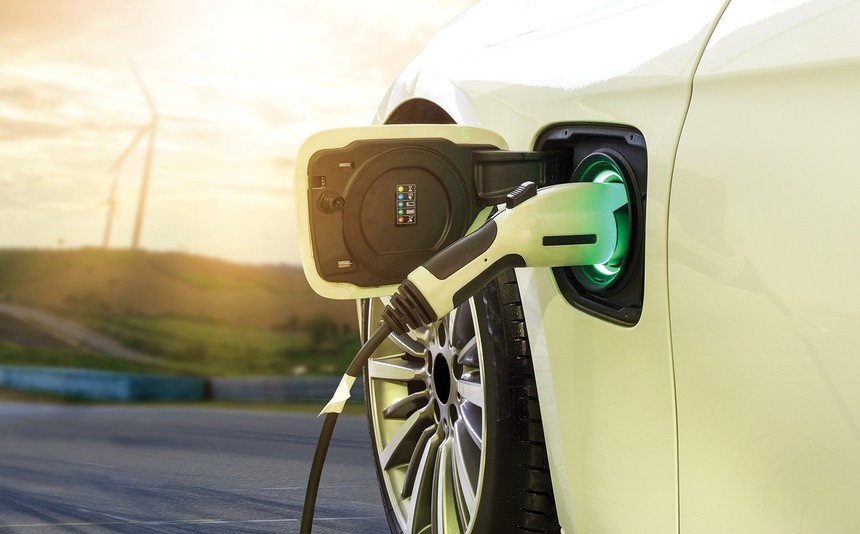 |
In addition to traditional gasoline-powered vehicles, many insurers have begun rolling out products tailored for electric vehicles (EVs).
Several insurance companies have introduced specific physical damage insurance policies for EVs, applicable to both electric cars and electric motorcycles.
For instance, DBV Insurance has developed specialised EV insurance products designed to cover unique risks such as battery damage, fire, flooding, and electrical system failures.
Despite this, industry players note that premiums and policy terms for EVs remain largely similar to those for gasoline-powered vehicles – posing an issue as EV-related losses continue to rise. In some cases, even minor damage to an electric car’s battery casing can cost up to around $4,000 to replace.
Insurers have yet to differentiate pricing between petrol and electric vehicles due to limited data, as EV adoption in Vietnam is recent and long-term claims history remains lacking.
As these vehicles operate differently and are exposed to distinct risks compared to traditional cars, insurers are still in the process of collecting data to enable more accurate assessments, and the development of EV-specific pricing models.
Some experts argue that insurance providers should improve data sharing across the industry – particularly concerning EV-related revenue and claims figures – to create a centralised database that would help in setting more appropriate and equitable premium rates. However, implementing such a system poses significant challenges.
Data from a major Hanoi-based motor vehicle insurer shows that in the first half of 2025, revenue from electric vehicle insurance accounted for 5.2 per cent of the company’s total motor insurance portfolio.
This figure has seen consistent growth over the past three years – from just 0.06 per cent in 2022 to 3.58 per cent in 2024.
The surging demand for EVs is putting pressure on insurers to standardise their policies.
In fact, current claim rates for EVs are relatively high, particularly for battery-related issues and fire risks.
As a result, insurers are approaching the EV segment with caution, hesitant to fully embrace it without policy safeguards that ensure sustainable business performance.
Some insurers have launched pilot schemes for niche EV insurance products, such as battery protection and fire risk coverage. However, these remain limited in scope and are often offered only as add-on or supplementary clauses rather than as standalone policies.
According to market research firm Mordor Intelligence, Vietnam’s EV market is projected to reach $2.93 billion this year and could grow to $6.69 billion by 2030, representing a compound annual growth rate of approximately 18 per cent – one of the fastest rates in Southeast Asia.
The Ministry of Transport has set a target for 30 per cent of vehicles in use to be electric cars and 22 per cent to be electric motorbikes by 2030.
The Vietnam Automobile Manufacturers Association (VAMA) estimates that by 2028, the country could have around one million EVs on the road, with that number potentially rising to 3.5 million by 2040.
However, the EV market still faces major obstacles. High vehicle costs, suboptimal battery efficiency, and concerns about the national power grid’s capacity to support a surge in EV use remain significant barriers.
Experts suggest that to ensure sustainable growth, Vietnam will need stable policy frameworks, long-term investment strategies, and public-private partnerships across the EV value chain – including manufacturing, services, and infrastructure.
 | Life insurers under fire over policy deficiencies Vietnam is working to urgently address shortcomings in the cross-selling activities of life insurance policies, highlighting concerns over advisory quality and the need for comprehensive market inspections. |
 | Insurers' 2024 profit targets indicate caution PetroVietnam Insurance Corporation (PVI) passed an ambitious revenue target of $725 million for 2024 at its AGM on March 21, a record figure representing an 8.17 per cent increase on-year. |
 | Private insurers must integrate advanced tactics Amid modest insurance penetration and early-stage digital adoption, Vietnam’s insurance sector stands at a pivotal turning point. Dr. Tran Phuoc Huy, chief of office at the School of Banking and Finance under the National Economics University, spoke with VIR’s Khanh Linh about the emerging opportunities for private insurers. |
What the stars mean:
★ Poor ★ ★ Promising ★★★ Good ★★★★ Very good ★★★★★ Exceptional
 Tag:
Tag:
Related Contents











Latest News





More News
- Insurance struggles to keep pace with electric vehicle boom (July 28, 2026 | 17:27)
- AM Best maintains stable outlook on Vietnam's non-life insurance sector (July 27, 2026 | 11:59)
- Non-life insurers rebound on strong first-half results (July 24, 2026 | 16:24)
- Hanoi Re named “Best (Re)Insurer” as record profits and ratings upgrade mark 15th anniversary (July 24, 2026 | 09:00)
- NNX opens first insurance centre in Hanoi (July 08, 2026 | 16:17)
- Vietnam to unlock long-term savings through expanded pension fund (June 11, 2026 | 14:04)
- Infrastructure boom fuels expansion of non-life insurance market (June 06, 2026 | 14:40)
- Igloo expands into life insurance with Chubb Life partnership in Vietnam (June 06, 2026 | 11:25)
- Vietnam targets 25 per cent micro-insurance coverage by 2030 (June 05, 2026 | 14:42)
- Willis and Global Parametrics deliver payouts to coffee farmers hit by storms (May 22, 2026 | 09:39)









 Mobile Version