
Tax & Legal Institute 2025 drives Vietnam’s tax reform momentum

On November 4, the Tax & Legal Institute 2025 continued its national series in Hanoi, following a successful kick-off in Danang on October 29, and will conclude in Ho Chi Minh City on November 7, bringing together over 1,600 business leaders and chief accountants from more than 500 enterprises across the country.
As the world faces growing geopolitical concerns and shifts in global trade, Vietnam is steadily enhancing its governance and regulatory systems towards greater transparency and modernisation.
This evolution has made Vietnam an increasingly attractive market for investors, while also placing higher demands on corporate compliance, transparency, and planning strategy as international standards become more rigorous.
The Tax & Legal Institute 2025 aims to equip businesses with insights into the latest regulatory updates, tax and legal trends, and strategic foresight, bringing together representatives from tax authorities, legal experts, and industry professionals, and highlighting how technology and AI can support more informed decision-making.
The forum opened with a plenary session on the global economic and policy outlook, providing an overview of global trade dynamics, supply chain shifts, and Vietnam's policy adaptation in response to these changes.
Speaking at the Tax & Legal Institute 2025, Dang Ngoc Minh, deputy director general of the General Department of Taxation under the Ministry of Finance, said that Vietnam's bold reforms in institutional development, policy improvement, and tax administration have strengthened market confidence and created new momentum for business growth.
"The year 2025 marks a major turning point in institutional and tax policy reform. Based on the Central Committee's four key resolutions, a number of new tax policies have been issued and are now in effect, providing a strong impetus for economic growth and digital transformation in tax administration," he noted.
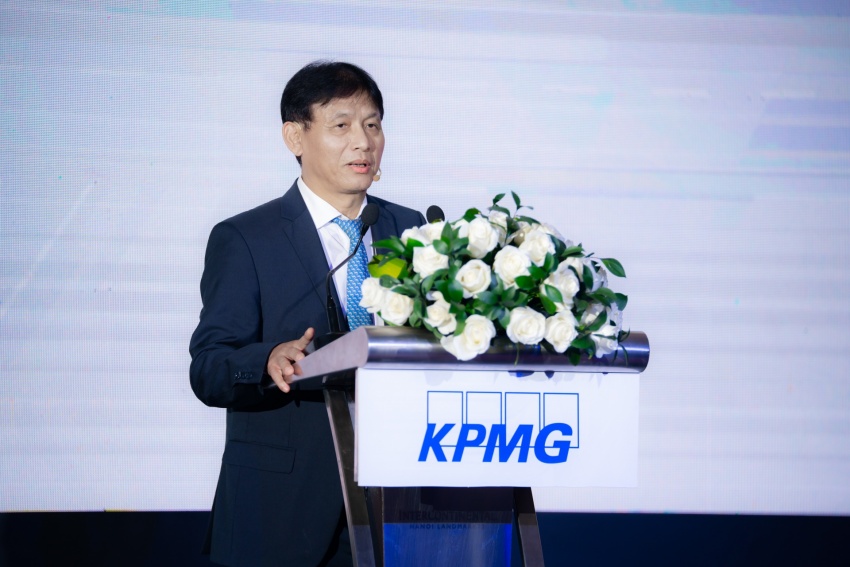 |
| Dang Ngoc Minh, deputy director general of the General Department of Taxation. Photo: KPMG Vietnam |
Minh highlights that the private sector currently contributes around 50 per cent of total state budget revenue, meaning recent tax incentives serve as crucial levers to help enterprises expand production, generate jobs, and foster innovation.
“In addition, the amended Personal Income Tax Law, now being submitted to the National Assembly, has been significantly revised to ease the burden on workers,” he said. “The draft law reduces the number of tax brackets from seven to five and raises the taxable income threshold for household businesses. Notably, a recently issued resolution of the National Assembly Standing Committee increases the personal deduction from $440 to $620 per month for taxpayers, and from $176 to $260 per month for dependents.”
Minh also emphasised the importance of the amended Law on Tax Administration, describing it as the legal foundation for comprehensive digital transformation within the tax sector.
According to Minh, the revised law will streamline approximately 45 per cent of administrative procedures, shifting from function-based management to taxpayer- and risk-based management.
“The promulgation of the law will lay the groundwork for a fully digital tax authority model, enabling automation, risk analytics, and transparent tax refund processes,” added Minh. “These strong reforms in institutional development, policy enhancement, and tax administration have reinforced market trust, empowered businesses to thrive, and guaranteed national revenue stability and sustainability.”
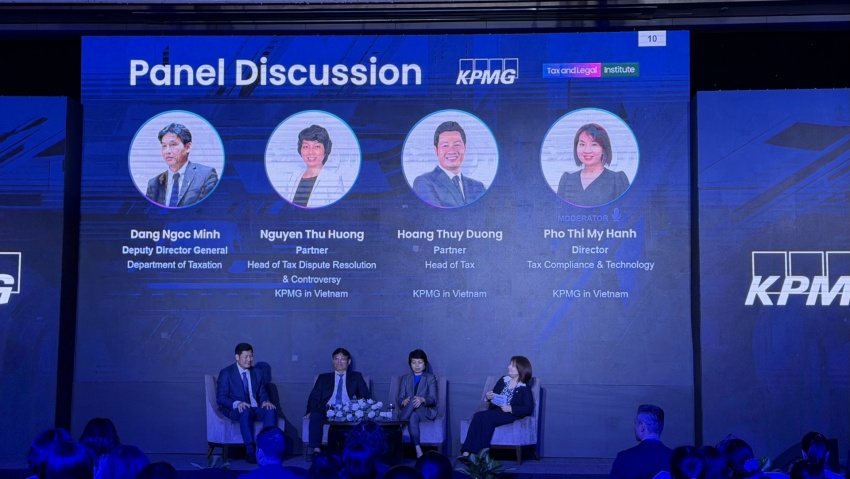 |
| A panel discussion at the event. Photo: Ha Vy |
Within Tax & Legal Institute 2025, two plenary sessions took place between representatives of the General Department of Taxation and KPMG in Vietnam, featuring Nguyen Thu Huong, partner and head of tax dispute resolution and controversy; Hoang Thuy Duong, partner and head of tax; and Pho Thi My Hanh, director of tax compliance and technology.
The first session highlighted major tax policies coming into effect in 2025, including corporate income tax, VAT refunds, special consumption tax, e-commerce taxation, the ISF, and the global minimum tax (GMT). Real-world dispute cases were also discussed to help enterprises prepare for significant tax shifts.
The second session explored Vietnam's response to the GMT and its implications for multinational operations. Experts focused on compliance timelines, customs valuation, and traceability requirements, as well as emerging transfer pricing trends shaping import-export activities in 2025.
 | Tariff modeller guides exporters through trade shifts In the face of mounting global trade headwinds, Vietnamese exporters are turning to simulation tools to anticipate tariff changes and recalibrate supply chains. |
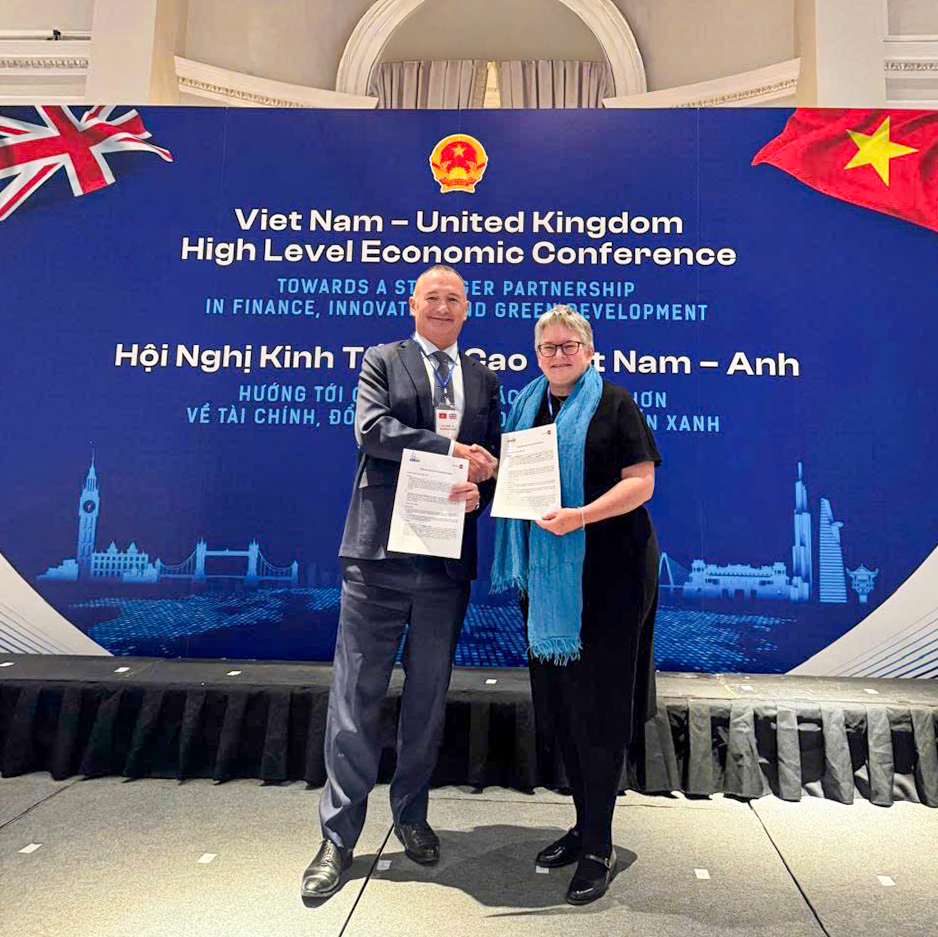 | KPMG Vietnam and ACCA partner to support development of IFC KPMG in Vietnam and the Association of Chartered Certified Accountants have joined forces to support the development of Vietnam's international financial center. |
 | Drive for innovation and digital growth proves a big catalyst for investment Vietnam is poised to see a rise in cross-border transactions as it continues to strengthen its position as an appealing destination for global investors and dealmakers. Michael Dwyer, partner and head of Deal Advisory at KPMG, shares with VIR's Vy Van how the country can translate this momentum into long-term gains and secure a footprint on the global deal map. |
What the stars mean:
★ Poor ★ ★ Promising ★★★ Good ★★★★ Very good ★★★★★ Exceptional
 Tag:
Tag: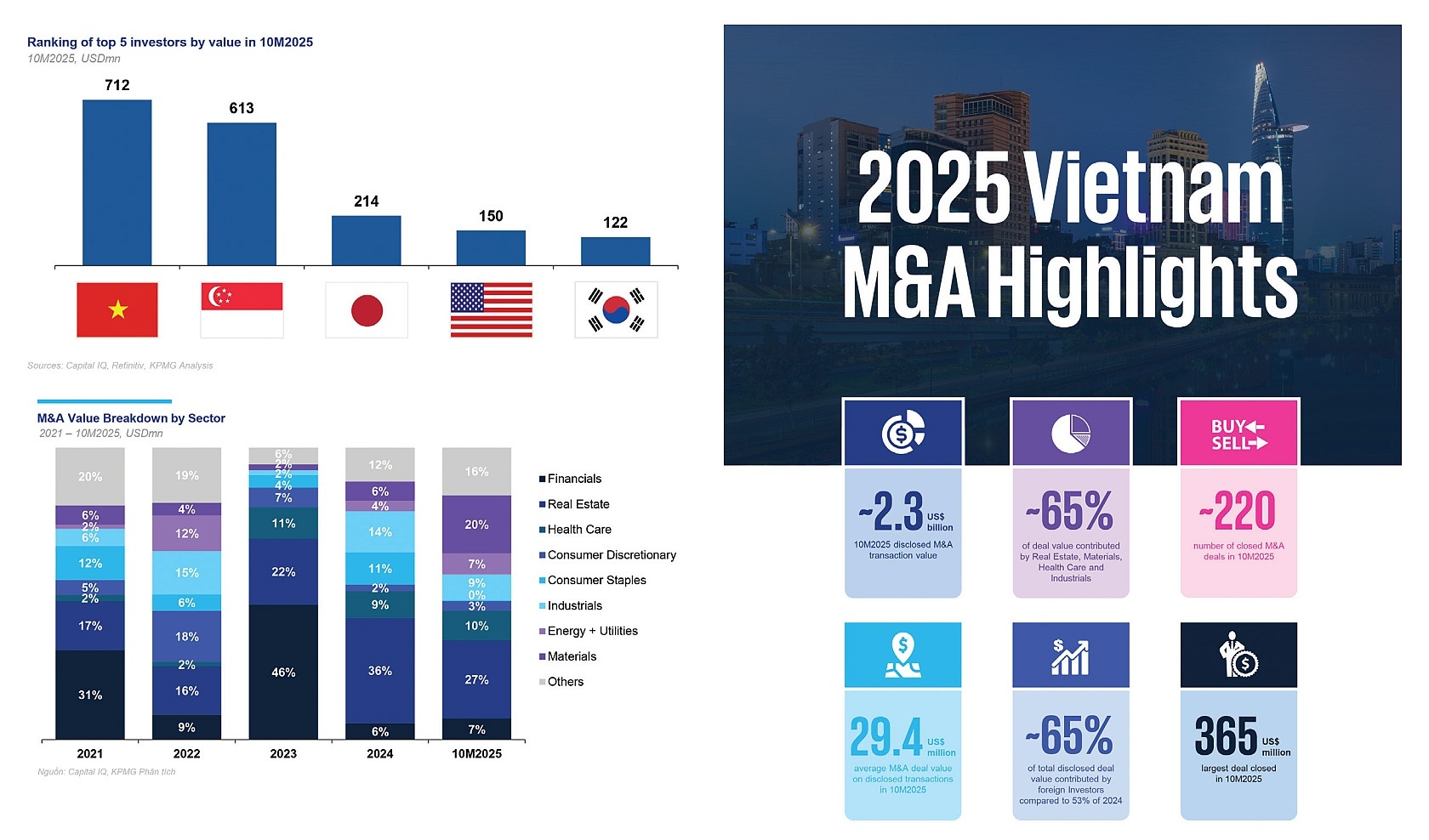
More News
- Drive for innovation and digital growth proving a big catalyst for investment (November 04, 2025 | 15:27)
- KPMG Vietnam and ACCA partner to support development of IFC (November 04, 2025 | 11:32)
- KPMG Vietnam appoints new head of Deal Advisory (October 10, 2025 | 15:01)
- Tariff modeller guides exporters through trade shifts (August 11, 2025 | 10:00)
- KPMG launches tariff modeller in Vietnam to navigate US tariff risks (July 29, 2025 | 12:11)
- Removing hidden barriers to unlock ASEAN trade (June 29, 2025 | 11:31)
- New report charts path for Vietnam’s clinical trial growth (May 21, 2025 | 08:58)
- TTC Agris strengthens market position with investment in Bien Hoa Consumer JSC (May 19, 2025 | 10:14)
- World Bank to help SBV build shared database for banking industry (April 09, 2025 | 08:55)
- New trade alliances and investment hubs are redefining global power dynamics (April 03, 2025 | 17:00)









 Mobile Version