
Hanoi boosts tourism ties with Japan to attract more visitors

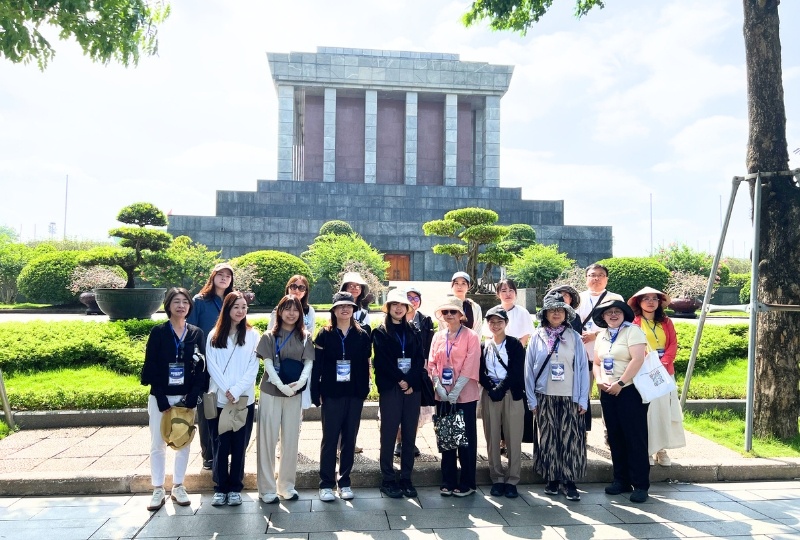 |
| Japanese tourism businesses visit the Ho Chi Minh Mausoleum during a familiarisation trip in Hanoi |
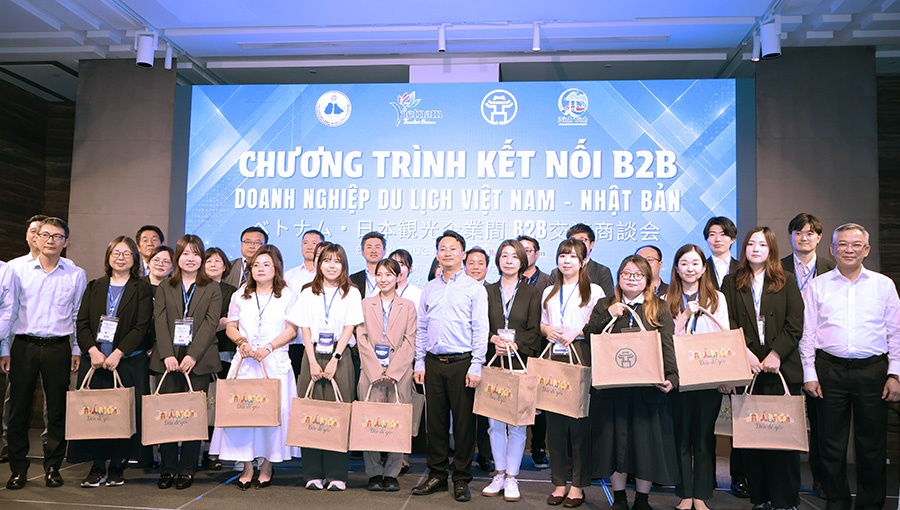
The event took place on May 28 in collaboration with the tourism authorities of Ninh Binh and Quang Ninh provinces and Hanoi Tourism Investment JSC. It was part of a five-day familiarisation trip from May 25–29 connecting the Hanoi–Ninh Binh–Quang Ninh tourism route for Japanese travel companies.
A key highlight was a series of direct meetings and product presentations between Vietnamese tourism operators and Japanese travel agencies.
The visit provided an opportunity for Hanoi, Ninh Binh, and Quang Ninh to showcase their distinctive tourism offerings, including accommodation and resort services, cultural and heritage attractions, and inter-regional tourism routes tailored to Japanese travellers’ preferences.
Tran Trung Hieu, deputy director of Hanoi Department of Tourism, said Japanese Prime Minister Sanae Takaichi's official visit to Vietnam on May 2 reaffirmed the positive trajectory of bilateral ties. Building on this foundation, tourism promotion activities and cultural exchange programmes have been organised regularly, while Vietnam-Japan cultural festivals have been hosted in various localities, creating better conditions for tourism exchanges.
Hieu noted that tourism has emerged as a bright spot in the comprehensive strategic partnership between Vietnam and Japan, as bilateral relations continue to deepen across multiple sectors.
"Japan remains one of Vietnam's key international tourism markets, with more than 800,000 Japanese visitors travelling to Vietnam annually on average," he said. "Nearly 40 per cent of them visit Hanoi, equivalent to more than 300,000 arrivals, placing Japan among the capital's top five international source markets."
Hanoi Department of Tourism reported that the capital welcomed nearly eight million international visitors in 2025, accounting for around 37 per cent of all international arrivals to Vietnam. Meanwhile, tourism flows between Vietnam and Japan have reached near parity, reflecting strong demand in both directions.
“Vietnamese people, and Hanoi residents in particular, have a strong interest in experiencing Japanese culture, people, cuisine, and tourism attractions. In 2025, more than 700,000 Vietnamese travellers visited Japan,” Hieu added.
 |
As Vietnam-Japan relations continue to strengthen, tourism cooperation is increasingly viewed as a sector with significant growth potential. It offers Vietnam opportunities to enhance its competitiveness and attract high-spending visitors with demanding service expectations.
Current travel trends among Japanese tourists indicate growing interest in authentic cultural experiences, premium leisure travel, meetings and events, and heritage exploration, all areas where Hanoi, Ninh Binh, and Quang Ninh hold distinct advantages.
Hieu noted that Hanoi’s rich cultural heritage, extensive network of traditional craft villages, vibrant nighttime economy, and diverse historical assets have helped create a unique appeal for Japanese visitors.
“Our 2026 visitor survey found that Japanese travellers perceive Hanoi as a destination with a strong local cultural identity. The city is also recognised for offering unique experiences and being an interesting place to explore,” he said.
According to Hanoi Department of Tourism, the city’s scenic landscapes, friendly residents, and authentic local experiences continue to leave a lasting impression on Japanese visitors.
The familiarisation trip delegation, running from May 25–29, comprises 28 representatives from leading Japanese travel companies based in Tokyo, Osaka, Fukuoka, Kansai, and Hyogo. These businesses are expected to play an important role in boosting tourism exchanges and increasing visitor flows between the two countries in the coming years.



What the stars mean:
★ Poor ★ ★ Promising ★★★ Good ★★★★ Very good ★★★★★ Exceptional
 Tag:
Tag:Related Contents




Latest News


More News
- Keeping heritage authentic in a digital world (June 15, 2026 | 17:57)
- Vietjet's cabin crew: ambassadors of hospitality and pioneering spirit (June 01, 2026 | 10:38)
- TAT and Vietnam Airlines agree to boost travel links (May 29, 2026 | 12:24)
- Sustainable tourism to shape Vietnam’s growth path (April 30, 2026 | 12:41)
- Vietnam Military History Museum holds lacquer painting exhibition marking national milestones (April 24, 2026 | 17:29)
- Vietnam welcomes over 2.2 million international visitors in February (March 12, 2026 | 11:39)
- Women-led businesses to enhance capacity (March 08, 2026 | 08:00)
- Fusion expands seasonal travel offerings for Lunar New Year and Valentine’s Day (February 11, 2026 | 14:00)
- Sheraton Phu Quoc rolls out Lunar New Year 2026 cultural and dining programme (February 11, 2026 | 09:00)
- Fairmont opens first Vietnam property in Hanoi (February 04, 2026 | 16:09)









 Mobile Version